
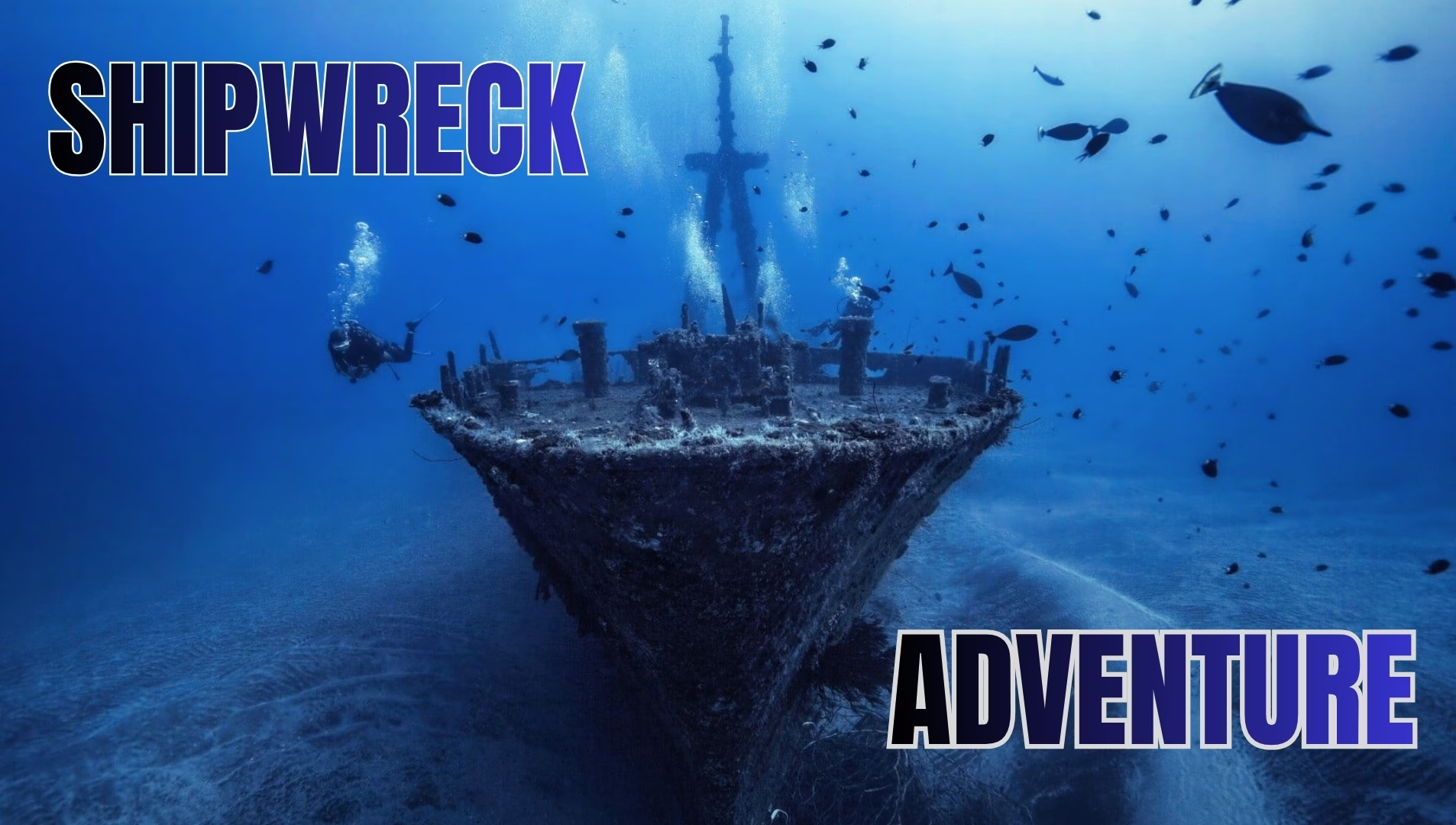
Under the ocean, the world’s oceans contain a vast underwater world that is home to forgotten stories. Thousands of shipwrecks are scattered across the sea beds, hidden under sand, trapped in the depths of coral reefs and resting in the darkness of the deep waters. Some were on merchant ships with great goods, some were great naval ships and many were common ships whose final journeys were not anticipated.
To explorers and divers, a shipwreck is more than just an abandoned structure under the sea. This is a snapshot in time. Rusty metal, missing masts, abandoned cargo, personal items and enigmatic storage spaces can all tell the story of the final journey of a ship.
These water-borne time capsules are among the most intriguing on earth, but they can be also quite dangerous.
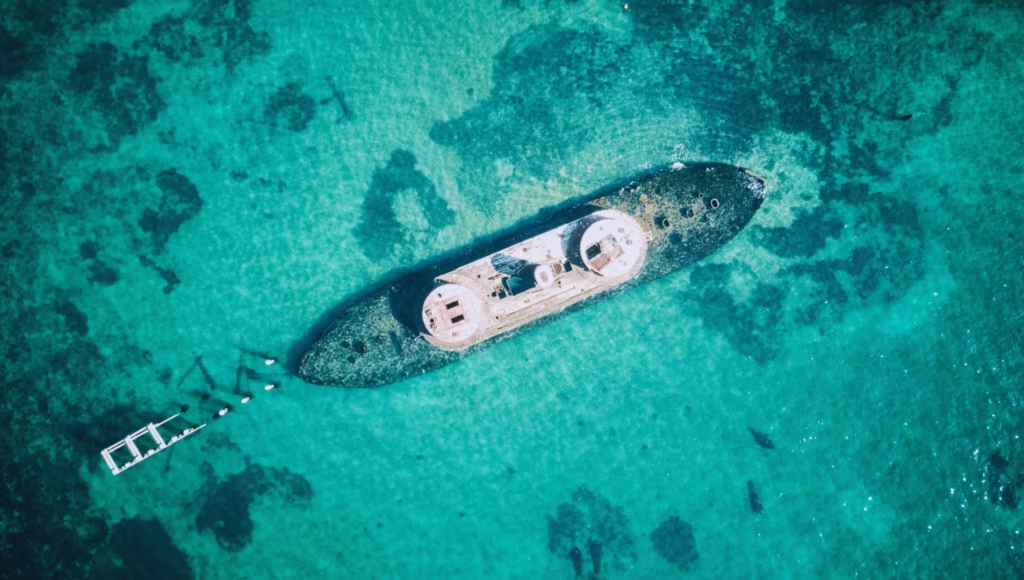
The Beginning of a Shipwreck Adventure
In a shipwreck adventure, the journey can actually occur before a diver gets in the water. Often months or years are required to study historical papers, ship logs, wartime documents, sonar readings, and old maps in order to find a lost vessel.
The use of modern technology has changed the way underwater exploration is done. Sonar can probe vast tracts of sea floor and ROV’s can explore wrecks miles over the human depth range.
The next hurdle for explorers is to decide if it’s safe to go in once a wreck is found.
What looks like a solid ship on the outside may be very flammable. It could be weakened after decades under water, there may be internal structural components which fail without warning, and strong currents may make it hard to navigate. Darkness and pressure make it an even more dangerous proposition in deeper waters.
But these are the hazards that make wreck diving so fascinating.
Why Are Shipwrecks So Fascinating
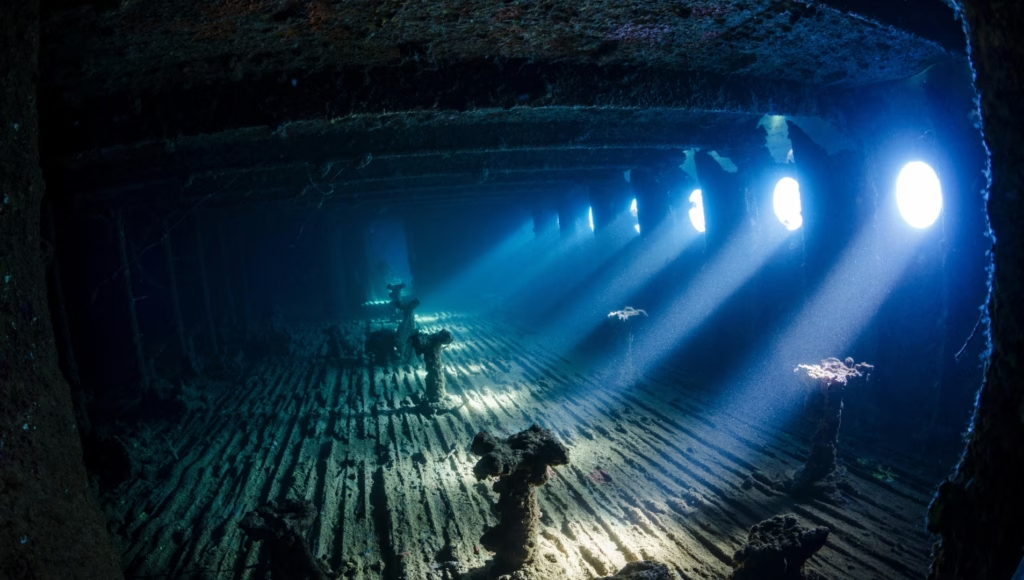
A shipwreck is always enigmatic. An ancient building on land may for centuries be hidden from man, but a sunken vessel might not even be known for many years.
A wreck can ‘preserve’ objects where no one has been for many generations.
Old bottles, navigation gear, anchor, machinery, furniture, weapons, or cargo may be found by the divers. Even items of personal effect can help to reveal the inhabitants of the ship.
A shipwreck can then be an ‘underwater archaeological site’.
Each damaged entryway can pose a question.
What happened here?
What caused the ship to sink?
Were there enough crew escape opportunities?
Did the ship have some valuable cargo aboard?
Why didn’t they ever recover it?
These unanswered questions make underwater adventures a discovery experience.
The Titanic: The World’s Most Famous Shipwreck
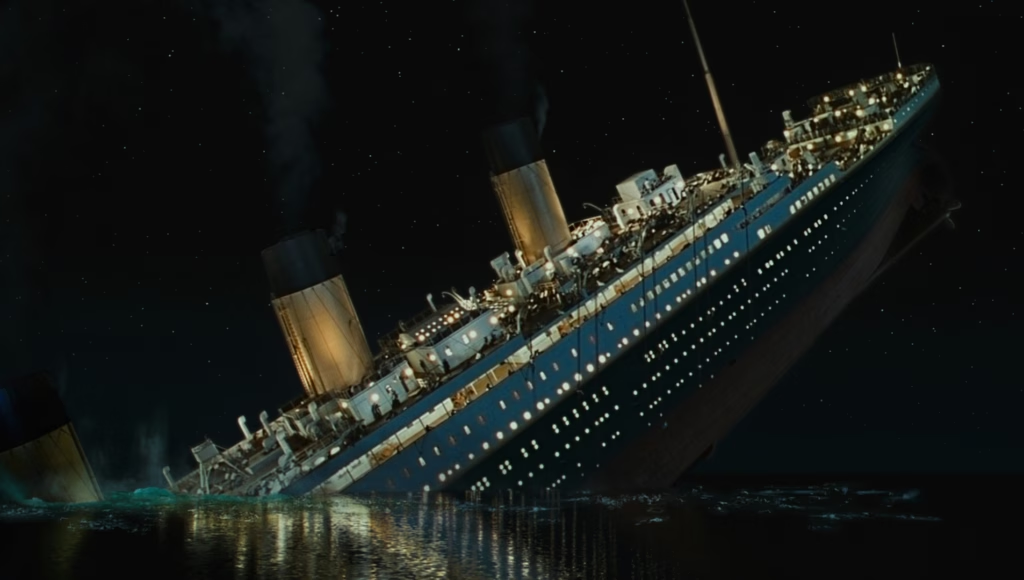
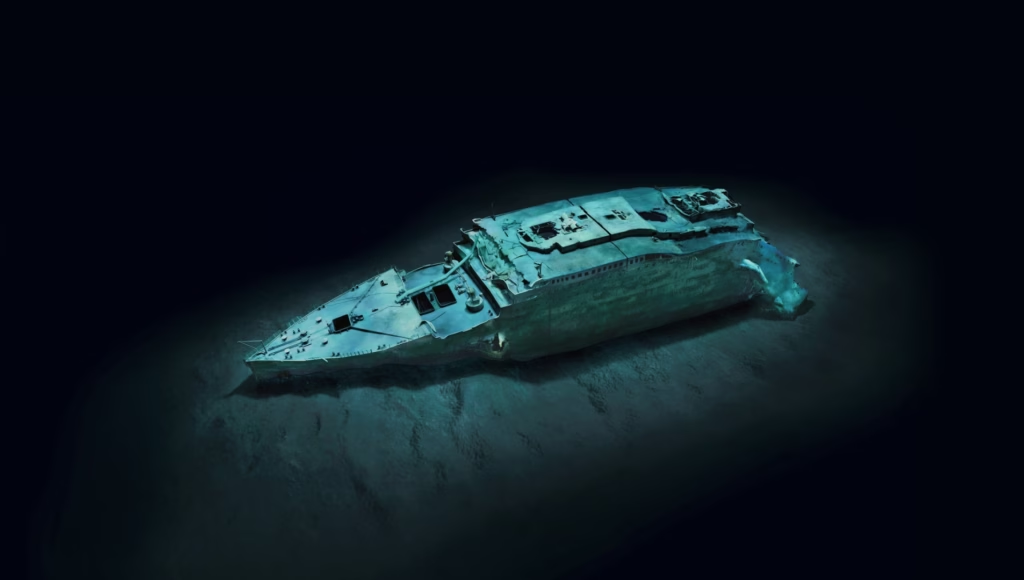
There are few wrecks as popular as the RMS Titanic.
It was an enormous passenger liner that sank in the North Atlantic Ocean in April 1912 after it crashed into an iceberg on its maiden voyage. Today, the wreck is regarded as one of the most notable underwater archaeological sites in the history of the world over 100 years later.
Titanic is located thousands of meters below the ocean’s surface, out of reach of most recreational divers. The site can be explored with specialized submersibles and remotely operated vehicles.
The wreck has also shown how rapid the changes in the ocean can be even on the largest of human constructions. The remains are still undergoing transformation due to corrosion, microorganisms, pressure and time.
Titanic is more than just a shipwreck. It has come to symbolize, amongst other things, human ambition, technological assurance, tragedy, and the capricious force of nature.
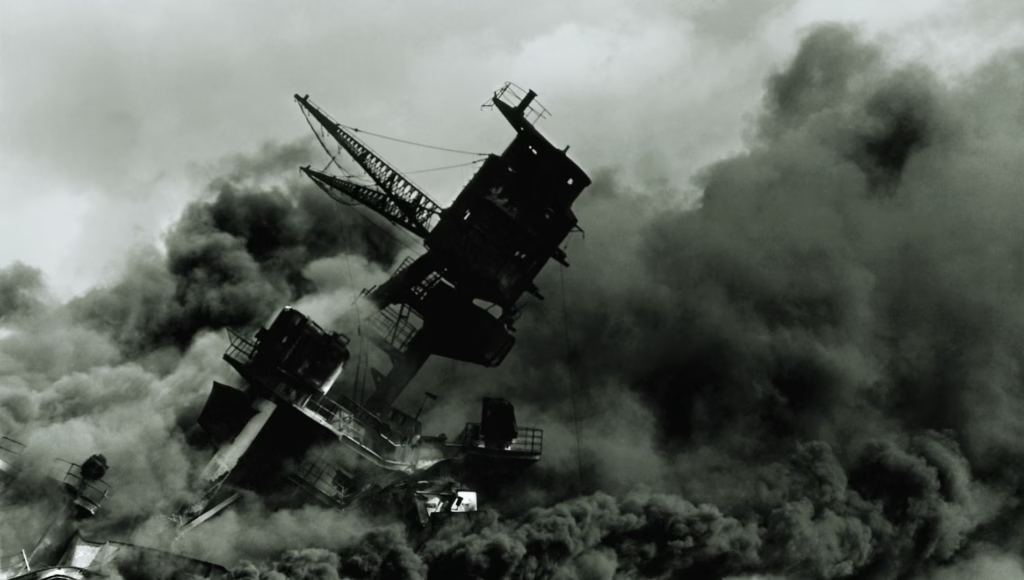
USS Arizona: A Wreck That Became a Memorial
Not all shipwrecks make good adventure destinations.
The shipwreck of the USS Arizona in 1941 was a significant war memorial and war grave. The battleship lost hundreds of sailors and Marines.
The Arizona is a historic wreck designed for historical and emotional reasons – it is not a recreational wreck for the sake of curiosity.
Remnants of the wreckage remind visitors that what lies beneath the surface of the water are not just chunks of metal. Shipwrecks may also provide the final resting places of never-returned persons.
This is why you need to be respectful when exploring a wreck responsibly.
The Mysterious World of Deep-Sea Wrecks
Some of the greatest finds are found much deeper than where normal divers can go.
The wrecks of the deep sea may take decades or centuries to be reached with specialized equipment and, therefore, undisturbed. Under the extreme depths, pressure level is one of the biggest difficulties.
A minor technical incident can be a life threatening emergency.
Remote operated vehicles (ROVs) can have strong lights, cameras, robotic arms, and scientific instruments for the explorers to use. The machines are capable of penetrating narrow areas of wrecks and gathering data without endangering the safety of a human diver.
The wrecks also have been found to be artificial ecosystems when investigated in-depth at sea.
With time marine life grows on the ship surface. A sunken ship can be a flourishing marine sanctuary for fish, corals, sponges and more.
Once it carried humans across the ocean, it may one day be home to a wholly different community of life.
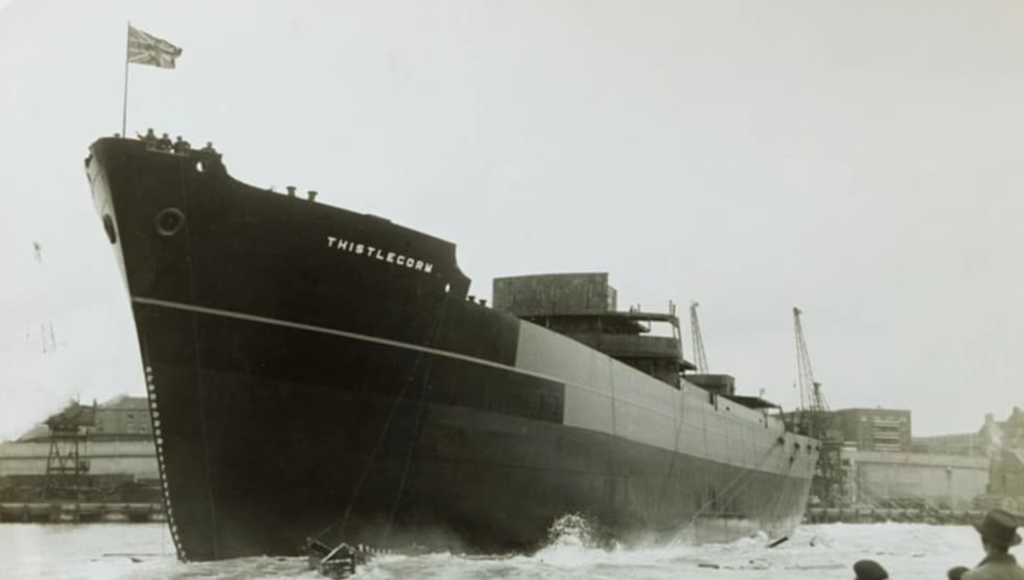
The SS Thistlegorm: A Diver’s Underwater Time Capsule
The SS Thistlegorm is one of the most iconic wrecks in the world, a British merchant vessel that was sunk in the Red Sea during World War II.
It was attacked and sunk in 1941 with the loss of some of its military cargo.
Today, there is the opportunity for those with expertise in diving to explore some parts of the wreck and observe traces of its wartime cargo, including vehicles and other equipment.
This is the kind of wreck diving that makes it so appealing to adventurers and how the Thistlegorm illustrates that. While traditionally divers would only be able to view historical artifacts inside a museum, now they can experience them in their original context.
This experience can be like entering into an era of the past.
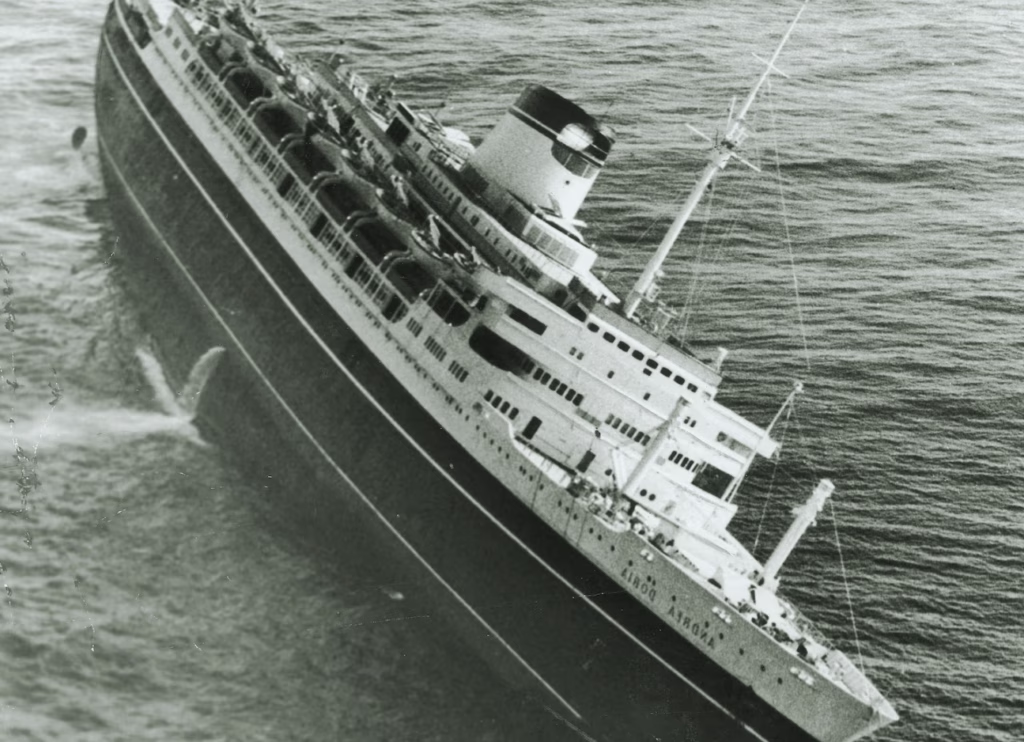
The Andrea Doria: A Dangerous Underwater Challenge
The SS Andrea Doria is a famous shipwreck in the Atlantic Ocean off the coast of Massachusetts, sunk in 1956.
Wrecks are at a critical depth and experiencing strong currents and difficult conditions. It has been the object of many dives over the years and is especially renowned for being a difficult wreck dive.
It’s reputation conveys an important message: a competition isn’t underwater exploration.
A seasoned diver should be familiar with equipment, training, depth limits, decompression procedures, navigation and environmental factors. The beauty of a wreck is its deadly nature when approached by someone who doesn’t know the dangers.
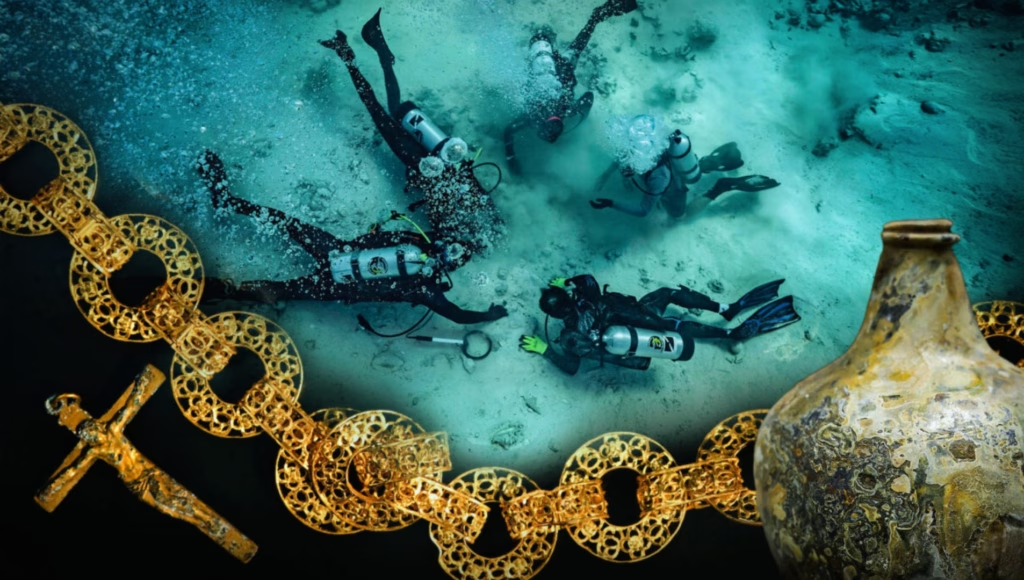
Treasure Hunting Beneath the Waves
For centuries, shipwrecks also have been the interest of treasure hunters.
Very valuable objects like gold or silver, gems, spices, weapons, ceramics or other products were sometimes shipped via ancient ships. Numerous treasures searches have been conducted to find the lost treasure.
However, it’s not only the wealth that is important in modern wreck exploration.
Some countries have regulations pertaining to archaeological sites and historical wrecks. Do not remove artifacts without permission as this may have a negative impact on the historic record and may be a violation of the law.
The treasure is the information, for archaeologists.
Ancient trade routes can be found in a piece of pottery. Ships’ design can offer clues to technology of the time. Evidence of economic links between distant civilizations can be obtained from cargo.
Knowledge has indeed more value than gold, in this context.
The Dangers of Exploring Sunken Vessels
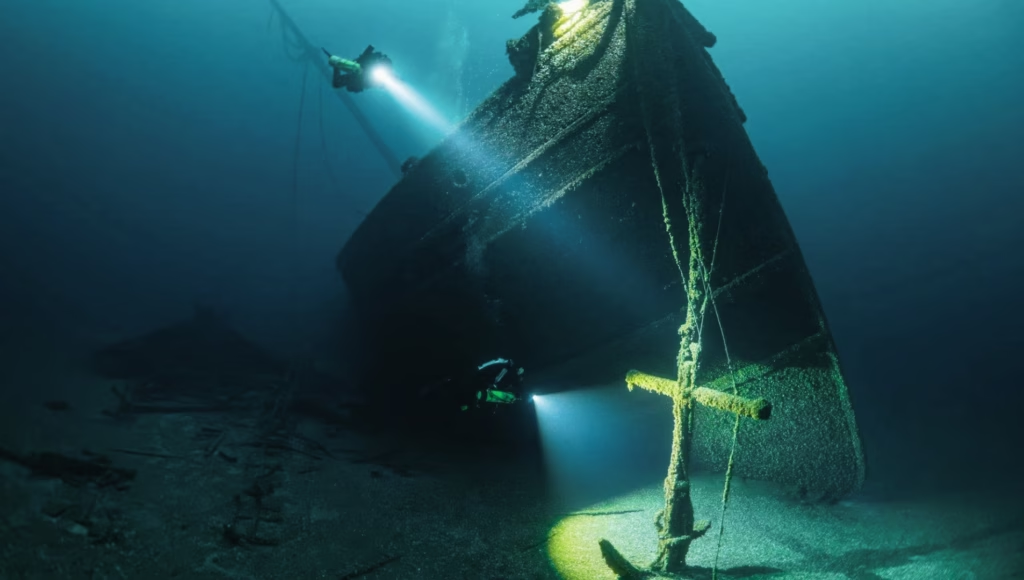
The shipwreck divers has to deal with several dangers while diving.
One of the main difficulties is the depth. The pressure increases as depth increases for diving and diving bodies must be controlled in relation to breathing gases and decompression.
Another potential hazard is due to poor visibility. Sunlight could be totally absent inside a wreck. A diver can easily lose his or her sense of direction in seconds.
An entanglement is also a serious threat. Ropes, fishing lines, cables and collapsed structures are potential hazards for divers.
Not to mention wreck itself!
Metal can collapse. It could cause the ground to collapse. Corridors may be closed. Sudden decrease to almost zero visibility can be caused by sediment.
It is therefore necessary to be well trained and prepared for diving into a shipwreck.
Technology Is Changing Wreck Exploration
Robots could be the key to the exploration of shipwrecks in the future.
The autonomous underwater vehicles can be utilized to explore huge quantities of ocean without putting human life at risk. ROV’s are capable of diving deeper than recreational divers.
The wrecks can be surveyed using powerful imaging technology that can create a 3D map of the wreck, to be studied without disturbing it.
AI and cutting-edge sonar systems also can assist researchers in finding new shipwrecks in massive areas of the ocean bottom.
It is possible that thousands of ships have yet to be found under the sea.
A Journey Into the Past
One of the best things about shipwrecking trips is that you’re able to travel through time.
A wreck is more than just a shipwrecked ship. It’s an accomplishment of a trip that began with people, plans, goods and goals.
The ship was lost and it was as if its tale had come to an end.
Yet when it’s time for diving under the sea, it might be feasible to bring that story back to the surface.
Each anchor, each cabin and cargo box, and each piece of machinery can give another element. As a whole, these pieces enable historians and archaeologists to piece together lost journeys.
Conclusion
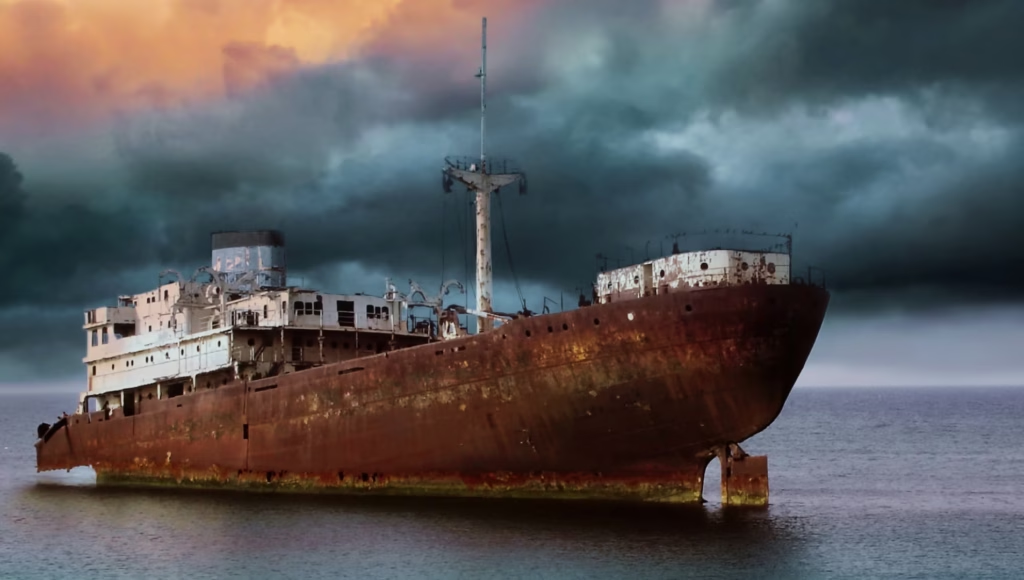
No other adventure is as multi-faceted as a shipwreck adventure, and little adventures are as captivating as it is. Warm sunk ships from wars and storms, accidents and mysterious events. Some are well known, others are totally unknown.
It’s not just a matter of going through dark water hallways or looking for gold coins. It’s about learning about the history and respecting the persons and events of these extraordinary places.
The seas take up the bulk of the Earth and under their surface, there are so many stories to be told.
In terms of the adventurous, this translates to the biggest wreck finding could still be out there, in the dark.





0 Comments