
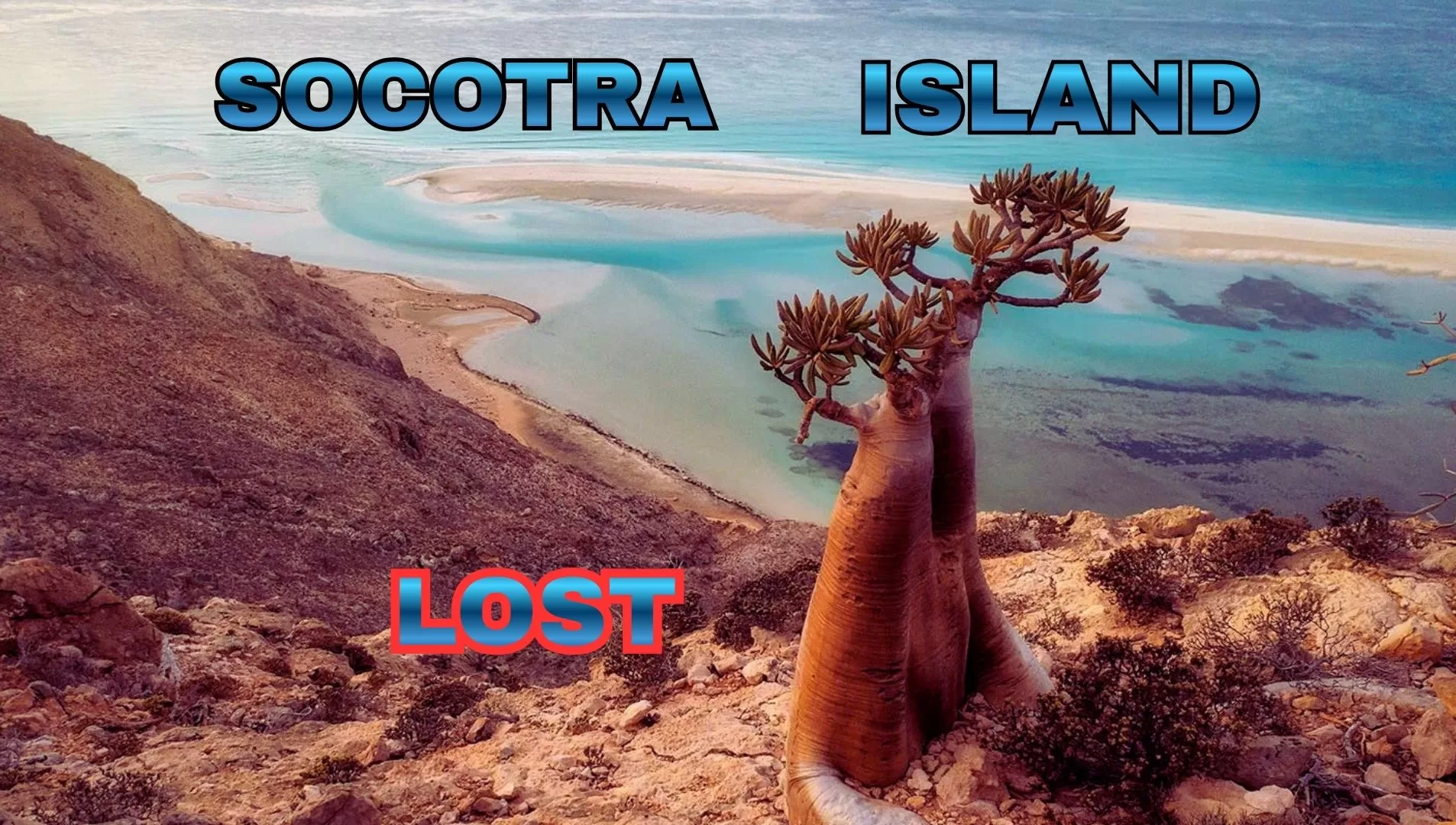
When people envision an alien planet, they usually envision odd plants, weird landscapes, and creatures that don’t exist anywhere else in the universe. It may come as a surprise, but it actually exists on this planet. Socotra Island, on the Arabian Sea, some 380km off the Arabian Peninsula, is one of the most unusual and secluded places on earth. Socotra’s flora, fauna and stunning landscapes make it “the most alien looking place on earth.”
This far flung island of Yemen is unlike anywhere else in the world. It is one of the most significant biodiversity hotspots on Earth with scientists estimating that almost one-third of its plant species are found nowhere else. For centuries, explorers, biologists, photographers and travelers have been intrigued by its unique appearance.
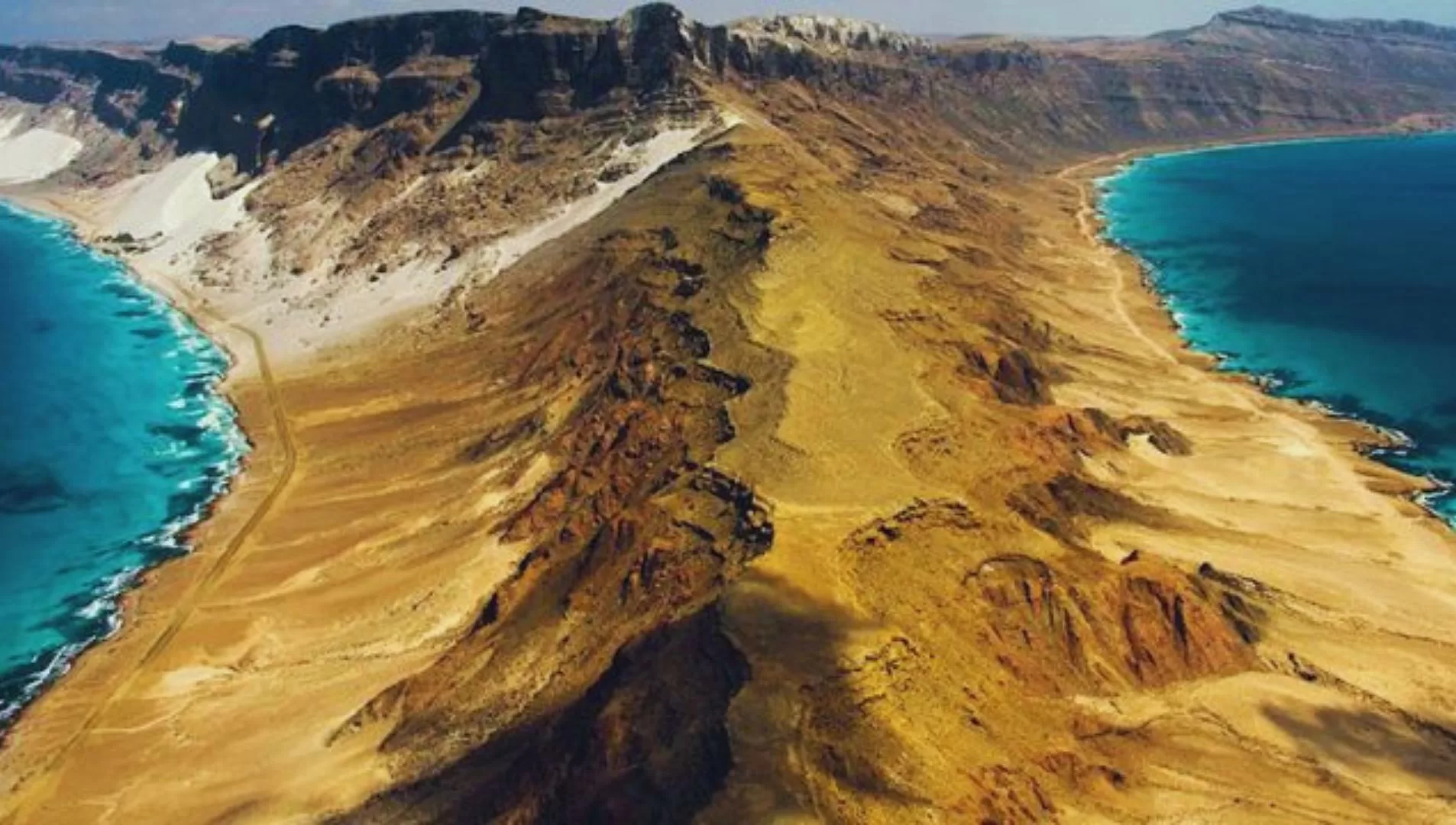
An Island Lost in Time
The Socotra Archipelago consists of four islands, the largest of which is Socotra which lies at the intersection of the Arabian Sea and Indian Ocean. The island has been isolated from the continent of Africa and Arabia for millions of years, as a result of which it has developed its own unique identity.
The geologists believe Socotra separated from the African continent about six million years ago. This separation enabled the plants and animals to evolve on their own and develop new species not found elsewhere.
Socotra can be called a living lab of evolution, and is often likened to the Galápagos Islands. It is one of the more biologically unique areas on the planet, in the opinion of many scientists.
The island has a surface area of about 3625 sq.km, comprising of mountains, limestone plateau, caves, deserts and pure beaches. This variety of habitats has led it to be very bio-diverse.
The Famous Dragon Blood Tree
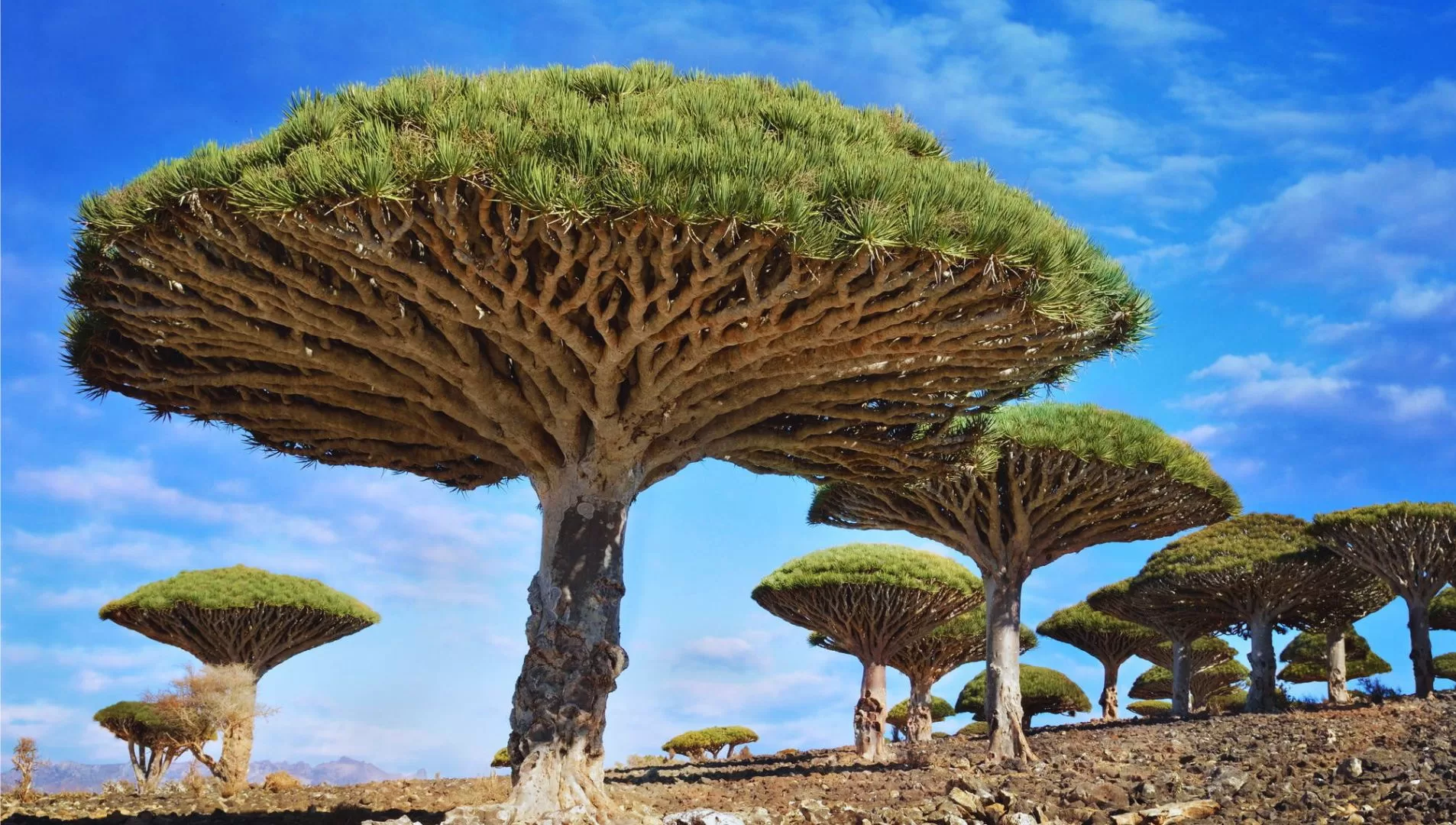
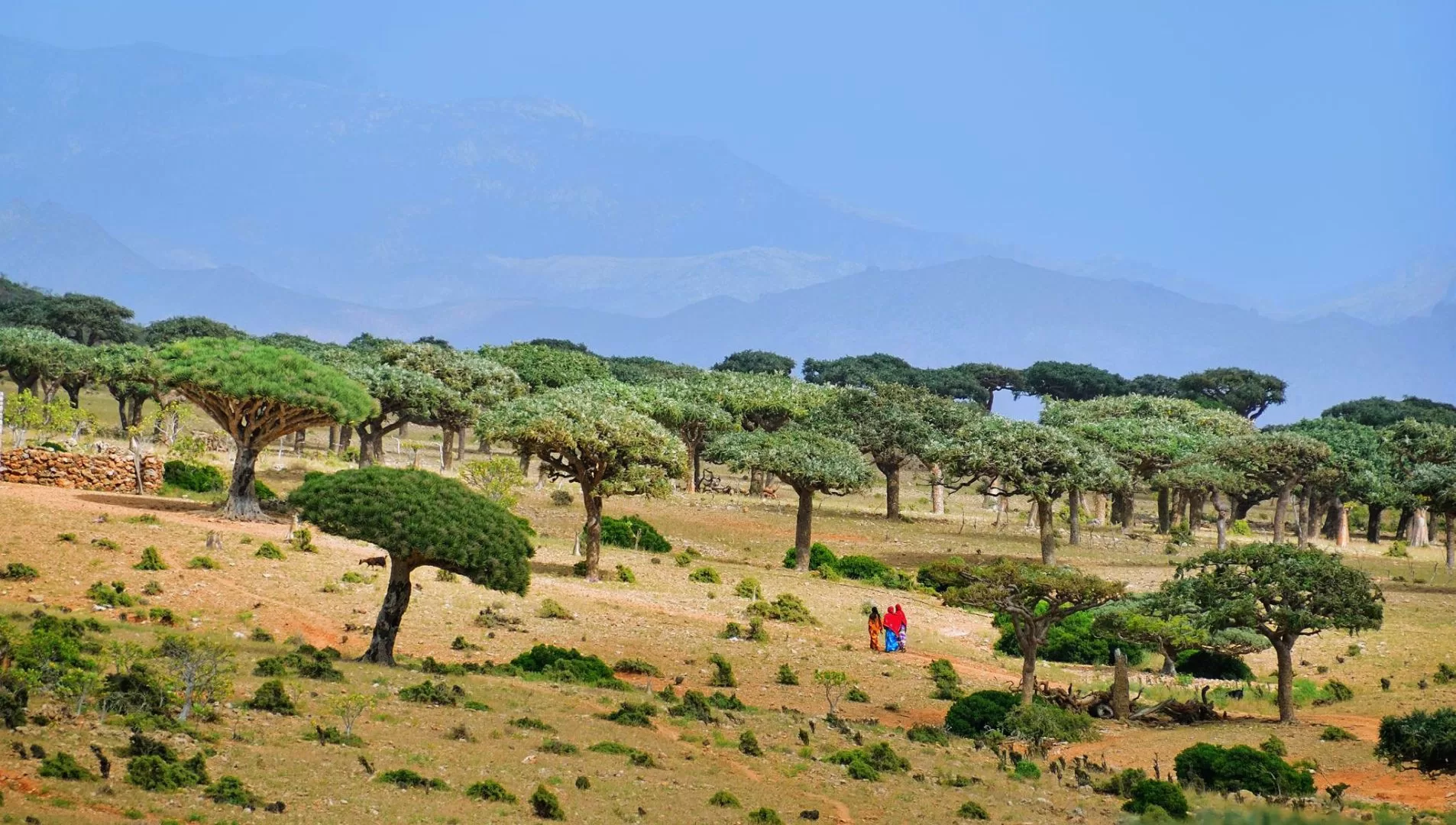
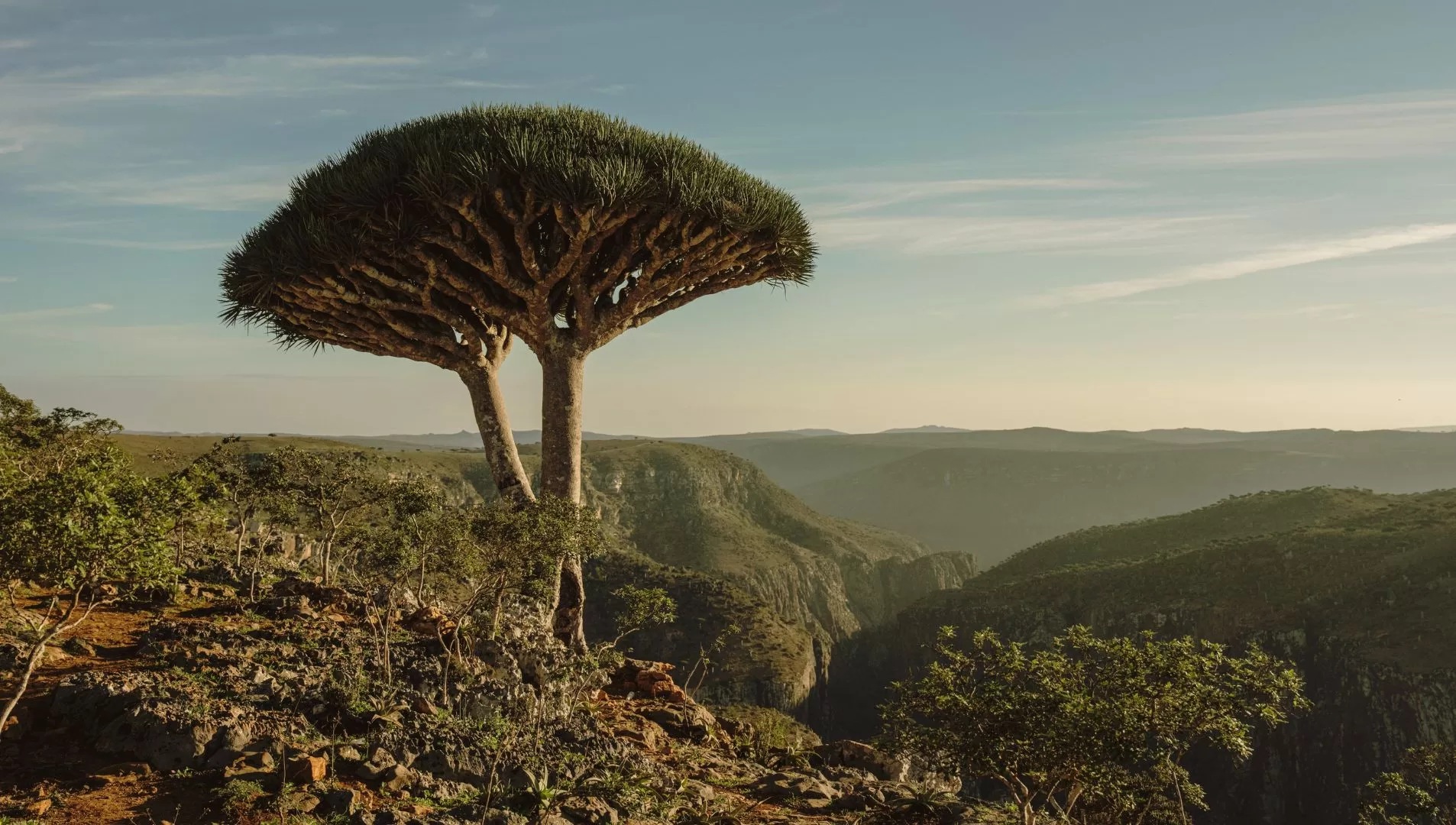
The Dragon Blood Tree is a symbol of Socotra. The tree has a thick canopy and many branches, giving it an umbrella-like shape and a dense canopy that give it a rather science fiction-like appearance.
The Dragon Blood Tree is named for its dark red resin, which is called “dragon’s blood. Traditionally, this resin has been used for medicines, dyes, varnishes, and incense for centuries.
The peculiar shape of the tree is a valuable function to it. The dense canopy of its foliage helps it to survive in Socotra’s hot and dry environment by shading and minimizing water loss.
In large numbers across the highlands of the island Dragon Blood Trees present a scene that is totally bizarre. The “alien world” of Socotra is in part due to their strange look.
A Treasure Trove of Unique Plants
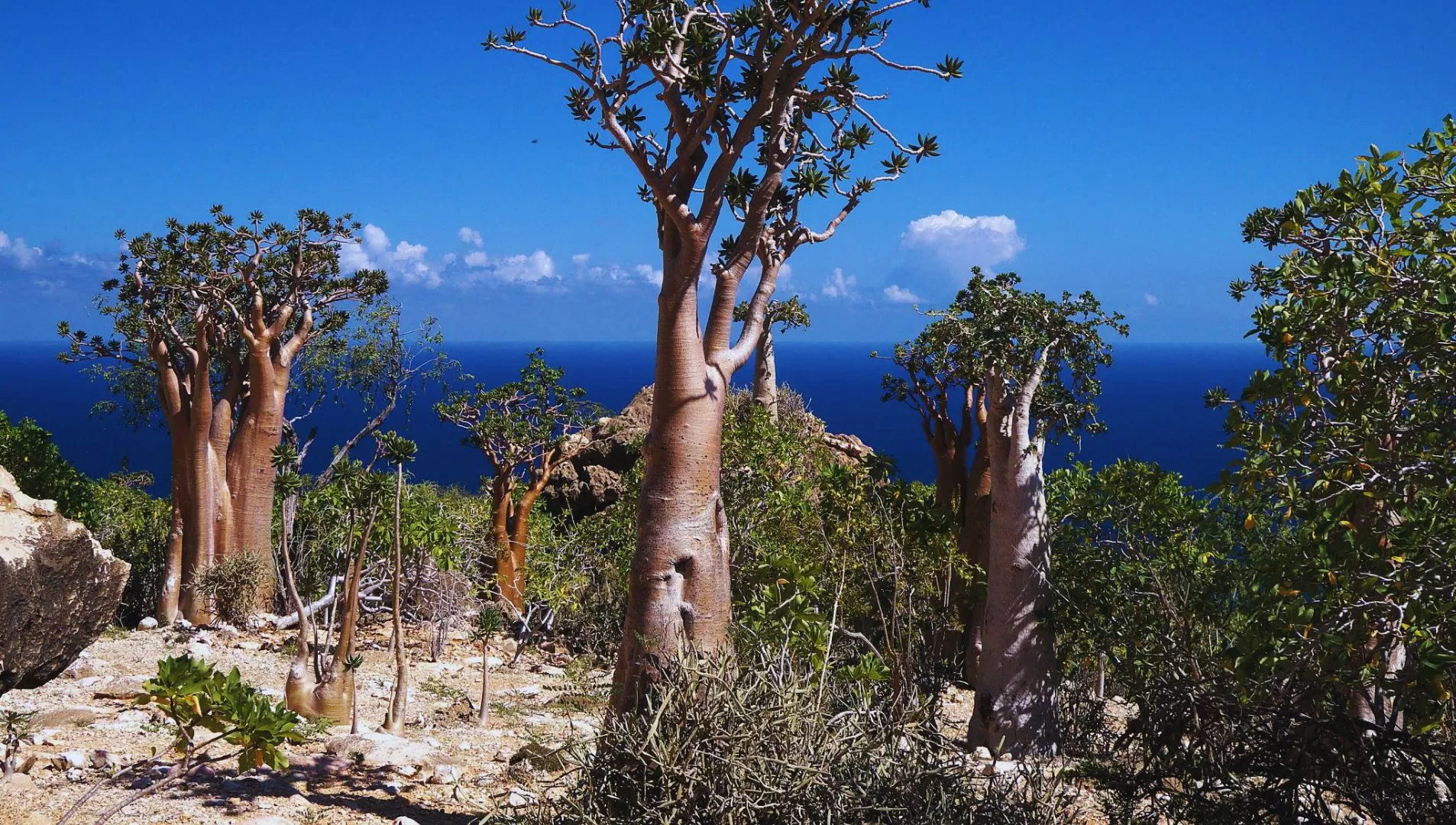
The Dragon Blood Tree is just one of the remarkable flora of Socotra. There are hundreds of endemic plant species on the island that are unique to the island.
The Desert Rose Tree is one other noteworthy plant. This species differs in producing a thick, swollen trunk for water storage which permits it to endure periods of extended drought. Its bright pink flowers form a striking contrast to the barren landscape, during the blooming season.
Another Socotran botanical oddity is the Cucumber Tree. This rare tree differs from the regular cucumber tree in that it is several meters tall and produces fruit that looks like cucumbers.
It is believed that more than 300 plant species are endemic on Socotra. It is this kind of uniqueness that is hard to find anywhere in the world, and makes the island an important natural treasure.
Wildlife Found Nowhere Else
The islands isolation has resulted in unimaginable diversity of animal species. There are several endemic birds, reptiles and insects on the island. More than 90 percent of its reptile species are found nowhere else in the world.
Socotra is a birdwatcher’s paradise, with notable species like the Socotra Starling, Socotra Sunbird, and Socotra Bunting. These birds are an independent derivation of their environment, and have adapted well to their surroundings on the island.
Socotra is one of the few tropical islands with relatively low number of large mammals. It also has a variety of ecosystems that host a wide range of smaller creatures that help maintain the island’s ecological balance.
The marine environment around the area is also the same. The waters surrounding the archipelago are rich in nutrients that support the growth and abundance of coral reefs, fish species, dolphins and sea turtles.
A Landscape of Stunning Contrasts
The diversity of landscapes is one of the most interesting aspects of Socotra. Tourists can enjoy climbing to heights above 1,500m above sea level to explore the towering mountains. They receive moisture from passing clouds, and nurture unique plant communities.
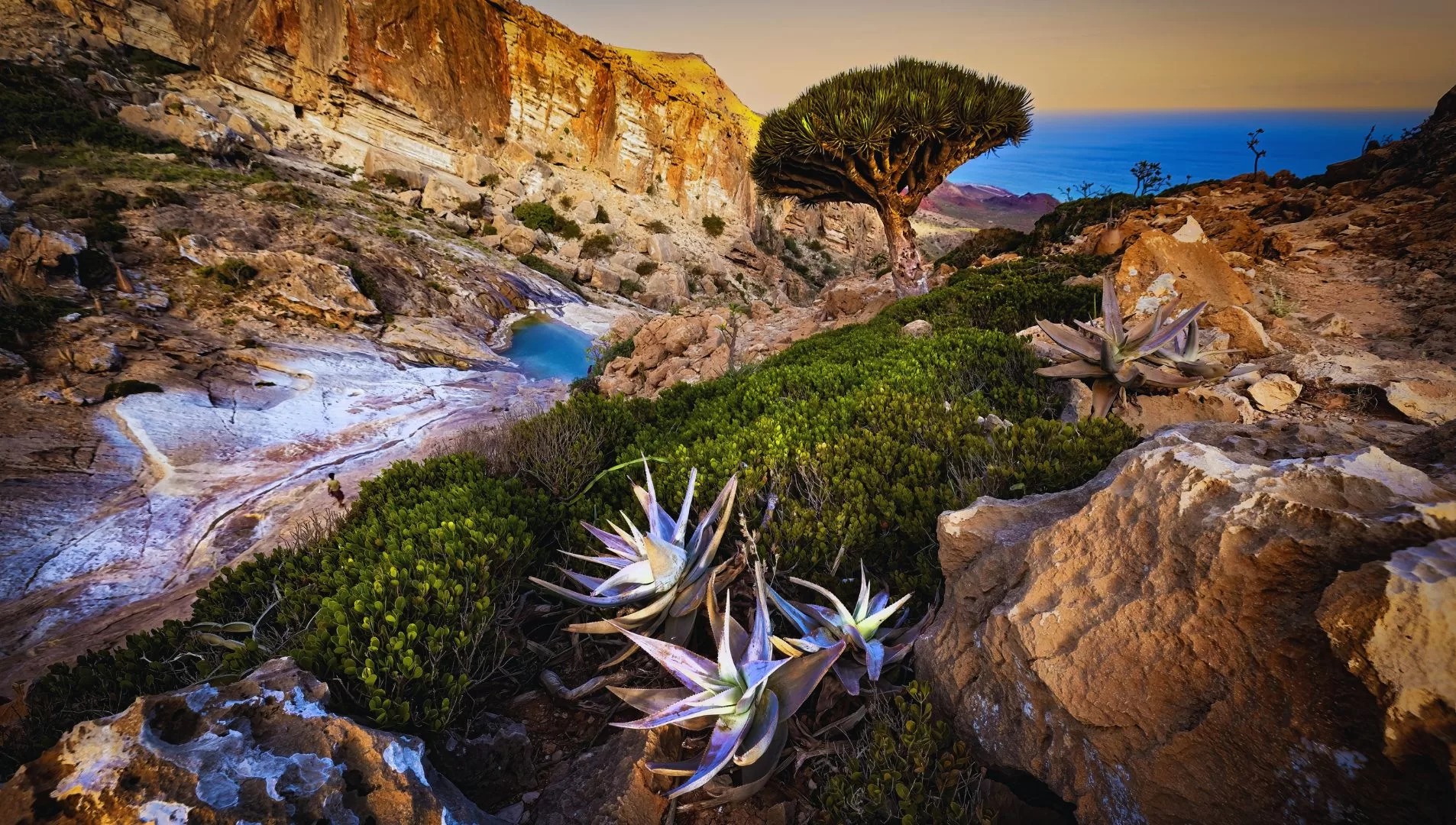
There are also extensive limestone plateaus on the island with caves and sink holes. Some extend for several kilometers and have wonderful stalactites and stalagmites. There are white sand beaches and clear turquoise waters along the coast rivaling the beauty of any tropical paradise.
In certain areas, huge sand dunes border right up to the sea, producing dramatic scenery that is seemingly impossible. The many environments give the impression that each part of Socotra is a different world.
The People and Culture of Socotra
Even though Socotra is in such a remote location, it has been inhabited for thousands of years. The island’s inhabitants have grown up in isolation resulting in a unique culture. The residents speak Socotri, an ancient language, which is not Arabic. It is one of the oldest surviving languages in the region, according to linguists.
The traditional way of life is still prevalent throughout the island. Many families still make a living from fishing and herding livestock, as well as small scale farming. For centuries, the people of this island have coexisted with the nature around them and used their knowledge to safeguard the environment and respond to difficult circumstances.
The people of Socotra are known for their hospitality, friendliness, and their strong bond with the environment.
UNESCO World Heritage Status
The Socotra Archipelago has been inscribed on the UNESCO World Heritage List due to its outstanding ecological value in 2008. UNESCO called the archipelago one of the most Endemic and Ecosystems rich biodiversity hotspot in the world.
The status led to the island being recognized internationally and spurred action to preserve its delicate ecosystem. Scientists are still studying Socotra, as it provides a great deal of information on aspects of evolution, adaptation, and biodiversity preservation.
Challenges Facing the Island
Although Socotra looks beautiful, some issues have arisen in the environment. Many of the island’s unique ecosystems are under threat from climate change. Endemic species may be impacted by shifting rainfall and rising temperature. Excessive grazing by livestock can harm plant life and stop important plant species, like the Dragon Blood Tree, from growing back.
Although tourism can be a good earner for the local economy, it has to be handled carefully to ensure that fragile habitats are not adversely affected. Efforts are being made to ensure that Socotra’s distinctive natural heritage will be kept for future generations through a collaboration between conservation organisations and local communities.
Why Socotra Captivates the World
There are few more places on Earth to be filled with wonder than Socotra Island. It is a place of surreal landscapes, unique flora and fauna, which makes it an experience like no other place in the world.
Images of Dragon Blood Trees that are captured against colorful skies and dramatic backgrounds can often make one think that they are on a different planet. But all of Socotra is quite real, the result of millions of years of evolution on its own. The island will remind everyone that Earth has yet so much more to offer even the most seasoned explorers and researchers.
Conclusion
Socotra Island is one of the few remaining places in the world that is truly unique. It is a place unmatched in its biodiversity, strange flora, beautiful nature and cultural heritage. Known as the “Galápagos of the Indian Ocean” or “Earth’s Alien Island”, Socotra still captivates those who discover its wonders.
Socotra still has much to contribute to the world of conservation and documentation, and is a testament to the creativity and resilience of nature in a world that has been explored and documented. It’s a world untouched by evolution and a place that seems to be a world of the past, but not quite earthly. If you’re looking for a place that proves reality can be more fantastical than fiction, then Socotra Island is one of the most amazing places in the world.


0 Comments