
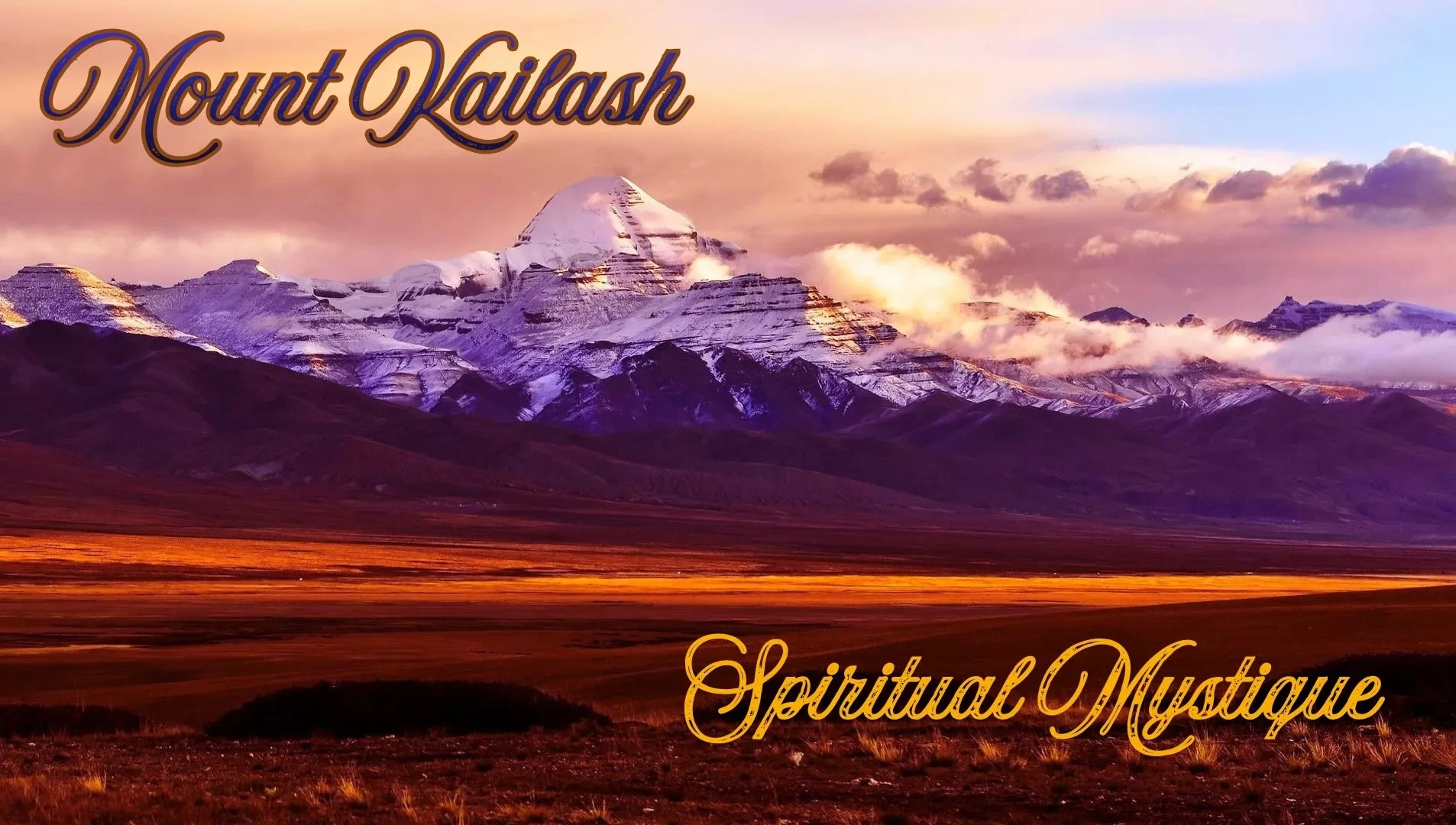
One mountain is still un conquered in a world where men have reached the highest peaks, explored the deepest oceans and walked on the Moon. Standing majestically on the remote Tibetan Plateau, Mount Kailash is one of the most mysterious and revered mountains on Earth. Mount Kailash has never actually been climbed officially, which is different from peaks like Everest, K2, or Annapurna. It is not dangerous to climb up there: its highest point is not touched by man, but because it is too sacred to be conquered.
This remote peak has been the focus of religious devotion, ancient myth, mysterious occurrences and contemporary speculation for centuries. For millions of people in Asia, Mount Kailash is not just a mountain, it’s the very heart of the world, the abode of the gods, a gateway between the material and spiritual realms.
So why has no one gone up Mount Kailash? Is it due to religious reason, natural difficulties or an even more enigmatic?
A Sacred Peak Unlike Any Other
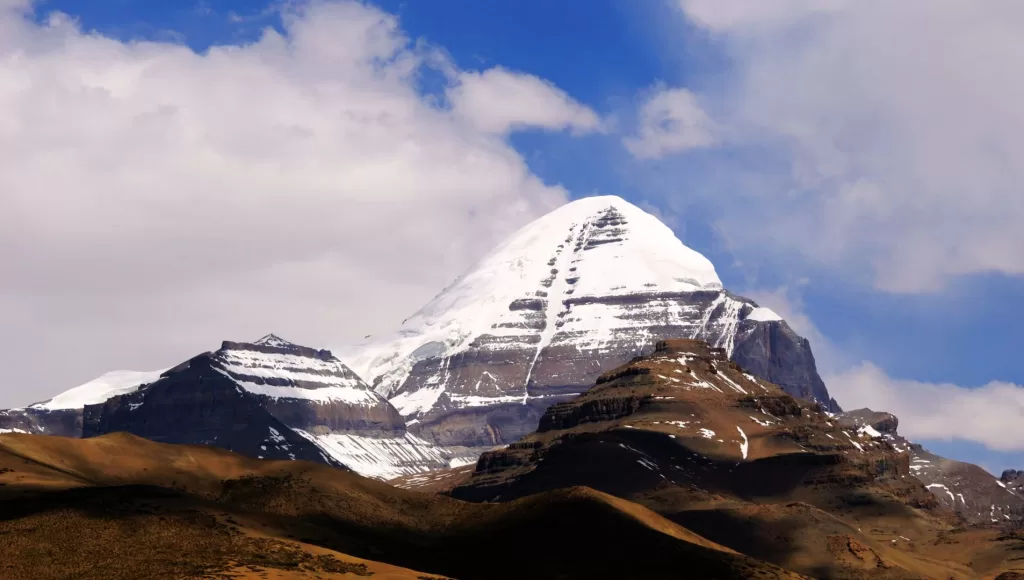
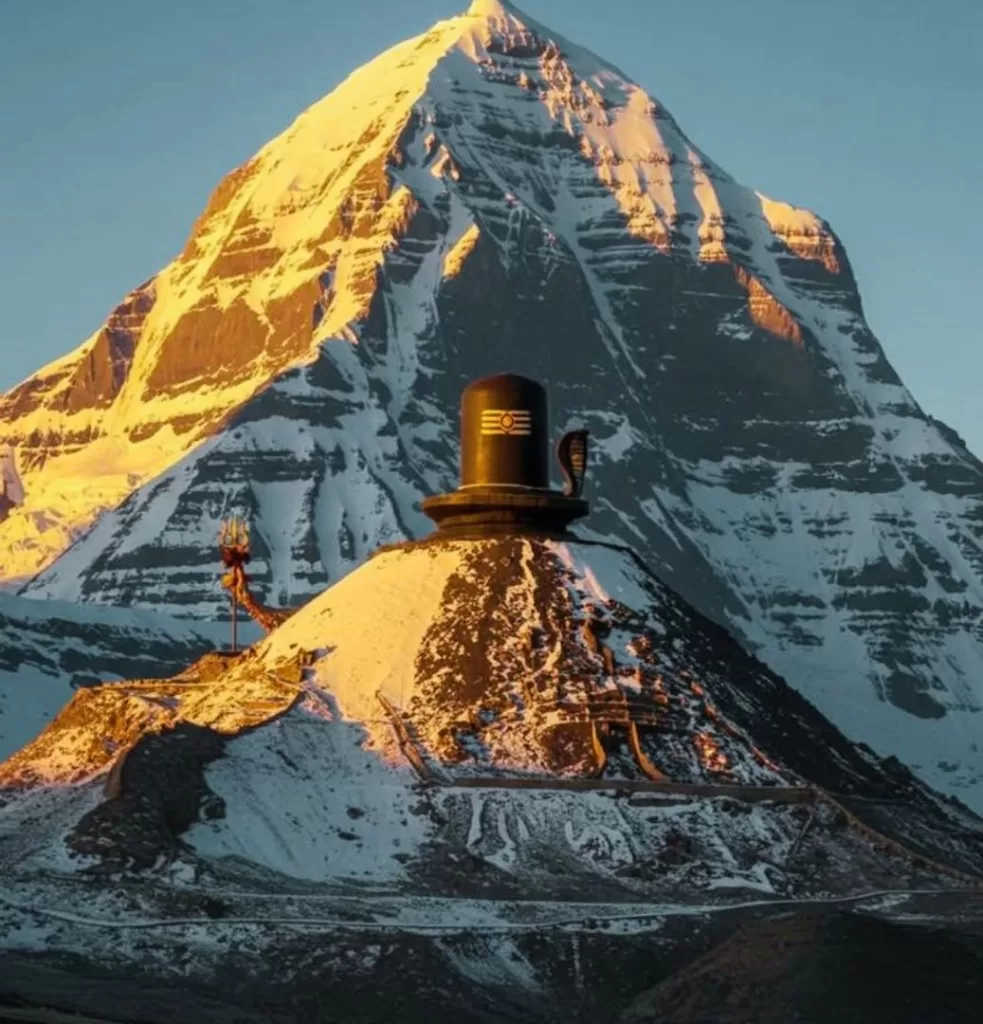
The height of Mount Kailash is about 6638 meters above sea level in Tibet Autonomous Region, China. It’s not one of the world’s highest mountains, but it certainly has a presence. It is almost symmetrical in shape and snow clad on its top with the appearance unlike any mountain in the Himalayas.
What really sets Kailash apart is its spiritual significance. It’s one of the few spots on Earth that’s considered holy by four different religions.
For many Hindus, Mount Kailash is seen as the home of Lord Shiva, known as the destroyer and transformer in the Hindu trinity. According to ancient texts, Shiva is believed to meditate there with his wife, Parvathi. Devotees truly believe that this mountain is the center of the universe.
Kailash and Demchok are considered to be one and the same in Buddhism, as Demchok is a deity that embodies ultimate bliss and enlightenment. The mountain is considered as a sacred mandala and one of the holiest places for pilgrimages in the world by Tibetan Buddhists.
According to the Jain beliefs, Rishabhadeva became liberated near the mountain which was his first Tirthankara. For people who follow Bon, the ancient pre-Buddhist religion of Tibet, Kailash is the spiritual heart of the universe.
Mount Kailash has come to be regarded as one of the most sacred mountains on earth because of the reverence of several faiths.
The Unclimbed Summit
Although the height of Mount Kailash is not so high as many mountains which have been conquered, it has not yet been touched. There are far fewer people than try to reach Everest every year, but Kailash has never seen a climbing expedition.
In the past, a couple of attempts were made to climb. Religious leaders were strongly opposed to such activities, however, stating that climbing the sacred mountain would be desecrating a holy place.
The tale of one of the most renowned stories is that of Reinhold Messner, who is considered one of the greatest mountaineers in history. According to the reports, he had once been offered the permission by Chinese authorities to climb the Kailash. But Messner said, out of respect for their spiritual significance, some mountains should be left unclimbed.
Climbing Mount Kailash is now largely banned. Visitors to the mountain can wander around but can’t climb to the top.
Consequently, Kailash has emerged as one of the last great mountains in the world that haven’t been climbed.
The Sacred Pilgrimage: The Kora
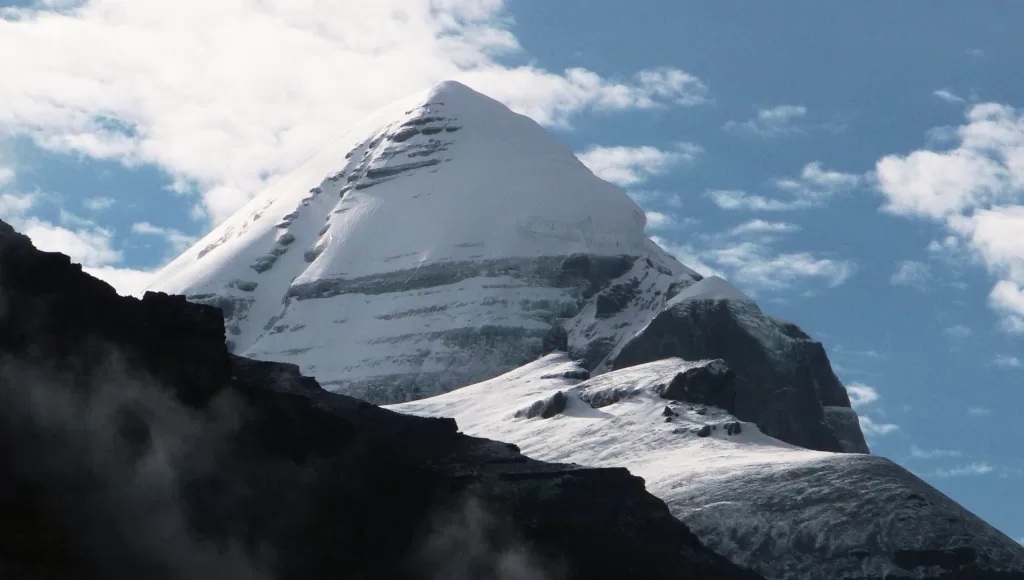
Pilgrims do not go up the mountain, but rather take a ritual around the entire Mount Kailash called the Kora.
The walk spans roughly 52 kilometers, taking pilgrims through tough terrain, over high mountain passes, and past breathtaking views. Many followers think that completing each Kora will wash away a lifetime of sins. In fact, some traditions say that if you do 108 circuits, you can achieve enlightenment.
The walk is very demanding. The hike goes up above 5600m, where oxygen levels are much lower than at sea level. But each year thousands of pilgrims make the journey in spite of the difficulties.
A few pilgrims make the trip even more difficult by falling into prostrations all over their bodies. They lie on the ground, stretch, stand and do it again along the route. It can take several weeks to complete the circuit this way.
The spiritual commitment of these pilgrims is more important than getting to the top.
Strange Legends Surrounding Kailash
The stories that circle Mount Kailash are a tale of fact and myth.
There is one such legend that has remained in the mountain that time runs differently around it. People have told of their hair and fingernails growing faster than normal while they were there. some claim that watches don’t seem to work there, or that time feels like it moves quicker than usual.
Tales of explorers attempting to climb the mountain but being disoriented, exposed to harsh weather and/or feeling too scared to come back down.
Tibetans believe that only one who is totally sinless could ascend Kailash. Anyone else trying to go up would meet with God’s judgment.
Such tales are unprovable, but have contributed to the mountain mystique.
The Perfect Pyramid Mystery
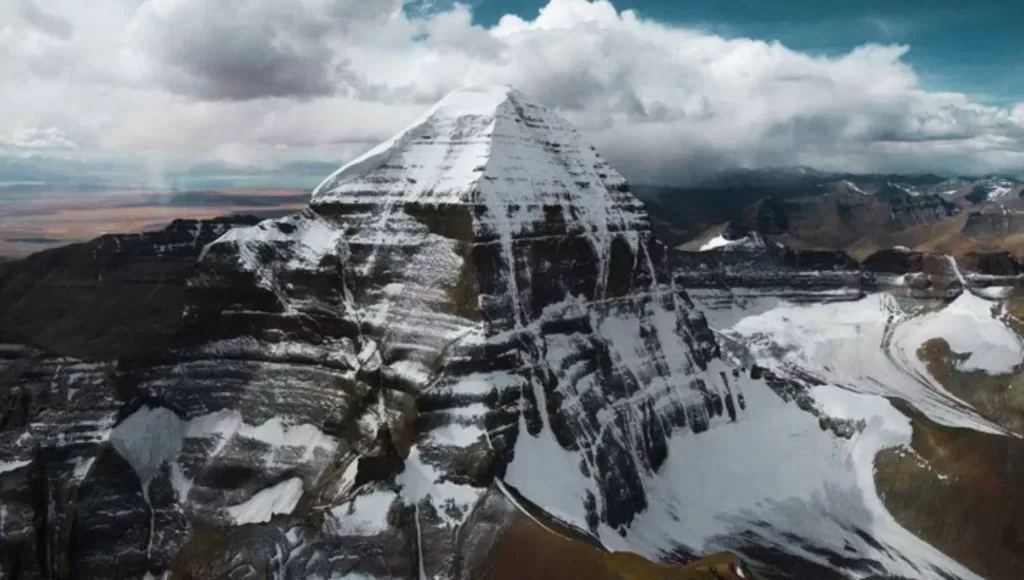
Another reason is that Mount Kailash is a peculiar shape.
The mountain looks almost like a pyramid from some vantage points. It has steep sides that look like the sides of a gigantic pyramid, and that’s why some researchers and conspiracy theorists believe Kailash may not be a natural mountain.
Throughout the years, theories have sprung up suggesting that the mountain may have been a human creation, a remnant of an ancient civilization, or even a part of a global network of enigmatic energy centers.
Other authors have suggested that Kailash may be a reference to Atlantis, aliens or subterranean cities.
However, geologists attribute the shape of the mountain to natural tectonic activity and erosion that has taken place over many millions of years. Science provides plausible explanations, but the unique beauty of the mountain still inspires speculation.
The Source of Life-Giving Rivers
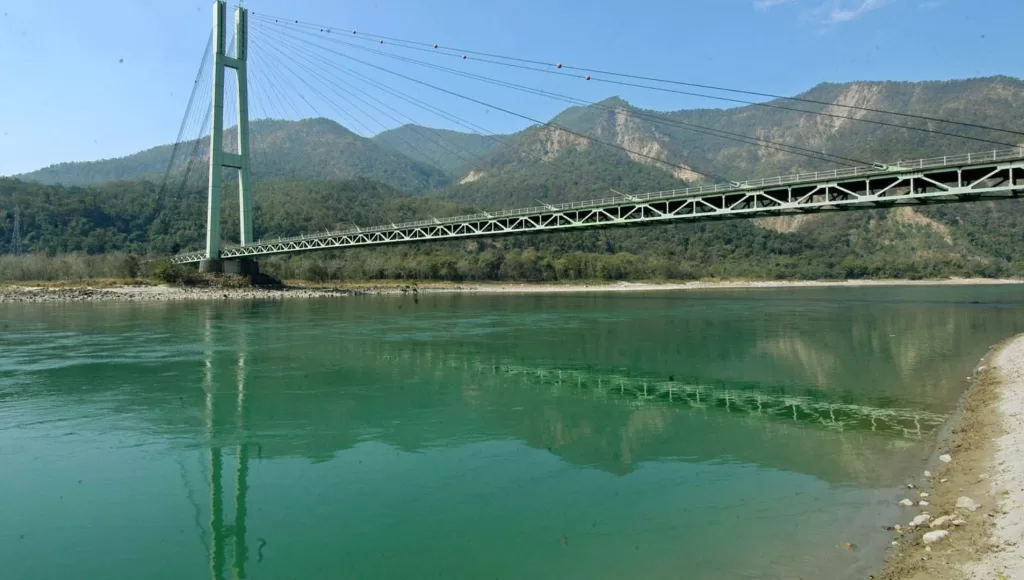
Mount Kailash lies in an extraordinary geographical location. There are 4 major rivers that arise in the surrounding areas:
- The Indus River
- The Brahmaputra River
- The Sutlej River
- The Karnali River
These rivers are responsible for the sustenance of hundreds of millions of people in India, Nepal, Pakistan and China.
This conjunction was considered by the ancient civilizations as proof of Kailash being the center of the world. It is termed the cosmic axis, through which heaven meets earth, in many religious texts.
The importance of the mountain as a source of water is heightened by its symbolic significance.
Science and Spirituality Meet
Mount Kailash is considered a geological curiosity, created by the tremendous forces that formed the Himalayas. It serves as a source of information about the geological history of the earth, due to its location, climate and its terrain.
But science can’t explain the emotional effect the mountain has on visitors.
Many pilgrims report experiencing a sense of calm, reverence and spiritual awakening during their visit to Kailash. There are numerous references to a strong energy around the mountain. These experiences may be of the faith, psychological, altitude or anything else.
It’s really the blend of science and spirituality that allows Kailash to resonate with people from all walks of life.
A Mountain Beyond Conquest
Nowadays, when we think of exploration, we often picture triumphs and victories—climbing mountains, breaking records, and pushing limits. But then there’s Mount Kailash, which tells a different story.
People haven’t reached its peak not because we can’t, but because so many believe that some places should be treated with respect instead of being conquered. It’s a unique symbol of a natural beauty safeguarded by shared reverence and spiritual significance.
Kailash serves as a reminder that not all mysteries need unraveling and not all peaks need to be climbed.
Conclusion about Mount Kailash
Mount Kailash is still one of the biggest enigmas on our planet. Its revered status, the fact that no one has ever climbed its peak, the odd stories surrounding it, and its stunning beauty all contribute to its reputation as one of the most intriguing spots on Earth.
Kailash is one of those places that really gets people thinking, no matter how you approach it—religiously, historically, geographically, or even just out of sheer intrigue. This mountain is wrapped up in ancient stories and still holds a lot of mysteries. It’s where the worlds of science and spirituality intersect, leaving us with more questions than answers.
In a time when we’ve explored nearly every inch of the world, Mount Kailash remains unique, keeping its secrets hidden beneath a blanket of snow and reminding us that some mysteries are meant to stay just that.





0 Comments