
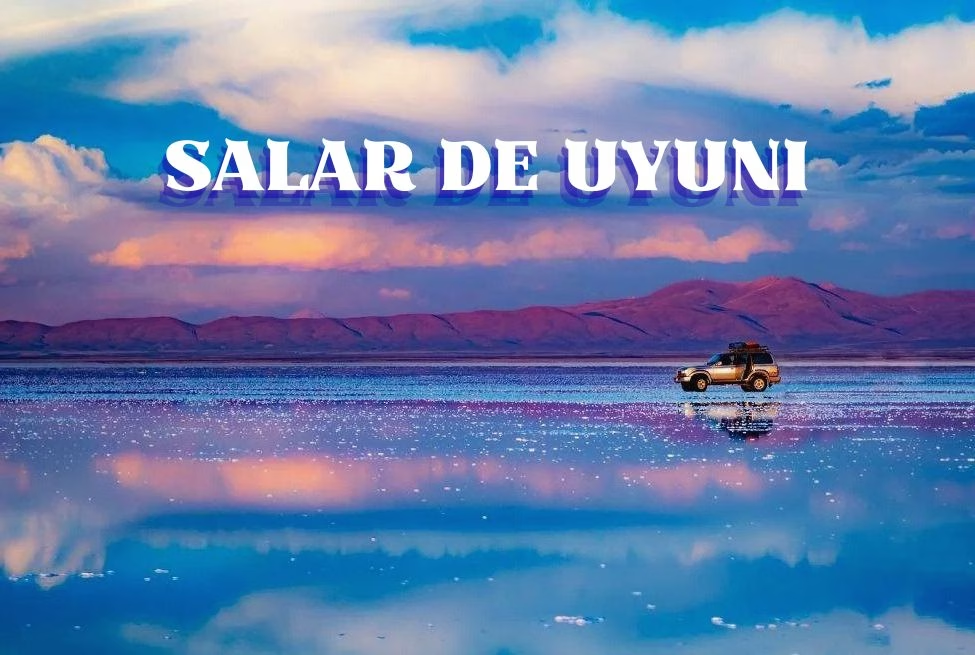
Salar de Uyuni is not only Bolivia’s number one tourist draw, it’s one of the biggest tourist attractions in South America as well. The Salar de Uyuni is not only Bolivia’s number one tourist attraction, but one of South America’s, too, with the honor of being the world’s largest salt flat.
The stunning white flats at the bottom of the Andes mountains range are renowned for their breathtaking mirror-like effect and for the fact that they can make your distance perception slip, so much so that you’ll have trouble finding a social media snap of the natural wonder that doesn’t have people running from dinosaurs or eating each other on a spoon. They’re huge and colorful enough to be spotted from space. The thought of working with these huge, honeycomb lands, though, can be a little daunting—so here’s how to make the literal salt of the earth a better experience.
What is Salar de Uyuni
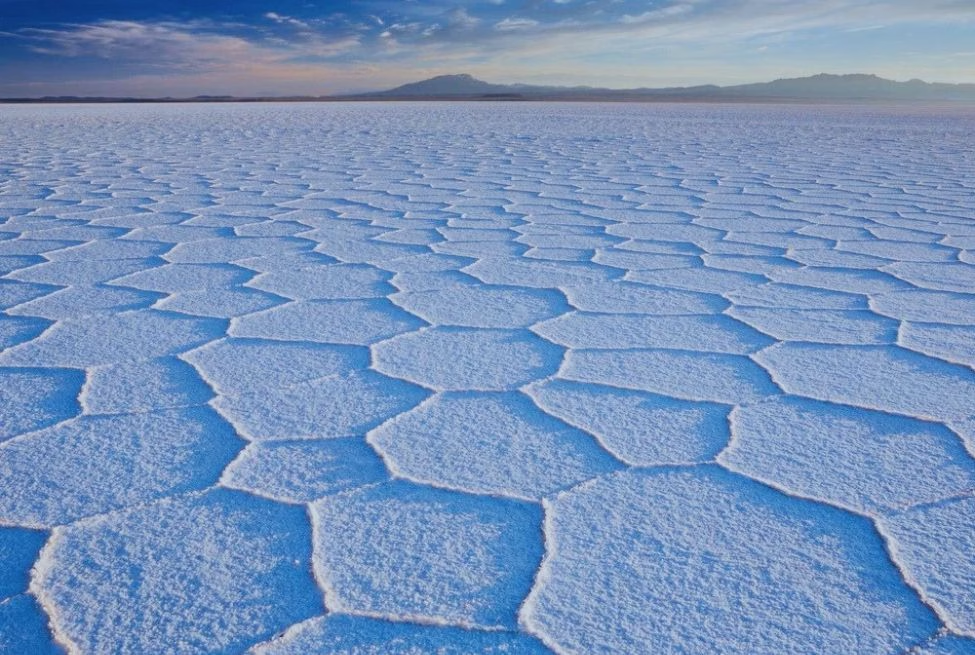
The salt in the Salar de Uyuni crystallizes in the form of a hexagon when it is dry. It’s the world’s largest salt flat, located in Bolivia.
The Salar de Uyuni is said to be formed when a prehistoric lake dried up, and is believed to contain 10 billion tons of salt. When dry, it is hexagonal in shape, like a honeycomb and when wet, produces a dazzling mirror effect. The world’s largest salt flat is located in the southwest of Bolivia near the Bolivia-Chile border and is very close to another world record, the Atacama Desert, the driest on earth.
What is the best time to visit Salar de Uyuni
Photographers go to the Salar de Uyuni during the wet season.
Depending on what you want to observe the wet and dry seasons have entirely different effects on the salt.
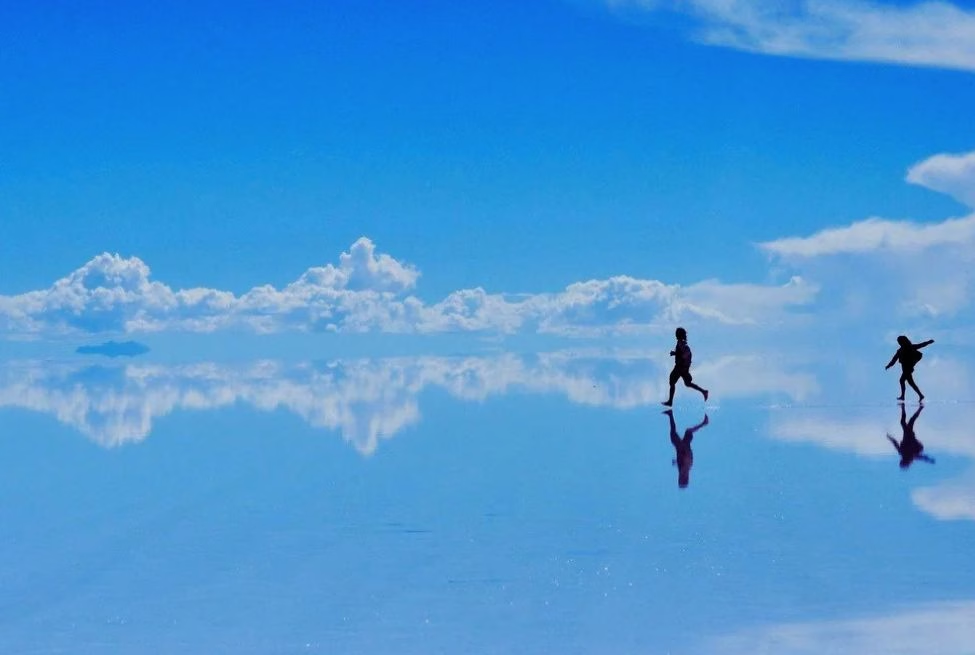
The best season to visit the Salar de Uyuni will depend on your preferences for what you want to do there, but this natural wonder is amazing any day of the year. The salt flats are the world’s largest natural mirror during the wet season from December to March.
But, in making amazing pictures, sections of the flat may become inaccessible due to the heavy rainfall. So, to ensure the best weather for exploring, head for September to December when it is the driest of the time of year, and the sun is forming photo-worthy honeycombs on the surface.
What is the best way to take pictures of Salar de Uyuni
- Using perspective can help create some interesting shots.
- Use props and perspective; let your guide assist.
As for photos, you may have seen photos of Salar de Uyuni on Instagram; visitors enjoy making the best of the flat white surface and putting their cameras to the test for some fun photo tricks. But how to obtain the best photos of Salar de Uyuni. The devil is in the details.
First, choose a season; as you’ll have guessed, rain season is ideal for the mirror-like reflection images, while dry season is for honey combed salt images. Secondly, be low to the ground and take advantage of angles and perspective. But working in props isn’t a bad idea, either. Whether you’re looking to make your friends, who are far away from the camera, look like they’re drinking from a giant water bottle, or they’re being chased by a plastic dinosaur, this is for you.
Last but not least: If you are unsuccessful, ask your guide to help you out. They know their way around taking great photos of the Salar de Uyuni at any time of year.
What’s the ideal duration at Salar de Uyuni
The longer the time the better.
Visiting the flats is long enough a day, but if you allow yourself to go 2–3 days, you can dive deeper.
If you have limited time in Bolivia, the Salar de Uyuni can be easily explored in a single day, even by flight from La Paz in the morning and enjoying the day on the flats before heading back to the airport in the afternoon, to enjoy the sunset.
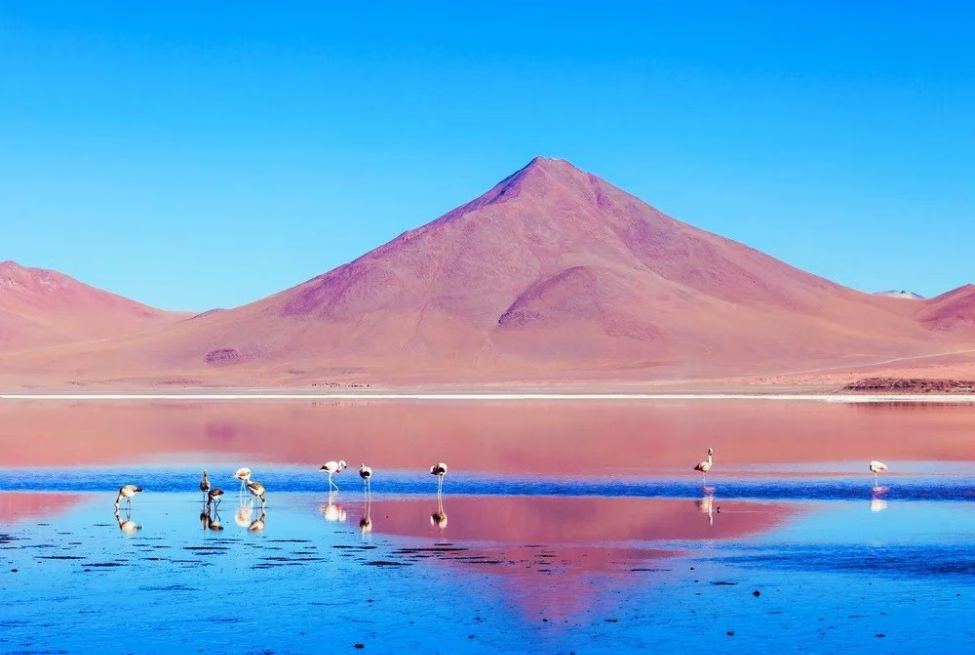
One day is adequate to see just the flats and the Train Cemetery (Cementerio de Trenes); two to three days in Uyuni is enough to take day trips to the surrounding Altiplano Desert where you will find geysers, hot pink lagoons to salt pools and wildlife from flamingoes to vicunas. The town of Uyuni is small, well-equipped but not a place to waste over an hour and a half on.
Let’s go on a tour to Salar de Uyuni
If you want to be the most convenient, you can book a one-day tour to Salar de Uyuni.
Yes, Day Trips help you avoid the stress of arranging transportation and admissions.
A visit to the Salar de Uyuni has a few moving parts, and it’s best to visit with a day trip in order to experience the natural wonder. Usually, excursions will go to the salt flat at sunrise to catch the salt flat’s well-known mirror effect before the sun evaporates it.
They also have numerous tips for you about taking the perfect photo with the interesting elements of perspective bending, such as visiting the Train Cemetery (Cementerio de Trenes), a strange collection of rusted, abandoned trains. And, 4WD is the most common way of reaching this rough terrain.
Don’t forget, however, that all-terrain vehicles are not the only choice for exploring the flat: Cycling tours have been on the rise in popularity, and are a very unique way for cyclists to discover the flat. However, it’s easy to lose track of the seemingly endless expanse of white, so choose the tour option to make sure you don’t get lost come sundown with the salt.






0 Comments