
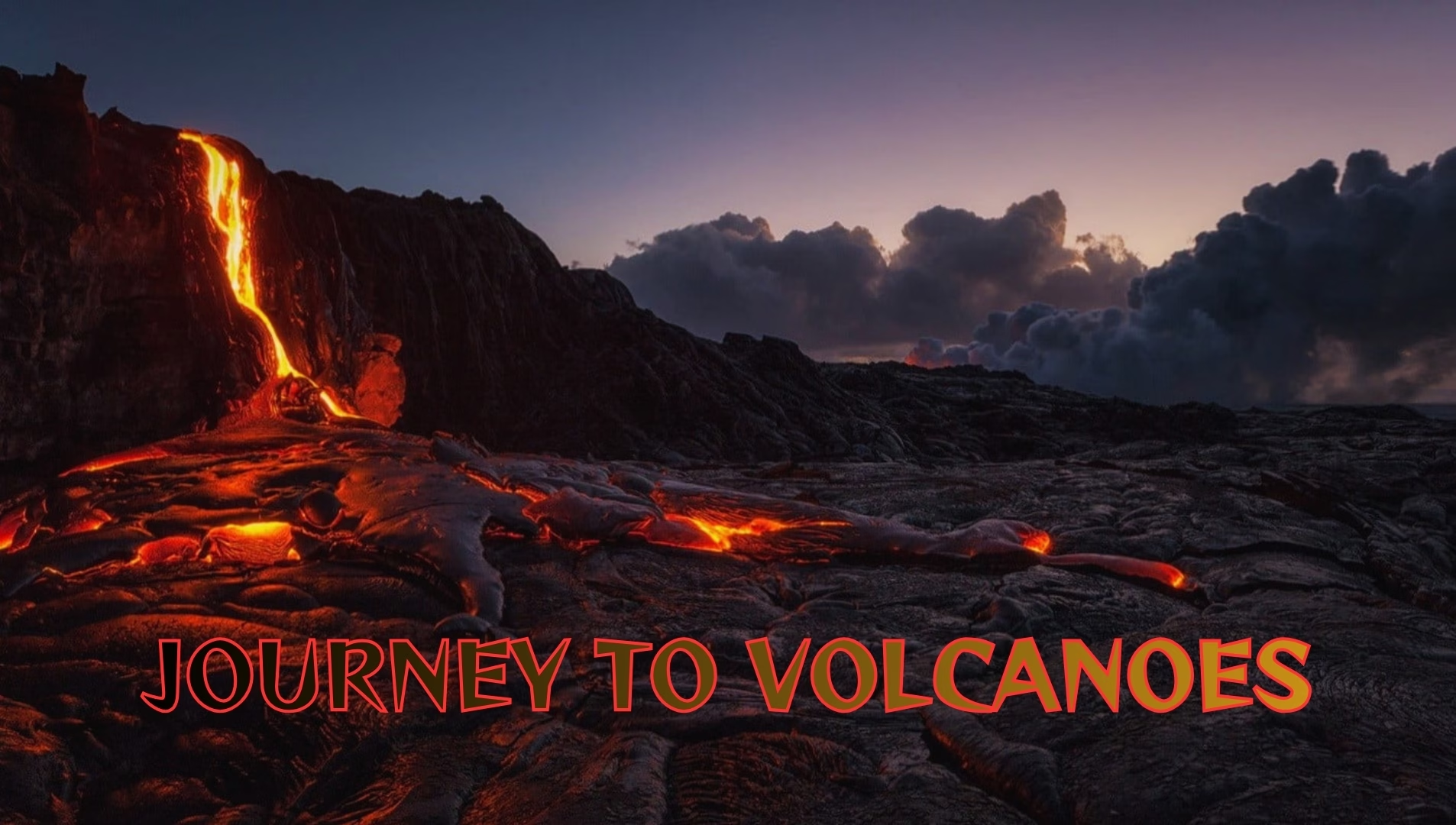
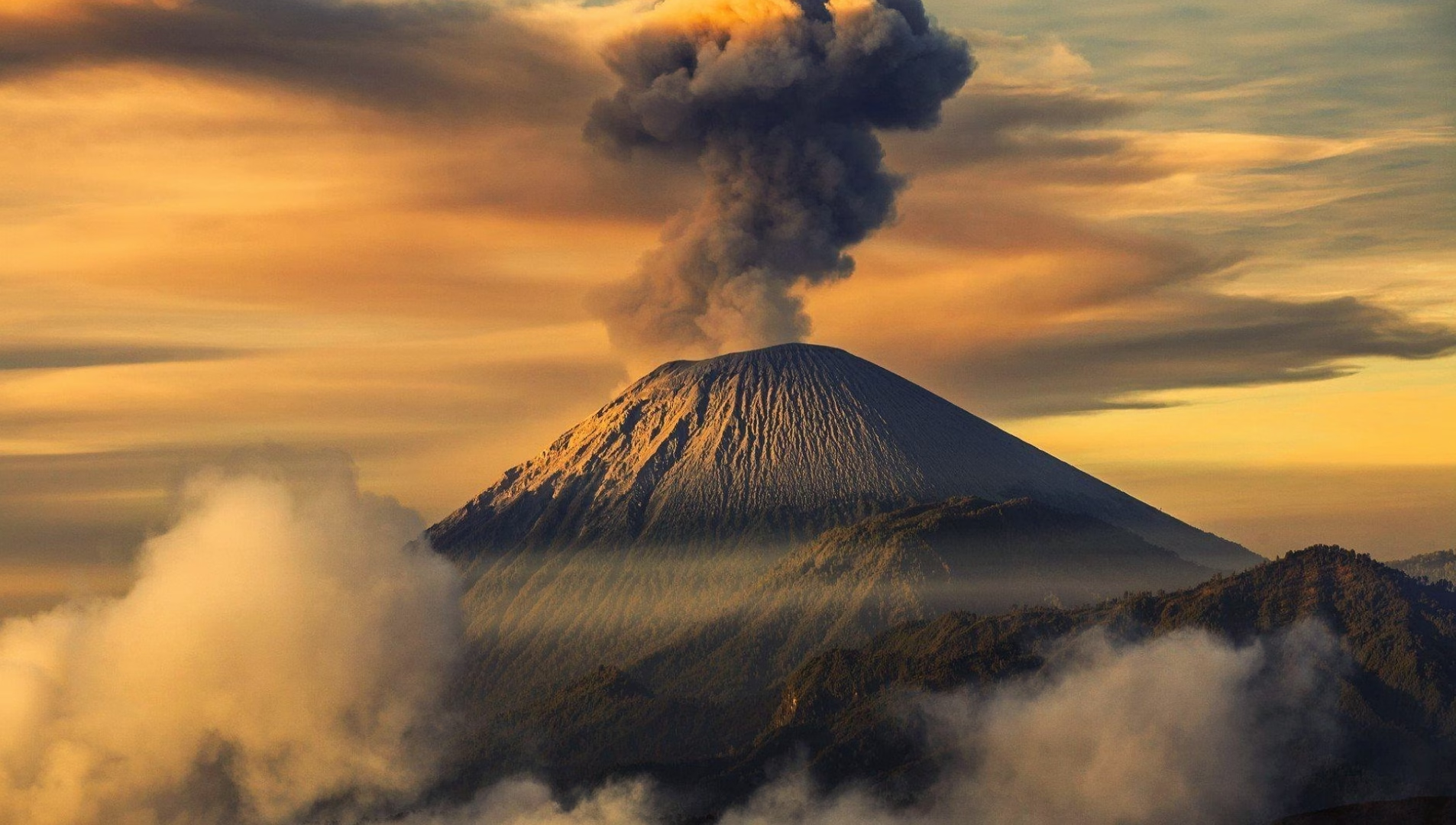
One of the most powerful and interesting forces on earth is volcano. They can form mountains, make islands, change the shape of the land and pour rivers of molten rock onto the earth. Being near an active volcano feels like being in another world of smoke, glowing lava, ash, roaring sounds and stunning vistas for the adventurous and the explorer.
Volcano exploration is not just about getting close to fire, however. It’s a trek into some of the worlds most extreme environments where nature can change in mere minutes. The best of everything from volcano hiking to watching lava glowing under a dark sky makes volcano exploring just a lot of fun.
A Journey Into Earth’s Fiery Interior
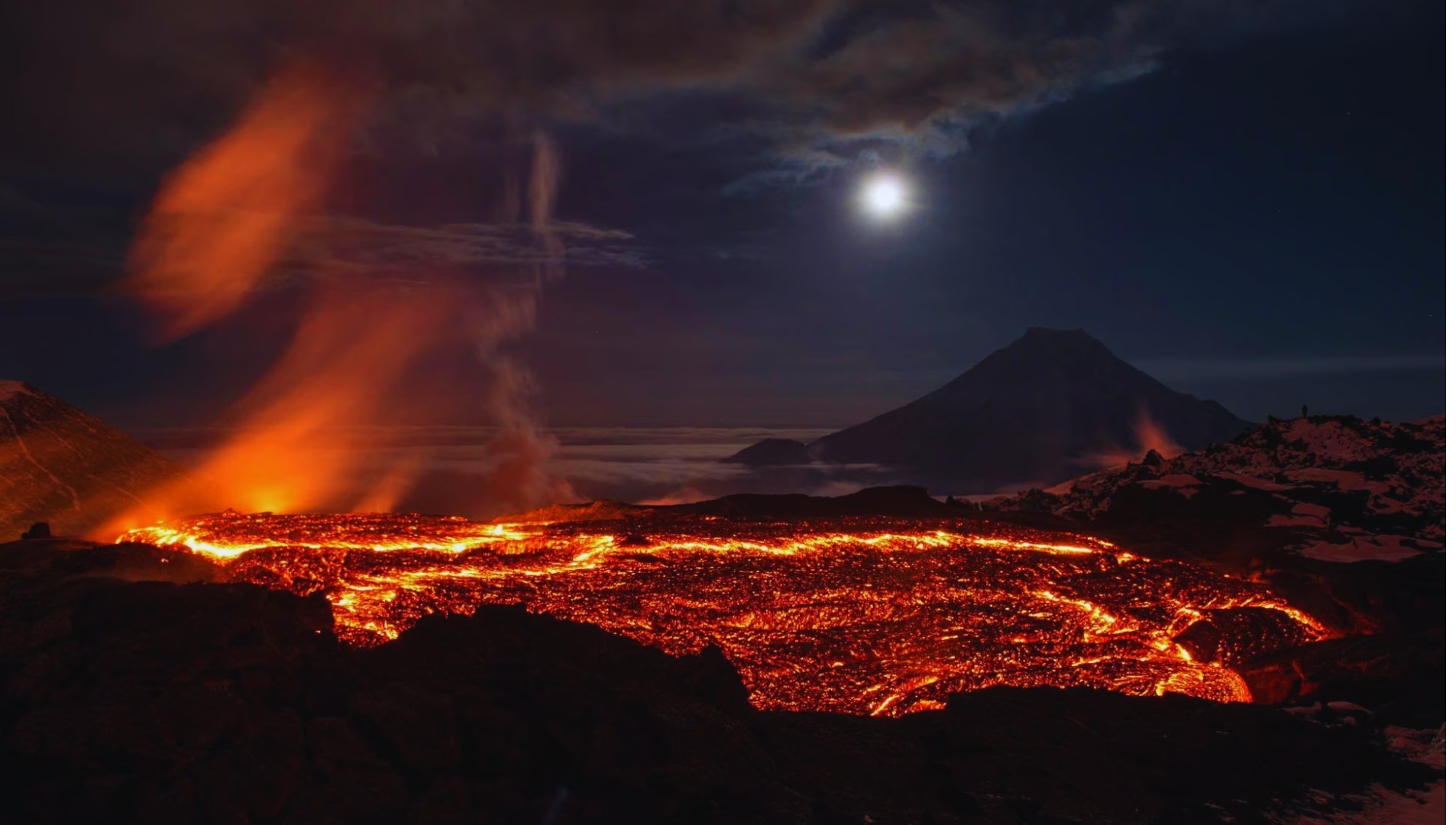
In order to appreciate the fascination of volcanoes, it is helpful to appreciate what is underneath our feet. Under the Earth’s surface, there is a lot of heat which may melt rock and form magma. This magma can then rise through the planet’s crust if there are cracks or openings in the crust.
When magma reaches the Earth’s surface it turns into lava.
The eruption of volcanoes can be very different. Some make relatively slow moving lava flows, others make explosive clouds of ash, volcanic gases and pieces of rock. This volatility is one of the reasons that volcanoes are so feared and fascinating to humans throughout history.
A volcano is no ordinary geologic feature for today’s adventurer. It’s a constantly mutating terrain where one can witness the Earth’s geological processes almost in real time.
Hiking Across Volcanic Landscapes
Volcano hiking is one of the most thrilling volcano activities.
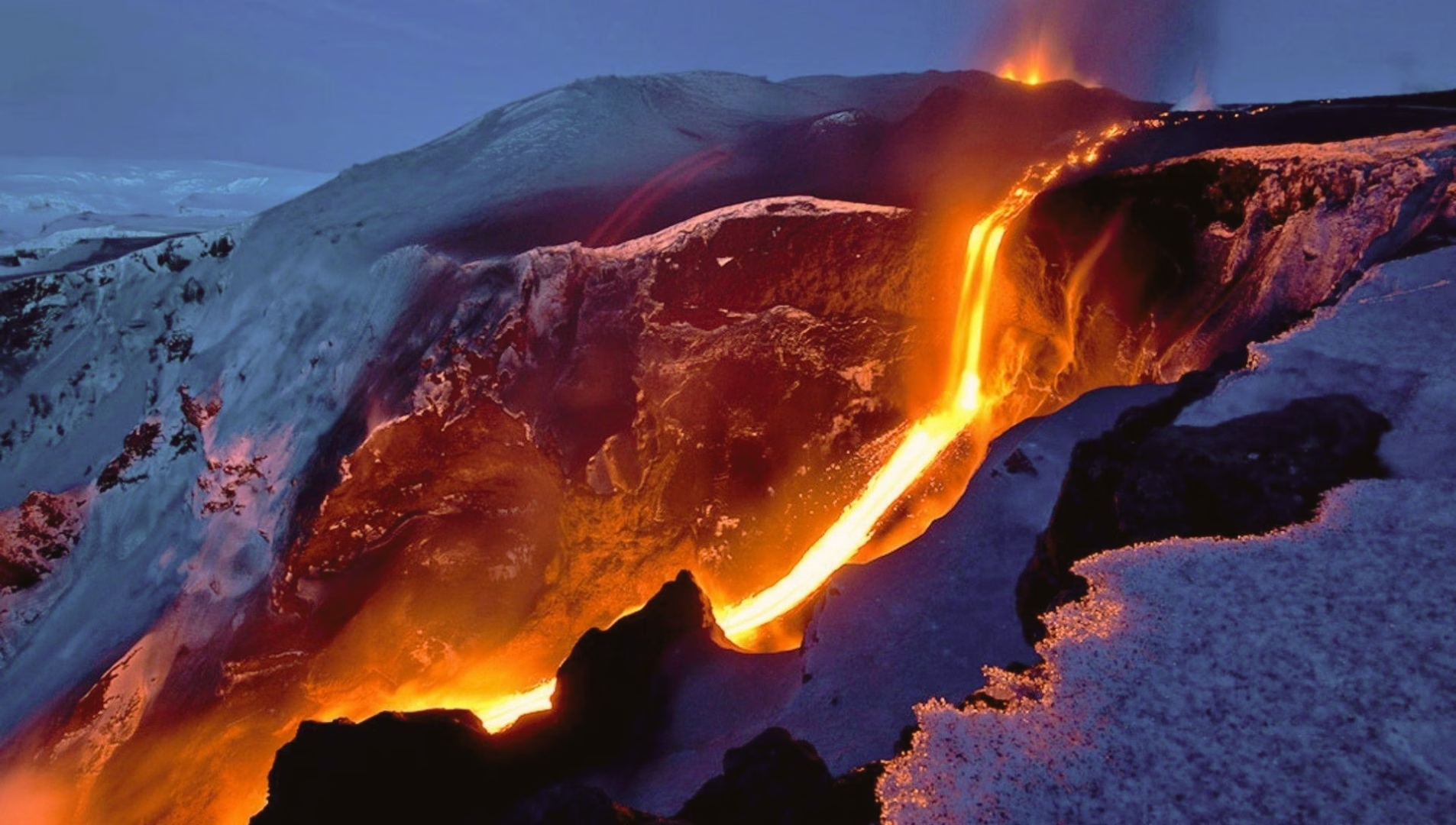
The volcanic terrain may be very different from a normal mountain. Trails instead of green forests and flat grassy slopes might be black volcanic rock, hardened lava fields, steaming ground, ash-covered trails or huge craters.
Some volcanoes have set up hiking routes for people to enter certain areas to observe the volcanoes safely. These walks can vary from a fairly easy walk to a tough climb and extensive stamina training.
It can be particularly surreal to cross an old lava field. Folded ridges formed by old volcanic eruptions are scattered across the land, and in some places look like frozen waves. Wherever there is vegetation, it is slowly making its reappearance, showing the ability of life to emerge after volcanic activity.
One of the most amazing aspects of volcanic environments is that of destruction and renewal.
Watching The Lava Glow After Dark
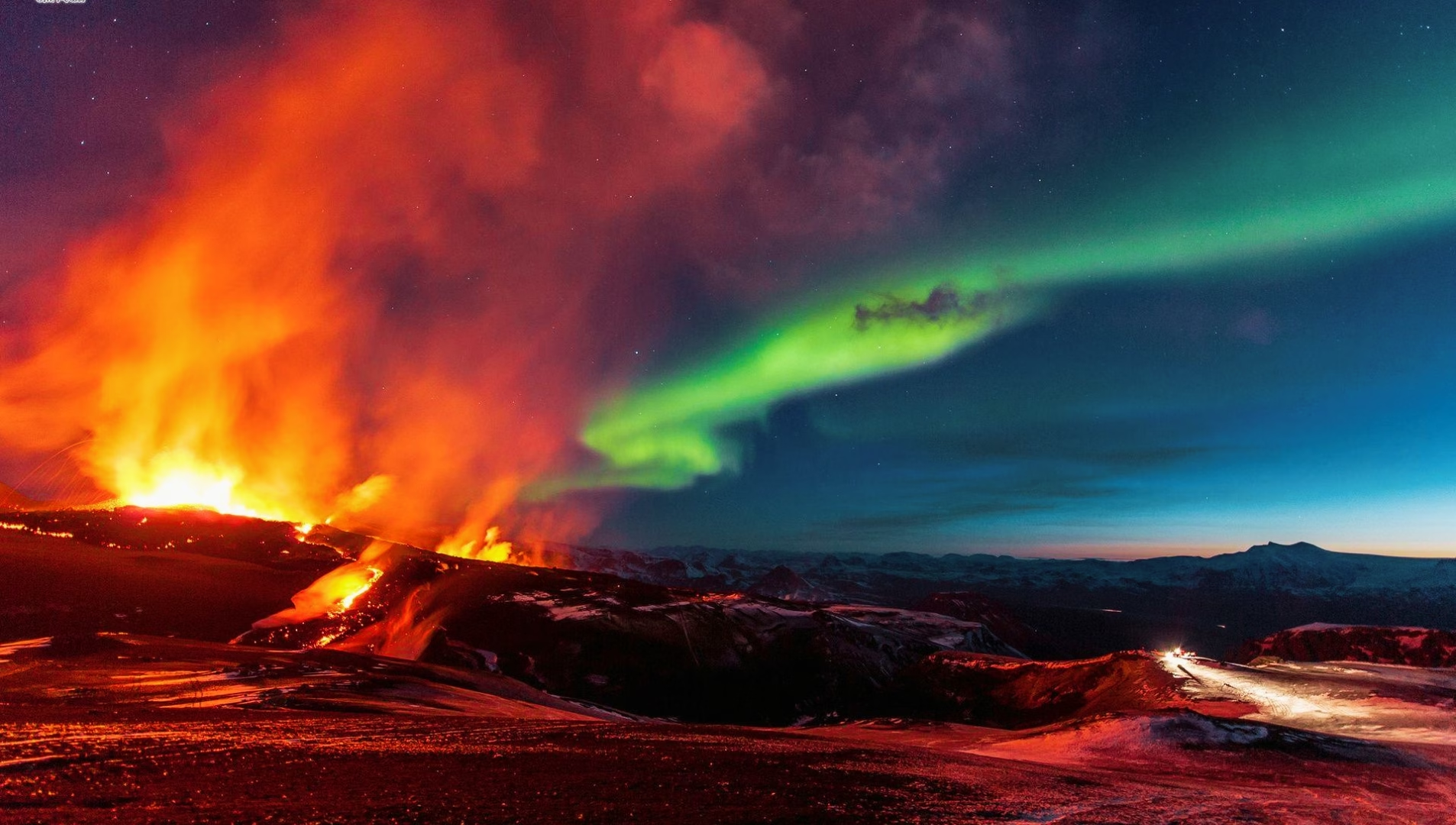
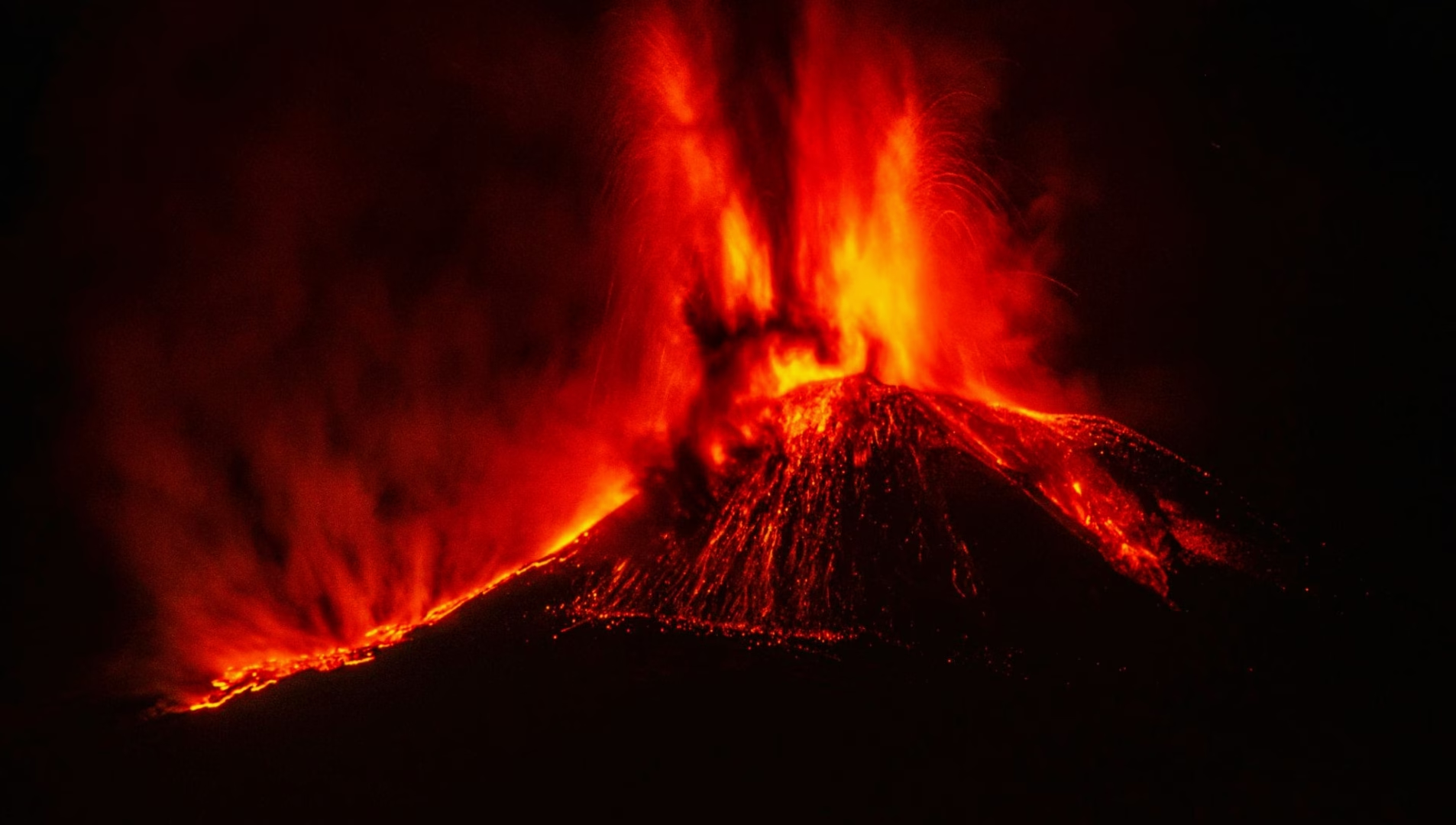
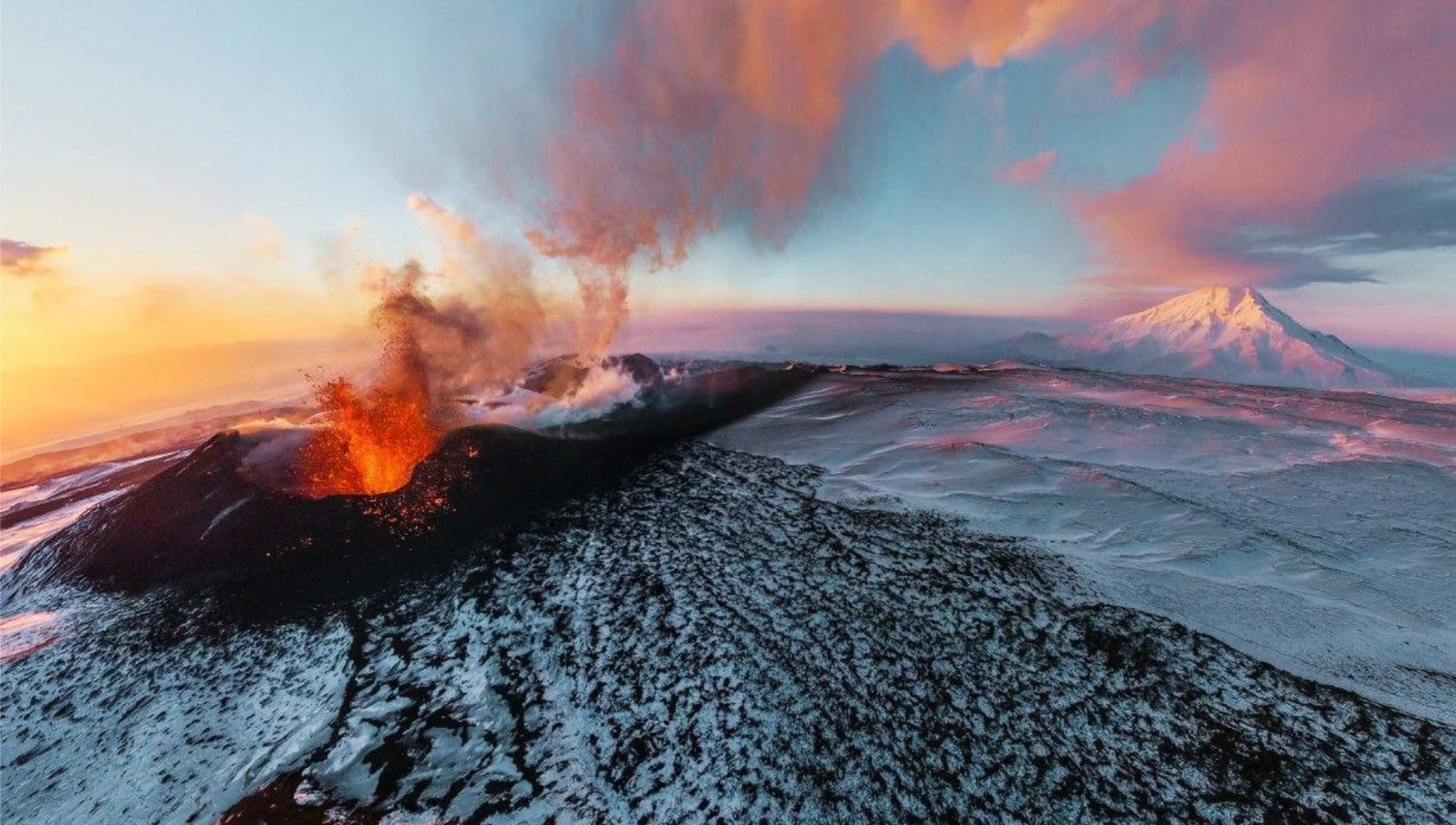
There aren’t many natural phenomena quite as dramatic as the glowing lava at night.
The lava can be dark red, orange or even black in colour when it is hot enough and/or of an appropriate composition during daylight. When it gets dark, however, it glimmer much more. The rivers of molten rock may look much like a stream of fire running through a dark-colored background.
Volcanic activity at night can provide some amazing photographic opportunities and adventure for the traveler. The fire is orange, the surrounding mountains are dark and smoke and volcanic gases are rising into the night sky.
This experience is not to be taken lightly however. Lava may be very hot, and volcanic gases very hazardous even if the lava itself seem fairly distant. Passers by must only view active lava from designated and monitored areas.
The Adventure of Standing Beside a Crater
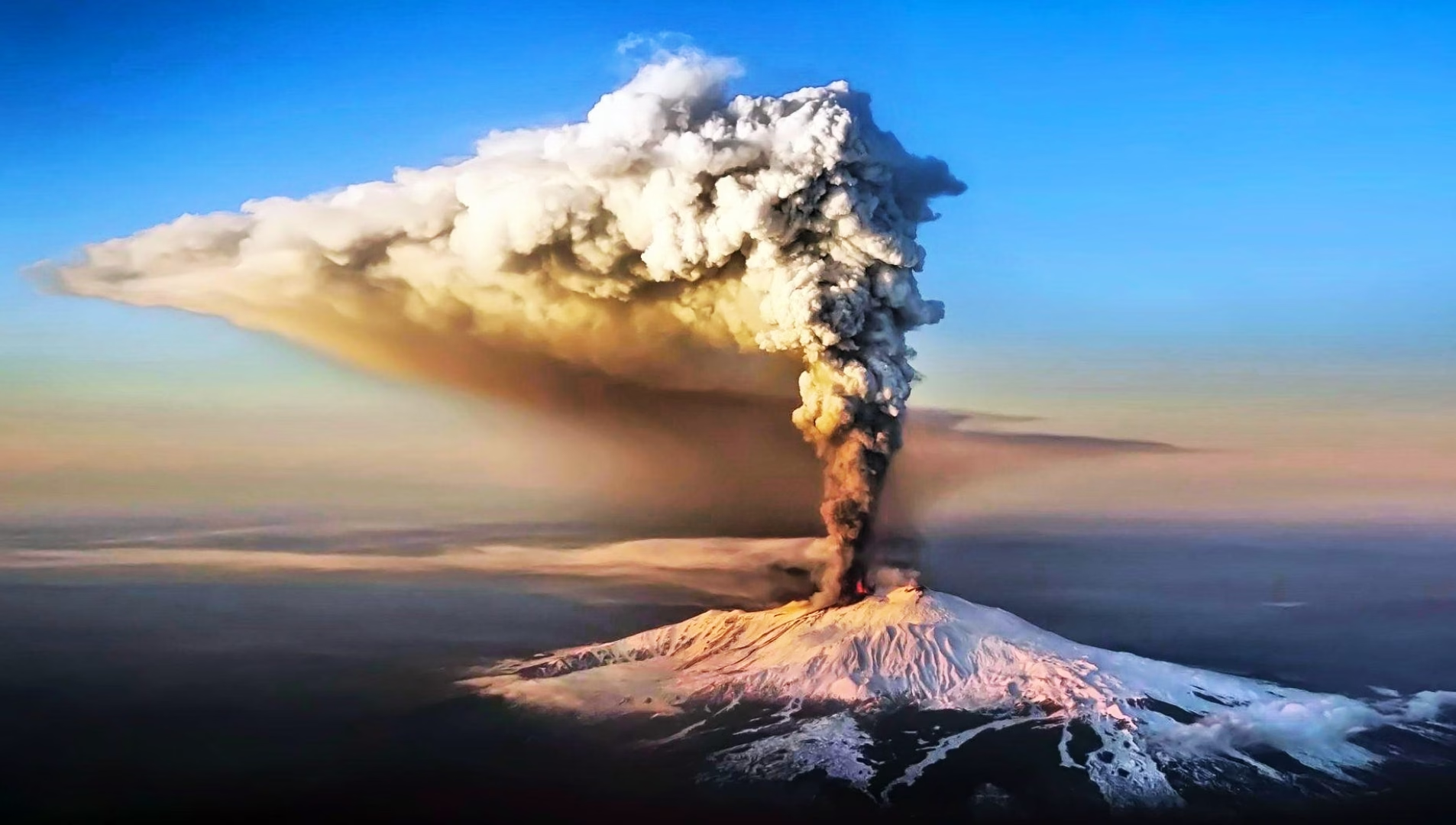
Volcano Expeditions usually have a volcanic crater as their focal point.
The crater is beautiful and yet frightening to look into. The visitors may witness several steam emission vents, coloured mineral deposits, clouds of gas or even molten lava below the volcano, depending on the volcano.
The colour of some of the lakes in volcanic craters is turquoise to dark green due to the minerals and volcanic chemicals dissolved in them. Others are situated at the foot of large cliffs which were formed by earlier eruptions.
The scale will be hard to figure out until they’re standing there. A crater can be hundreds or thousands of meters across, giving a good idea of the power of past eruptions.
Crater landing is an event that can be the highlight of the journey for the explorer.
Exploring the World’s Volcanic Giants
Great adventures at Volcanoes can be experienced in many parts of the world.
The volcano of Mount Etna in Sicily is one of the most famous active volcanoes in Europe. It’s also massive, so it dominates the landscape around it, and the slopes are good for guided explorations.
Even though Japan’s Mount Fuji is presently dormant, it shows how much volcanoes can become a part of the culture and history. Its unique shape, which is symmetrical, makes it one of the most recognizable mountains in the world.
Kilauea, located in Hawaii, is a volcano that has long been a source of fascination for scientists and tourists alike. The surrounding area offers an awesome perspective on the ways eruptions can shape and alter terrain.
Another amazing volcanic landscape in Iceland is found in a dune area. Located at a large tectonic plate boundary, the country features volcanic mountains, lava fields, geothermal areas and spectacular landscapes formed by fire and ice.
The volcanic adventure experience is different in each destination.
Volcanoes Beneath the Ocean
Some volcano adventures occur off the land!
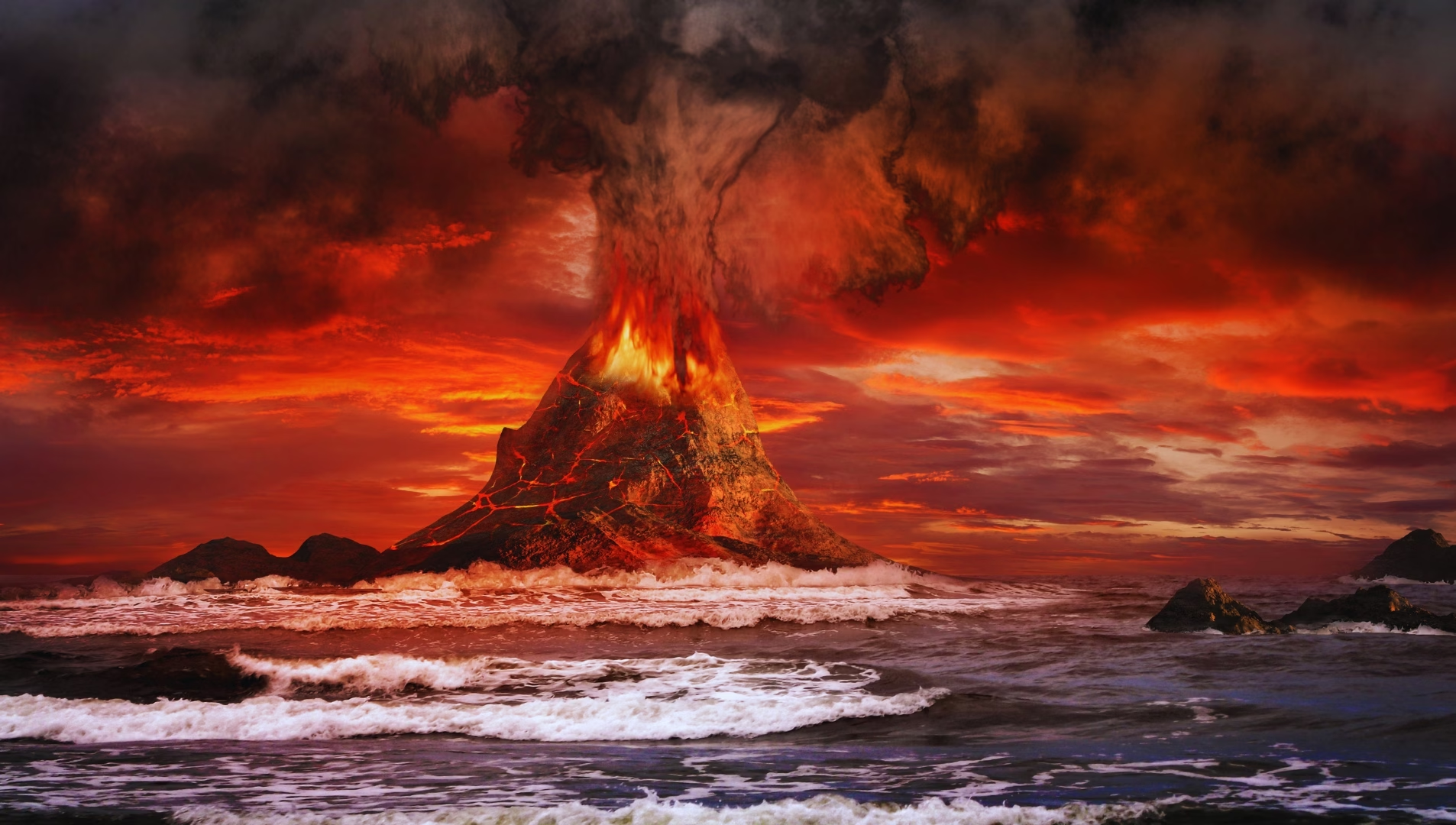
A vast majority of the Earth’s volcanic activity is thought to occur under the oceans. Volcanoes that erupt underwater can build up new land and in very long periods of time can cause the formation of new islands.
Underwater Volcanic environments are much more difficult to explore than hiking a mountain. Unusual rock formations, hydrothermal vents, extreme temperatures, and ecosystems that can live without using the traditional way of sunlight may be encountered by divers and research teams.
Hydrothermal vents are of special interest. They emit mineral-laden, super-heated water from beneath the earth and host special ecosystems of organisms.
These environments can reveal clues to how life might survive under extreme conditions, and maybe how life looks on other worlds, for scientists.
The Science Behind the Adventure
There’s more to volcano exploration than excitement! It also provides valuable scientific information.
Volcanologists use instruments to measure earthquakes, ground deformation, gas emissions, temperature changes, and more to monitor volcanoes. These observations can aid in determining if a volcano is getting more active.
Modern technology has enabled volcanic exploration to be safer and more informative. Satellites can make observations from space, helicopters can take photographs from risky locations and instruments can be placed in remote locations to gather data that does not involve risking the life of the researcher.
Each expedition could help in understanding volcano behaviour.
The Hidden Dangers
Volcanoes can sometimes be considered beautiful and overlooked.
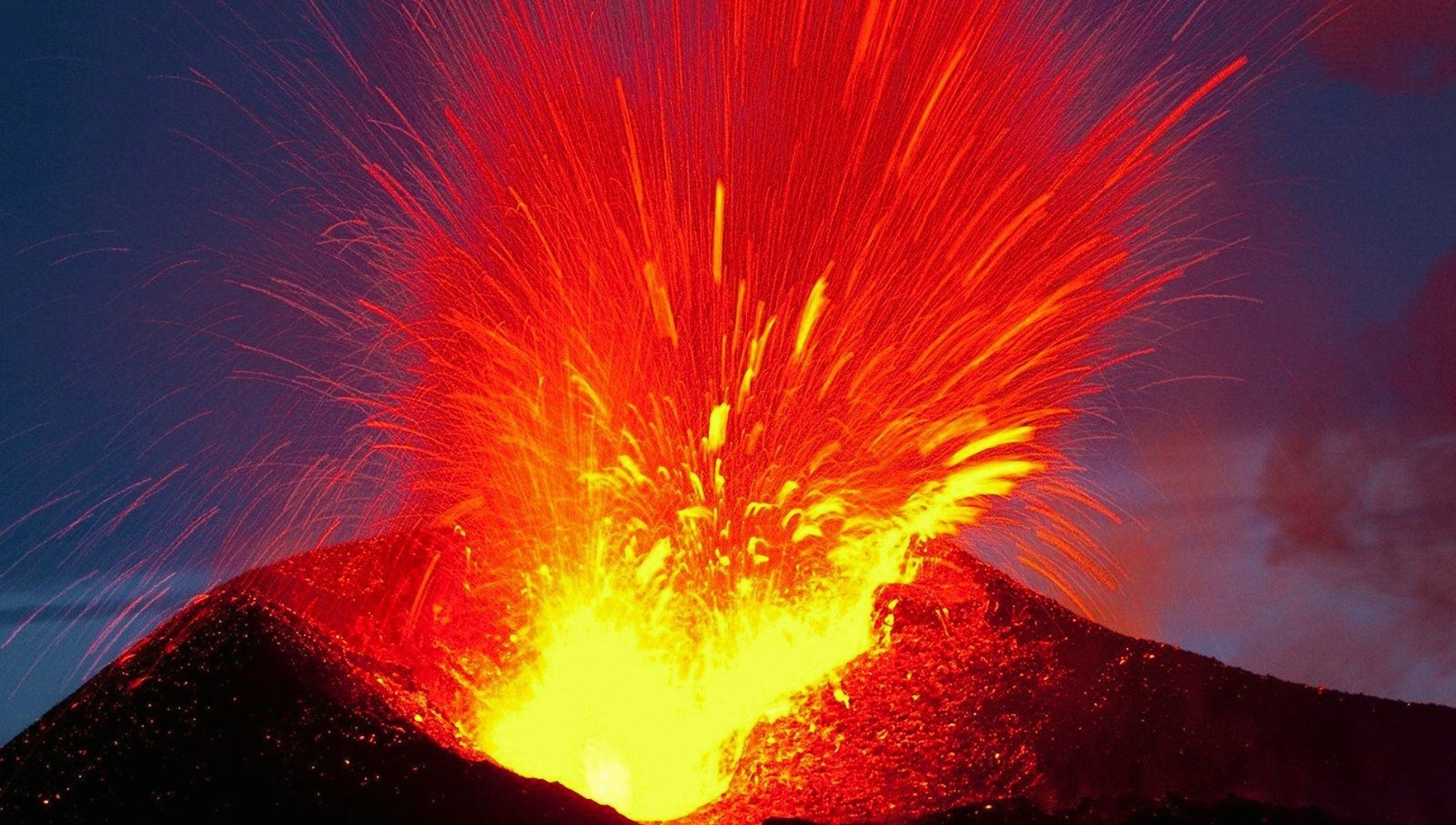
Toxic gases, rockfalls, ash fall, rapid explosions, lava flow, landslides and very hot areas are all possible at an active volcano. Some volcanoes that do not appear to be active may still have hidden dangers.
Lows may collect volcanic gases and unstable ground can collapse at any time. There are also occasional changes to weather or visibility in some volcanic areas.
Therefore, safety elements and barriers should never be disregarded or ignored for the sake of a better photo, and restricted areas should never be trespassed upon for reasons of volcano exploration.
It is best to stay with the local authorities, park officials and guides who have experience in the area. The situation around volcanoes can develop rapidly, and one day safe, area may turn out to be dangerous later.
Life After an Eruption
The most intriguing feature of volcanoes is what happens after they are destroyed.
During an eruption forests can be buried, fields can be blanketed with ash, and entire landscapes can be changed. But with the passing years a new life starts to creep back in.
Newly formed volcanic surfaces can provide an opportunity for small plants to become established. After the insects, the birds come. Larger plants or animals may be re-established at some point in time.
This process took place over a long period of time, a testament to the amazing resilience of nature. A lifeless landscape can turn to a flourishing ecosystem in time.
Volcanoes are thus a force of destruction and a force of creation. They destroy the existing environments, and they create new land as well.
The Human Fascination With Fire
Volcanoes have been with the human species for thousands of years. In ancient civilizations, volcanoes were often thought of in terms of myths and legends, and were believed to be the home of gods, spirits, or other supernatural entities.
Stories, movies, scientific expeditions, photography and adventure tourism are still inspired by volcanoes today.
This may be because volcanoes show us something we are otherwise not aware of. Earth’s mighty forces usually work imperceptible to human eyes, this time they come on the surface. Those forces are brought to the surface for a moment in a volcanic eruption.
Face to face can have a strong sense of perspective.
Preparing for a Volcano Adventure
Preparation is a serious matter for anyone planning an expedition in a volcano.
It is important to do some research on the volcano’s current activity. Conditions of the weather and trail closures, as well as eruption warnings and local regulations, should be reviewed prior to embarking on a trip.
Footwear and protective clothing should be determined by the environment in which they will be worn, as should navigation equipment, water, and other necessary equipment. Visitors are also cautioned not to stray from groups as directed and not to venture into any restricted areas.
Most of all, it is important to everyone who ventures into the field to realize that there is nothing to be gained by coming as near as possible to the volcano. The objective is to feel its strength without taking undue chances.
Conclusion
A volcano tour is a fantastic blend of adventure, science, beauty and danger. These hikes offer a unique chance to see the power of Earth, whether you’re strolling on ancient lava fields, hiking up volcanic slopes, or watching glowing lava beneath a starry sky.
But volcanoes must be feared. The landscapes in which they live can be as calm one day and as dangerous the next. Responsible exploration involves adhering to safety protocols, listening to local authorities and keeping in mind the nature is the one that’s in control, not the explorer.
Volcanoes are a once-in-a-lifetime adventure for people with a taste for adrenaline; they’re a chance to see the living, moving earth under our feet.




0 Comments