
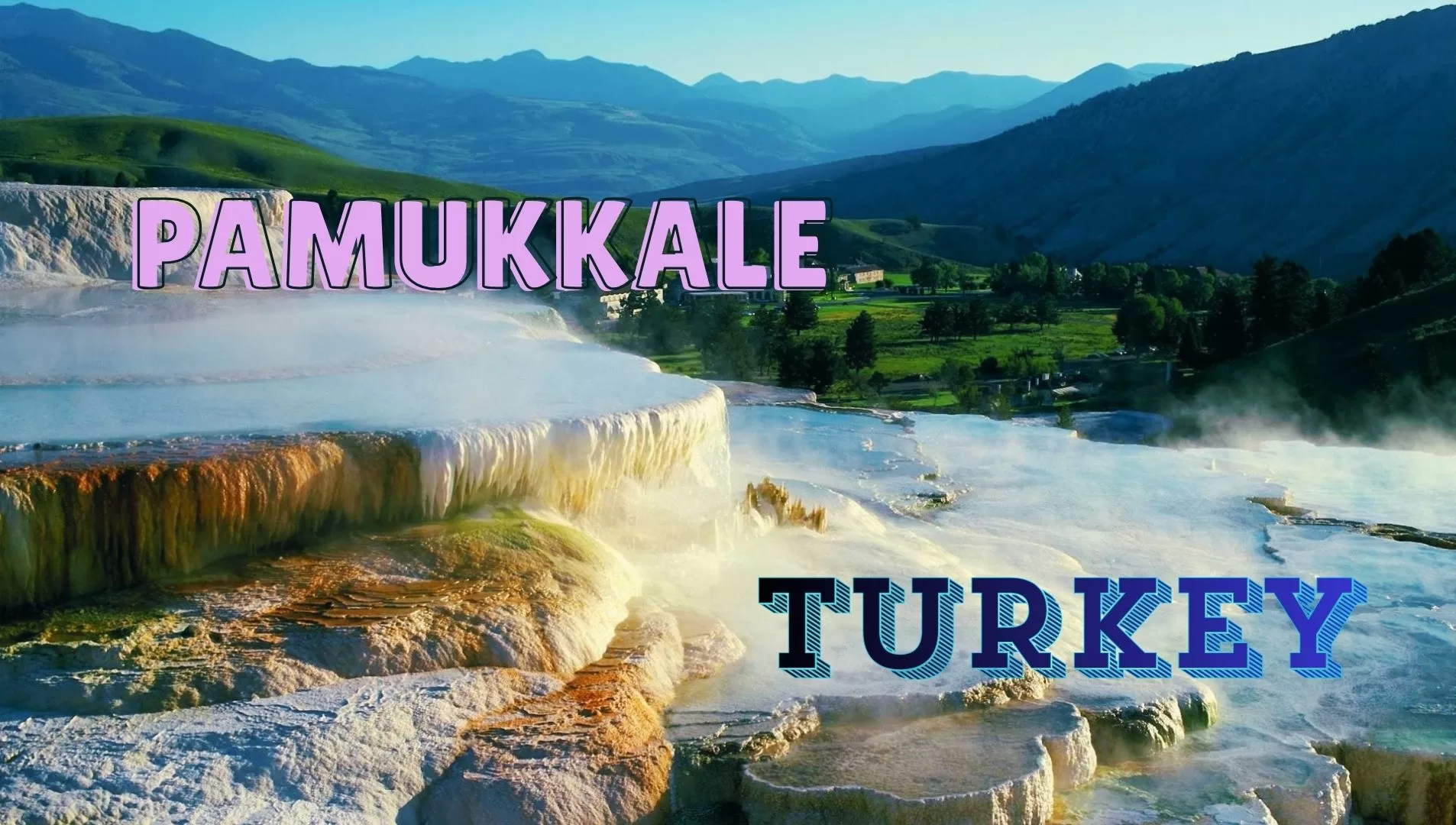
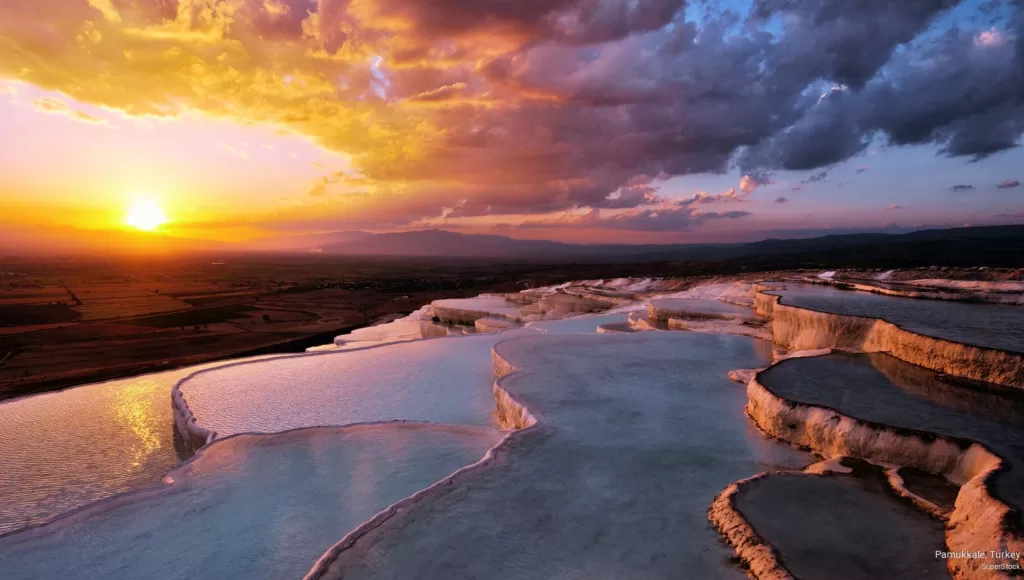
Pamukkale is one of the most amazing natural wonders on earth situated in the Denizli Province in the south-west of Turkey. Its name, which translates to “Cotton Castle” in Turkish, perfectly describes its appearance. At a long distance, the brilliant white terraces and terra cotta flakes that cascade down the hillside look like giant piles of cotton or a snow waterfall. This incredible landscape isn’t ice or cotton, though. It is a work of nature that has evolved over millennia and is a geological masterpiece.
Pamukkale is a beautiful place to visit, but it’s more than that. It’s a land of natural marvels and ancient history that attracts millions of visitors annually who seek to see its surreal beauty and to embrace its healing thermal waters. The city of Pamukkale is one of the most incredible places in Turkey that you will never want to miss, and is included in the world’s UNESCO World Heritage List.
The Formation of a Natural Wonder
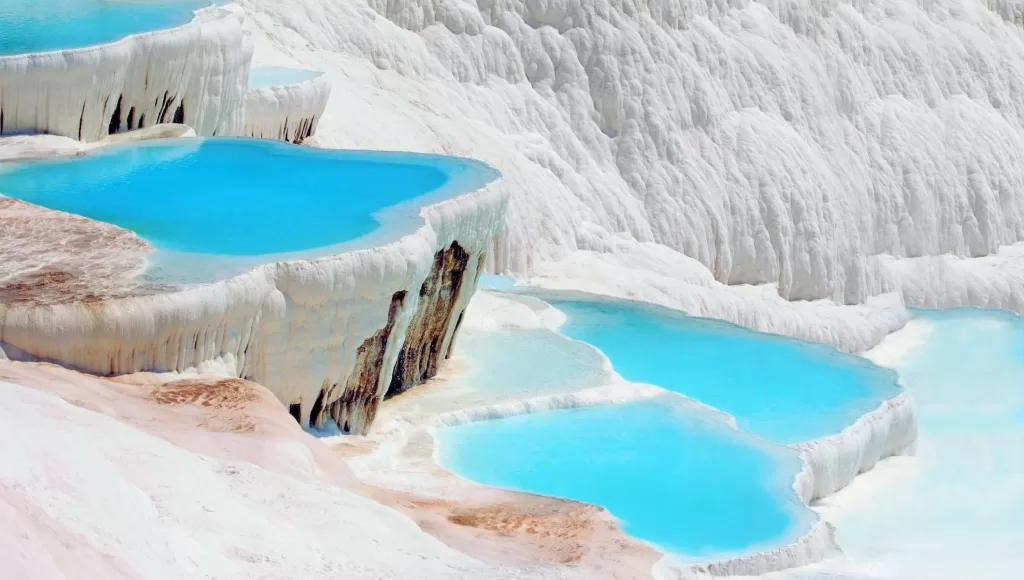
The splendid white terraces of Pamukkale are formed of travertine, a type of limestone formed from mineral springs and thermal waters. The area is over a geological fault, which lets heated ground water with high amounts of calcium carbonate to the surface.
The hot water trickles down the mountain-side, cooling, and releasing carbon dioxide into the air. This process results in a solidification of calcium carbonate and formation of layers of bright white deposits. The deposits, formed over thousands of years, have formed the terraces, basins and pools that give Pamukkale its distinctive appearance.
The end result is a landscape that is entirely unlike the rest of the world. Bright turquoise pools lie on top of spectacularly white steps that reflect the sky and surrounding mountains. The terraces may look icy white in the morning light, golden under the setting sun, or softly glowing under the night-light.
The Healing Waters of Pamukkale
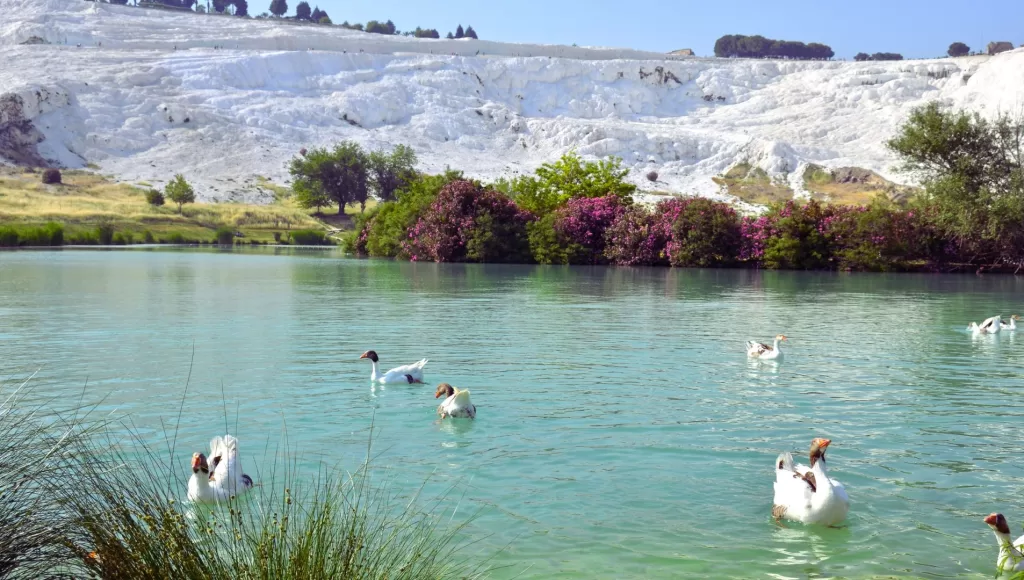
Pamukkale has been well-known for its hot springs since way back in ancient times. The temperature of the springs ranges between about 35°C to 100°C and are rich in different minerals which are believed to have therapeutic properties.
For centuries people have been coming to these waters to be healed of such diseases as arthritis, skin diseases, digestive disorders, and circulatory diseases. Thermal treatments were prescribed by ancient physicians, and the curative properties of Pamukkale were known all over the Mediterranean.
Even today, visitors immerse themselves in the warm pools, enjoying both relaxation and the timeless tradition of wellness. One of the most memorable experiences that the travelers have is a stroll through the shallow terraces, both with shoes on and off.
Hierapolis: The Ancient City Above the Terraces
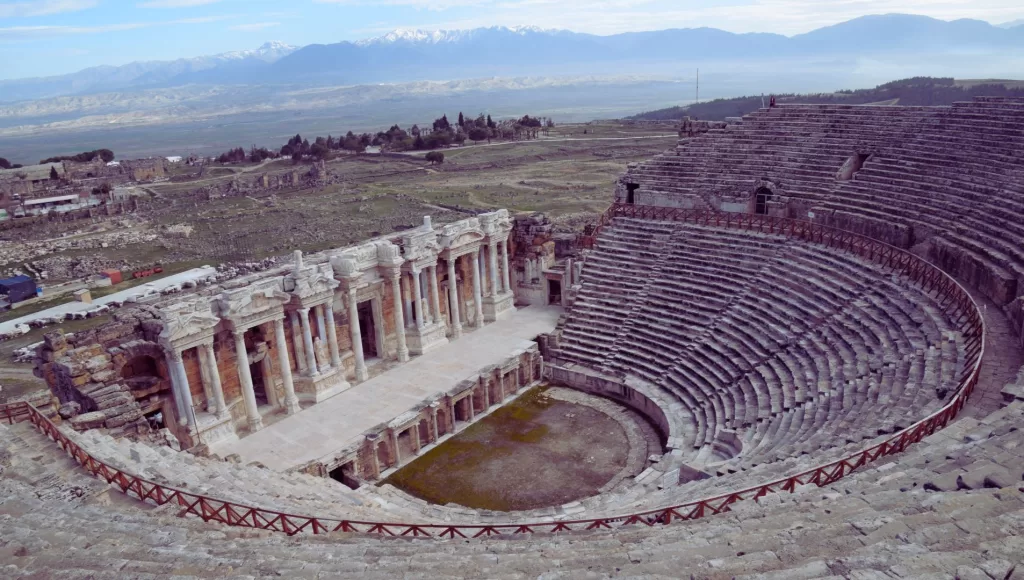
However, the importance of Pamukkale goes far beyond its natural beauty. The ancient city of Hierapolis, built by the Attalid kings of Pergamon on top of the travertine terraces, sits above.
The city of Hierapolis prospered under the Romans, and became a great center of healing and spirituality. Rich guests came from all over the empire to soak in the baths and for medical care. Eventually the city became a flourishing cultural and commercial centre.
The remains of Hierapolis are a fascinating glimpse into the past today. Visitors will be able to view very well preserved buildings such as:
- The capacity of the Grand Theatre to accommodate thousands of viewers.
- The Temple of Apollo – A dedication to the main god of the city.
- One of the largest ancient burial grounds of Anatolia, the Necropolis.
- Baths and exercise grounds for the Romans.
- Remnants of public buildings and houses along ancient streets.
Visiting Hierapolis is like visiting another time when medicine, religion and life centered upon the natural healing properties.
Cleopatra’s Pool: Swimming Through History
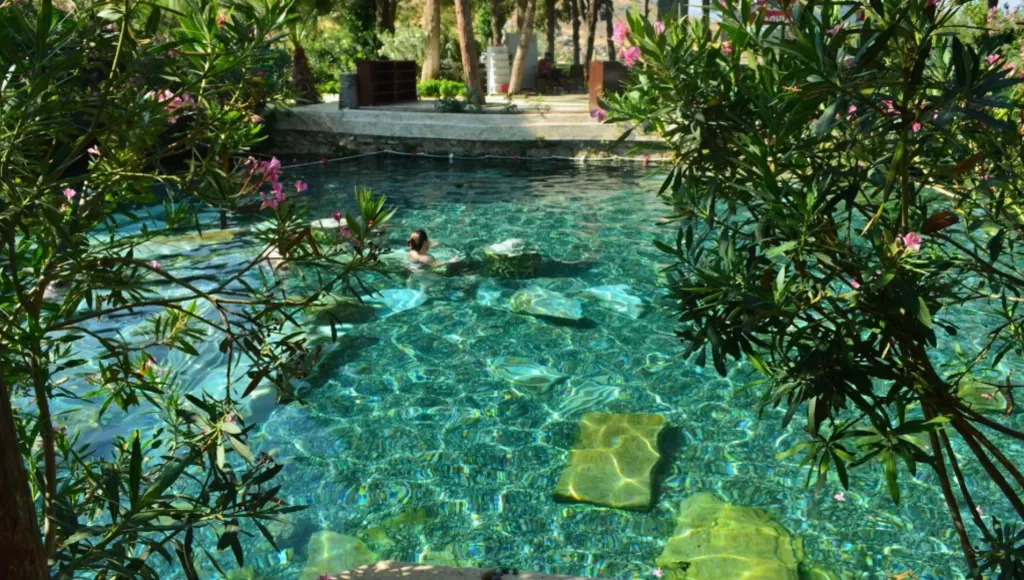
Cleopatra’s Pool or the Antique Pool is one of the most well-known sites of the city of Pamukkale. The mineral rich waters were said to have been the favorite bath of the Egyptian queen Cleopatra, though this has not been substantiated by history.
The pool is special in that the warm waters hide beneath it pieces of ancient Roman columns and marble structures, which are thought to have fallen due to an earthquake centuries ago.
The archaeological remains are a rare chance to get in the water with these warm thermal waters. It’s a mix of luxury, history and nature in one experience, few can say the same.
Preserving a Fragile Treasure
Although Pamukkale’s beauty has remained untouched throughout the years, there have been many environmental issues. In the twentieth century, hotels, and uncontrolled tourism were a danger to the fragile travertine structures. Vehicles and footwear damaged the terraces and too much diversion of water caused some sections to lose their fine white colour.
The Turkish Government saw a need to protect and conserve, and this was done. Hotels which were directly constructed on the terraces were eradicated, the number of visitors to the terraces was controlled and easy access paths were established to limit damage.
Some of the terraces are off-limits to the public for shoes to be removed, for visitors to walk on. The water flow is controlled to provide a natural production of travertines.
Such efforts have been essential to the conservation of Pamukkale for future generations, and must be balanced with the need for environmental responsibility in the wake of tourism.
The Best Time to Visit Pamukkale
You can visit Pamukkale all year round, but the best times are in the spring or autumn. These months have pleasant temperatures and lower crowds than the summer months.
These early morning visits create a peaceful ambiance and the light is softer which makes it ideal for photography; at sunset the white terraces are bathed in gold and pink hues, providing an unparalleled view.
Some visitors opt for a full day of exploration, taking time to savor the wonders of the site, its natural beauty, and the thermal wonders of Pamukkale and Hierapolis.
Why Pamukkale Feels Unreal
Not many places can boast of such an extraordinary mix in one place. The beauty of nature, the historical significance of the ruins, and the healing power of the thermal waters are all found in the many wonders of Pamukkale.
It’s like being in a dream world when you are taking in the warmth of the mineral pools while standing there barefoot with your eyes gazing out across the shimmering white terraces. Over those days is an old city with Roman ruins, that is believed to be where they seek wellness and spiritual renewal. There is a landscape around you, which looks like a photograph is a digital copy.
This blend of wonder, history and tranquility is what makes Pamukkale one of the most memorable places on earth.
Conclusion
The city of Pamukkale is not just a tourist destination, it is a showcase of nature’s great artistry and the continuing bond between humans and the environment. People have traveled to this ‘Cotton Castle’ for thousands of years to be healed, inspired and awed.
The magnificent terraces, remnants of ancient springs, and its enduring allure continue to draw tourists from all over the world to Pamukkale today. It’s a reminder that some the most amazing places in the world are not places you have imagined, but places you never imagined.
If you have an idea of making a bucket list of places that you want to see before you die, then Pamukkale must be one of the first places that come to mind. It’s one of those places where you have to ask yourself “How can this be the real world”?





0 Comments