
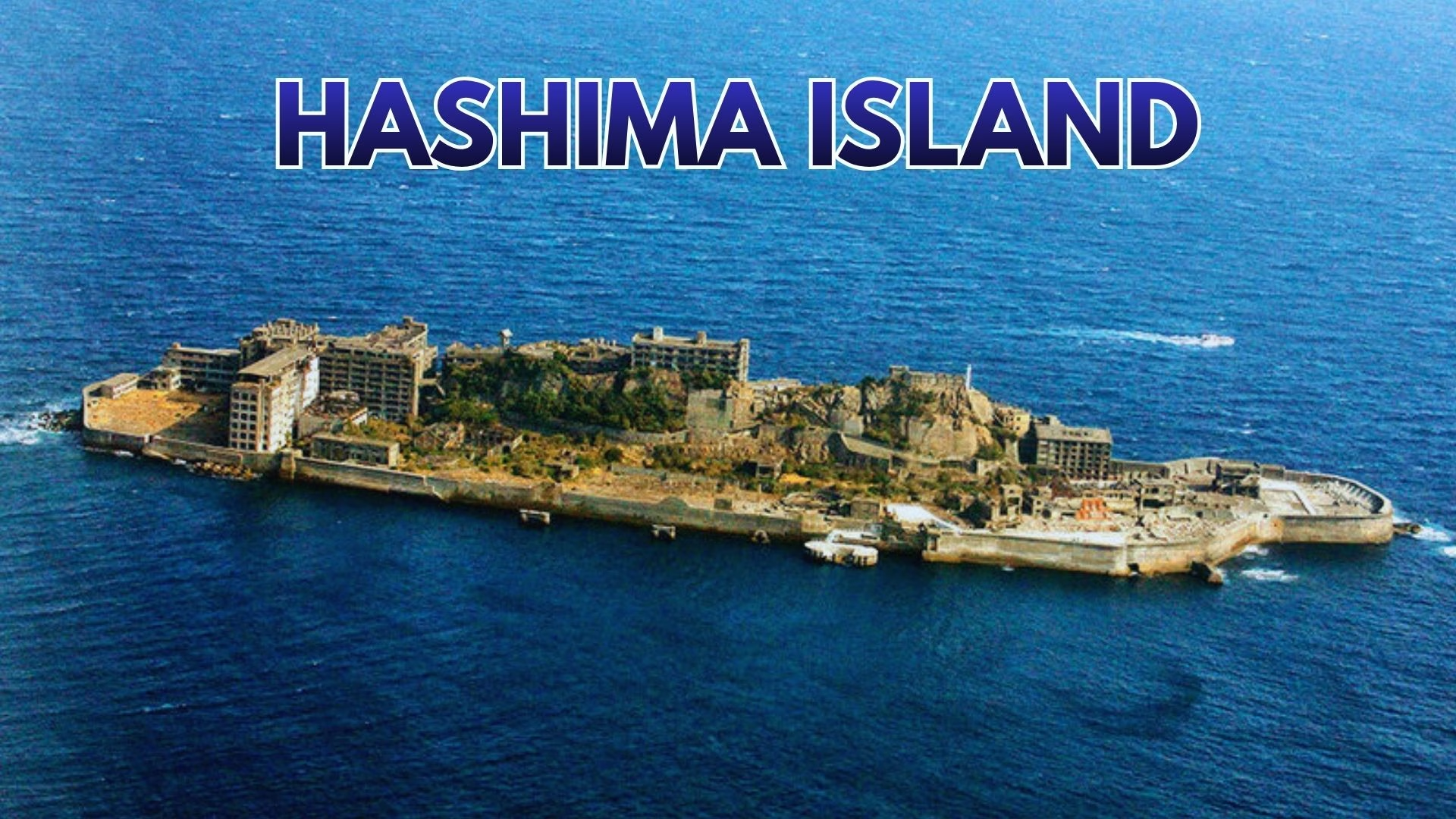
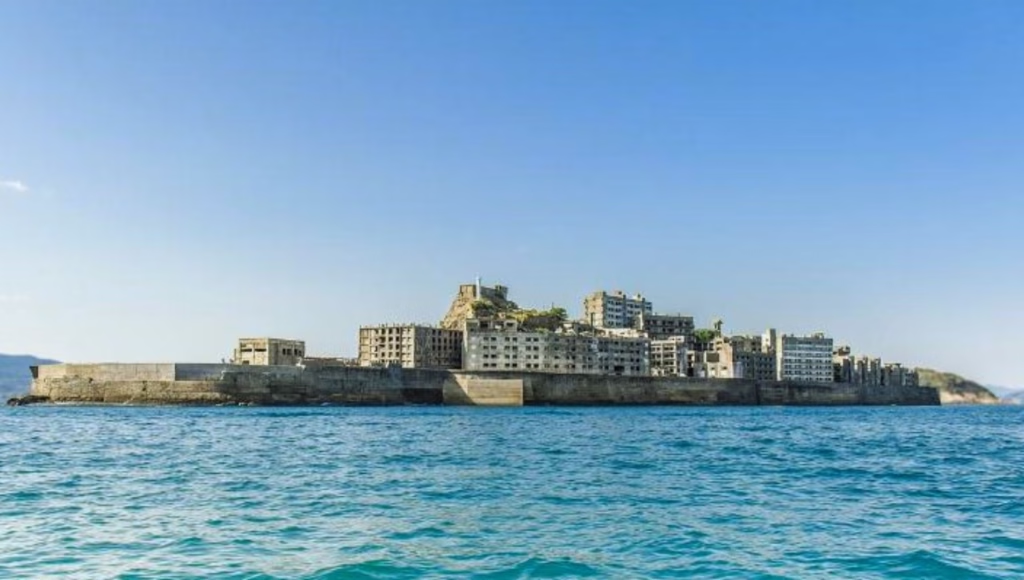
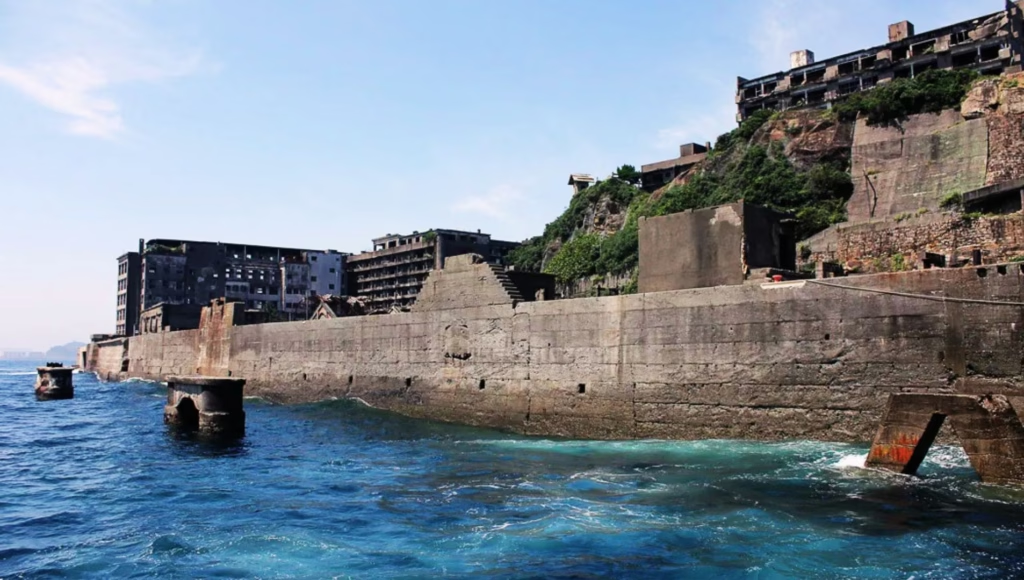
Suppose you are coming from a place of deep blue waters in the East China Sea towards a small island. At a distance, it appears more like a huge concrete battleship than a tropical island. There are high apartment buildings behind the dense seawalls, and broken windows and crumbling buildings show that this area has been largely abandoned for decades.
This is Hashima Island, Japan’s most interesting ghost town.
Known as Battleship Island, Hashima was a busy industrial settlement surrounding an underwater coal mine. This little area accommodated thousands of people who worked underground and lived with their families in a rather dense urban setting.
You can hear nothing at Hashima today. The ruins of its abandoned buildings are slowly decaying due to wind, rain, and salt water, and this ghostly landscape has captivated historians, photographers, filmmakers and tourists from all over the world.
However, there is a complex story behind the shadowy nature of its appearance: industrialization, harsh working conditions, wartime history, economic change and abrupt abandonment.
The Birth of Hashima Island
Hashima is situated some 15km from Nagasaki in south-western Japan. The little island itself is very small, only approximately 6.3ha.
It’s significance started when they found coal under the sea near the island.
Coal was a vital source of energy during the fast-paced industrialization of Japan in the late 19th century. The mining operations spread around Hashima and the island was later settled as a permanent industrial town.
The Mitsubishi company had already become involved with the mine and significantly increased its production levels.
Since there was not much land available, the development of Hashima was an unusual one. The community did not grow outwards from the center like a typical community, it grew upwards. Even multi-story concrete apartment buildings were built very near each other, resulting in very dense skyline.
The island slowly developed into a self contained community.
A City on a Tiny Island
At one time, Hashima was home to thousands of people.
The population density of this small island was quite unusual. The community developed several of the amenities that would be required for daily living, and workers had apartments with their families.
There were schools, shops, restaurants, medical facilities, recreational spaces and religious buildings.
It is the home of children born and raised. Families established a way of life that turned out to be remarkably similar to that of those living in the larger cities of Japan.
However, the ocean was always close to them.
The island was surrounded by massive seawalls to protect it from the strong waves and storms. These walls and the built-up buildings created the distinctive skyline of Hashima as seen from the sea.
This is what led to the island’s famous nickname of “Gunkanjima” or “Battleship Island.”
It looked like a battleship cruising through the oceans, from afar, when you looked at its concrete buildings.
Life Beneath the Surface
All of the community was coal mining.
Labors were sent down from above to get coal from the bottom of the ocean. Working conditions were tough and mining was a hazardous job.
The situation for miners was harsh, underground they were subjected to great heat, darkness, limited space and ever-present dangers as miners.
The island remained in operation with a small city above ground.
This contrasted with other islands, which were usually alike. Under the concrete buildings was a huge industrial enterprise, over the concrete buildings there were schools, homes and normal community life.
The island was thus the symbol of Japanese industrialization, but also of the difficulties faced by the population that made it possible.
Hashima’s Darker History
The history of Hashima cannot be told just in terms of its industry.
In Japan’s war years, Koreans and Chinese POWs were among those that toiled in Japanese mines, including Hashima. Descriptions of forced/coerced labor and harsh conditions in history.
These workers’ experiences have come to play a significant role in the discussion about the island, and have been a source of controversy.
This historical aspect has also shaped the discussions on the memory of Hashima and of the industrial history of Japan.
For others, Hashima is an example of the astonishing rapidness of Japan’s industrialization. For others, its history is a reminder of exploitation and suffering that goes with that development.
Thus, the island of Hashima is no ordinary tourist magnet. Its remains have a meaning that’s linked to true human experiences, including some of the darkest periods in modern Japanese history.
The Sudden End of an Island Community
For many years, Hashima was sustained by coal.
However, the energy situation of Japan was to change.
Petroleum began to be used more and more than coal after World War II. Japan’s coal industry shrank and numerous coal mines were hard to run.
The future of Hashima became more and more uncertain.
In the end, it has been decided to close the mine.
The Mitsubishi finally closed the Hashima mine on January 15, 1974.
The impact on the island was astounding.
If there were no workers to be paid for, and no families to be supported, why would thousands, with their families, stay at the mine. Soon, people started to move out and in no time at all the once bustling community was abandoned.
Hashima was not a city that was abandoned over hundreds of years like the ancient cities.
It was soon empty, in an amazingly short time.
And the houses still stood.
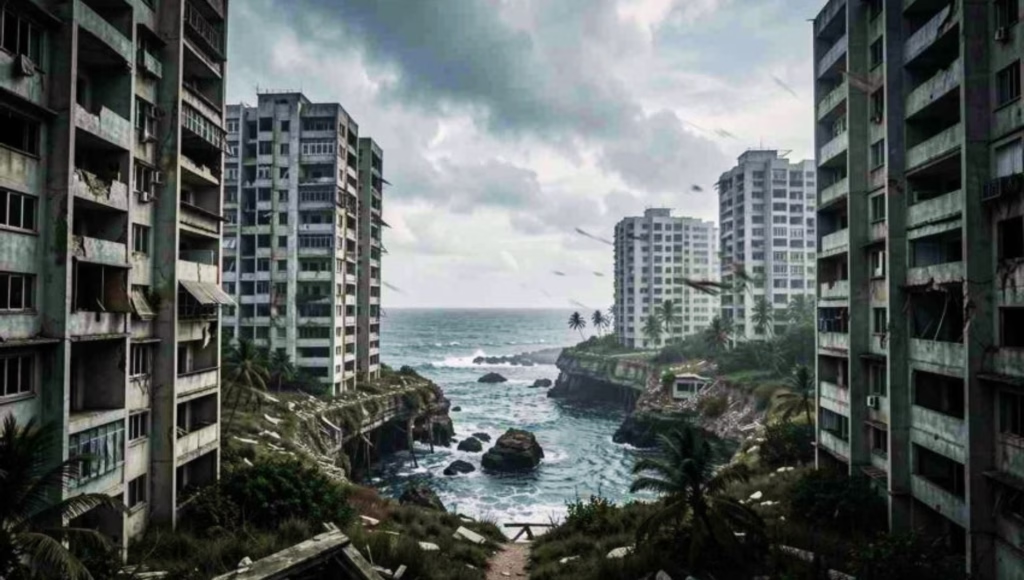
A Modern Ghost Town
Now Hashima is a ghost town, standing as it is in time.
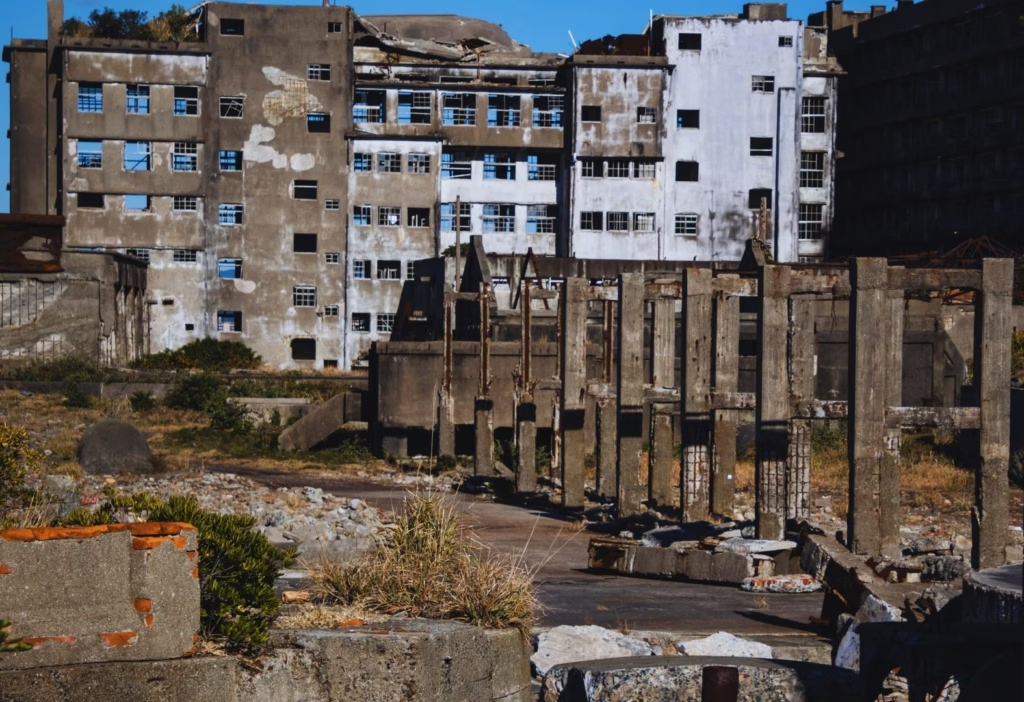
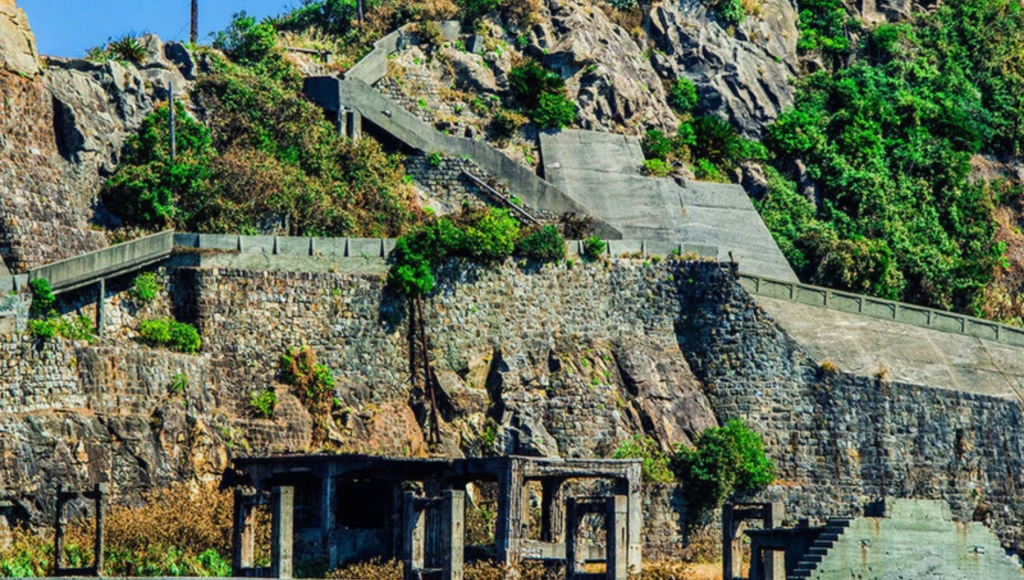
Although many have become quite deteriorated, the concrete apartment blocks are still standing. The walls have cracks, windows are broken and plants are starting to grow in the debris.
In some buildings, remnants of the former community can still be found.
Empty rooms, stairways and corridors provide a glimpse of a world once full of thousands.
It’s the difference between the island of yesteryear and the silence it finds now that makes it so interesting.
There are no masses of miners moving towards the pit.
No school going children.
Families doing their shopping for regular necessities aren’t being served.
The only sound that envelopes the rundown buildings is the sound of the sea.
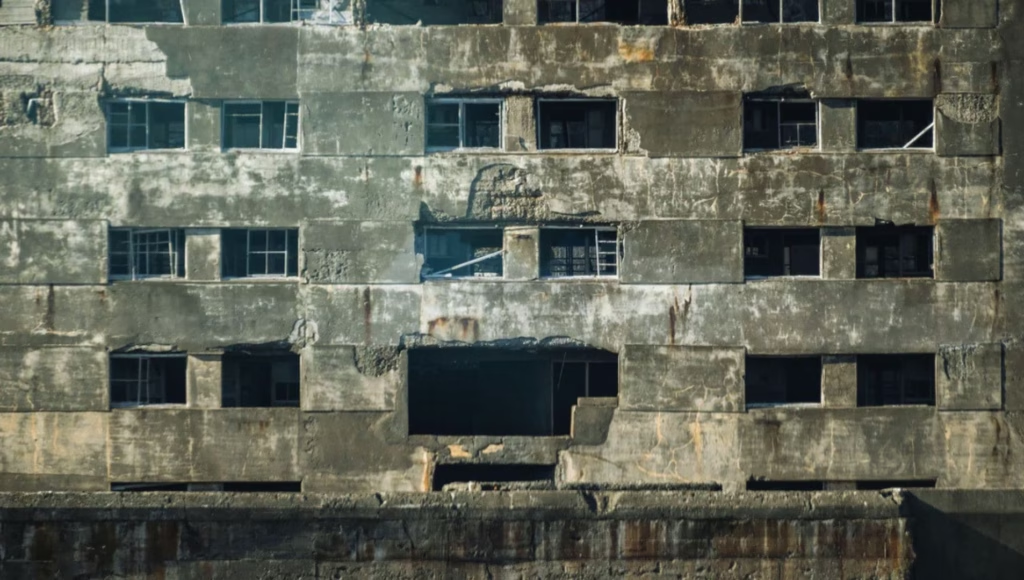
Why Didn’t the Buildings Get Demolished
A question which frequently comes to mind when viewing photos of Hashima is:
Why was the whole island alone abandoned?
It is more a practical answer.
With the closure of the mine the island no longer served an economically valued function. But moving or destroying the massive concrete structures would have been very costly.
As time passed on, nature took over.
The ocean around it helped to erode its condition. The buildings were weakened by the saltwater, strong winds and heavy rain as well as typhoons.
Over the years, Hashima was an unplanned time capsule.
It was not demolished, but was left to slowly decay.
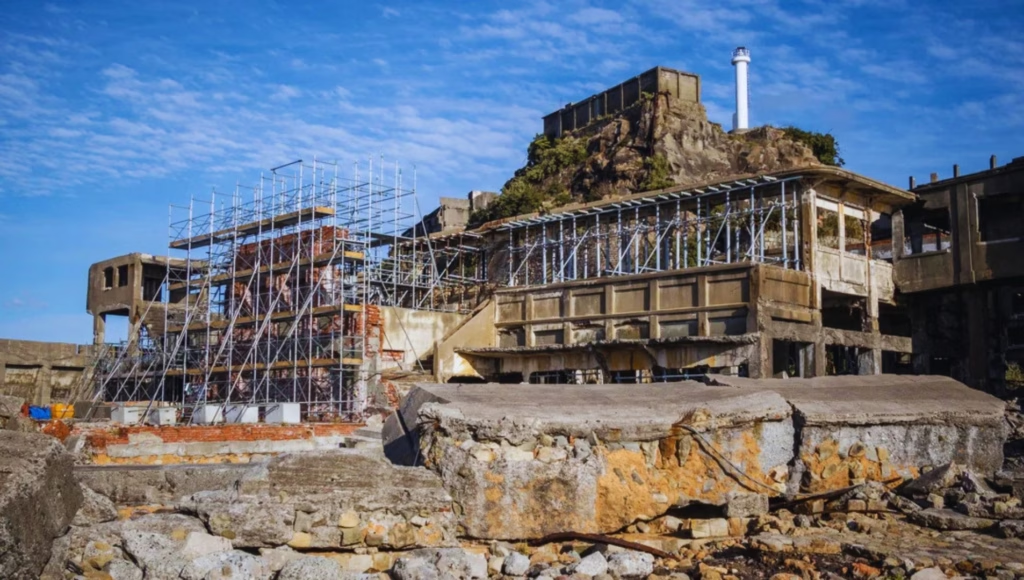
Hashima Island and Popular Culture
Beyond its ghostly look, Hashima has a significance to it.
It was included in the UNESCO World Heritage Sites of Japan’s Meiji Industrial Revolution: Iron and Steel, Shipbuilding and Coal Mining, in 2015.
The designation is for recognition of Hashima as it’s a part of the Japanese industrial development and modernization.
Inclusion has also been fraught with controversy, however, over the representation of the history of wartime labour.
This means that Hashima has a unique character, having the industrial past and the memory of it all melded into one location.
Can Tourists Visit Hashima
For a long period of time, people were not allowed to visit Hashima due to its safety issues.
Later it was possible to have some tourists on the island as the tourists were taken to the places set aside for them by the organized boat tours.
But it does not allow for visitors to roam freely within all of the buildings.
The site of the ruins is precarious, and there are areas of the island that are still unsafe. The weather is generally good and the buildings are in a state of disrepair making it impractical to gain unrestricted access.
The ruins are normally seen from boarded-up areas and on designated paths by tourists.
Even from these places it’s impressive just how big the abandoned city is.
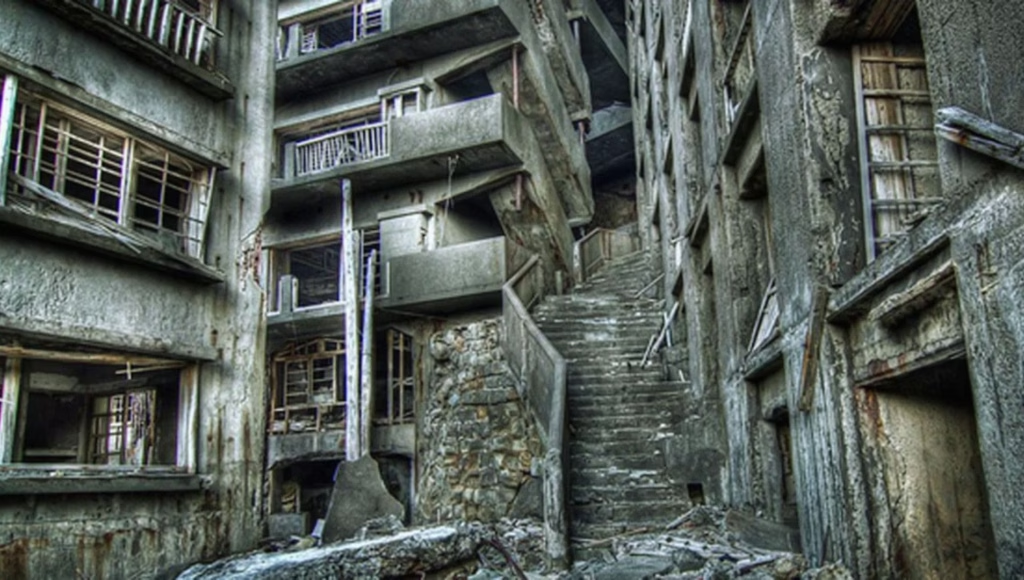
The Mystery of Hashima Island
Unlike other world-ending disappearances, such as that of the islanders of the Pacific island of Rota, Hashima has no mystery surrounding the civilization that once inhabited it and vanished.
The residents had to leave, we know why.
The reason for the closure of the mine is known.
We know what happened on the island that made it abandoned.
But there is another question that remains unanswered: What about an entire modern community that vanished yet now only has physical remains.
There’s a stunning solution offered by Hashima.
To the common man, a city is more than just concrete buildings. Requires humans, employment, and commuting, and a motive for people to remain.
The closure of the coal mine left Hashima without its base of support and a population.
But the people went away, and the City stood.
Conclusion about Hashima Island
Hashima Island isn’t just a bunch of abandoned houses; it’s a world unto itself.
It is a monument of the industrial revolution in Japan, a reminder of the hardships of the miners and wartime workers and an extraordinary example of how a flourishing community can vanish rapidly.
For decades, Hashima was teeming with workers, families, children and businesses. It was a very strong industrial economy which it embodied.
After that, in 1974, the mine was closed.
The people left.
The Schools went quiet.
The apartments emptied.
And the ocean continued to surround the island.
Now, Gunkanjima is an abandoned concrete ship gradually taking over by nature. Its derelict structures could be gone someday, but the saga of Hashima Island is one of the saddest narratives of Japan’s industrial past, involving ambition, adversity, prosperity, abandonment and time.



0 Comments