

The best-known works in history from da Vinci to Bruegel, from Raphael to Dali, in our list of the most iconic works of all time according to Artistro.
Among the myriad creations produced by human hands, certain masterpieces have made a lasting impact on the course of human history. These works of art not only influenced artistic movements but also established the fashion trends of their respective eras, while introducing novel styles and artistic principles. But the most significant is that they have always been the source of millions of people for creative boldness and fresh creative ideas.
Every age has given birth to its own Genius, an extraordinary creator, whose name and work undoubtedly will remain references for the centuries to come. The works of these great artists are known and appreciated all over the world. In this article, we invite you to relive the greatest masterpieces in history, but we will focus on the iconic works of art.
The most famous paintings of all time
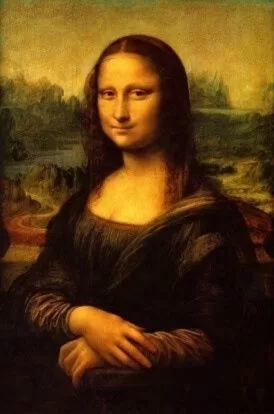
Mona Lisa by Leonardo da Vinci (1503-1505)
Arguably, the most renowned painting globally is Leonardo da Vinci’s La Gioconda, commonly referred to as the Mona Lisa. The painting represents the Portrait of a woman as personification of the ideal woman of the Renaissance, Madame Gherardini. They attempted to damage the painting on more than one occasion and also kidnapped the painting in 1911, which was returned 2 years later. The admiration for this work is indeed limitless; Napoleon Bonaparte even took it from the museum and instructed that it be displayed in his personal bedroom.
The painting is officially “priceless,” no surprise as this is the best artwork ever. The only existing price is its $3 billion insurance. The painting, having survived centuries of changing ownership and geopolitical shifts, has now found its permanent home within the prestigious halls of the Louvre Museum in Paris, where it is preserved as a masterwork of global cultural heritage.”
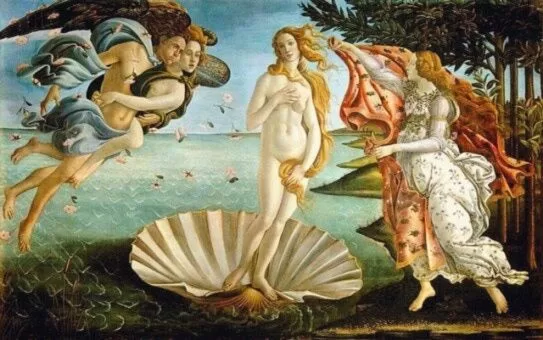
The Birth of Venus, Sandro Botticelli’s masterpiece (1486)
The Birth of Venus is another of the most renowned paintings. The myth of the birth of Aphrodite is depicted in Botticelli’s painting. The beautiful goddesses floats to the shore in a sea shell and is welcomed by one of the Graces on the shore by the Zephyr’s wind (West wind). The Birth of Venus is well preserved thanks to the fact that Botticelli applied a protective layer of egg yolk to the painting. This masterpiece is kept in Florence in the Uffizi Gallery.
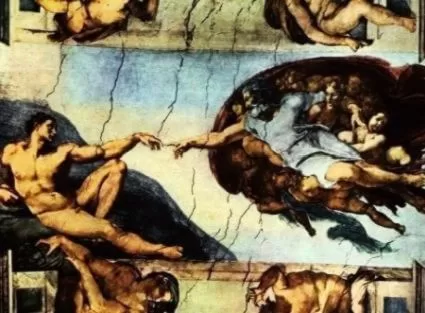
Creation of Adam by Michelangelo Buonarroti (1511)
The fourth of the nine famous art pieces of the central composition of the Sistine Chapel in the Vatican Palace is a fresco by the Italian master painter Michelangelo called The Creation of Adam. The fresco illustrates an episode of the first human being creation by God. The fresco also illustrates ideal human forms and is also one of the first attempts in the history of art to depict the God himself.
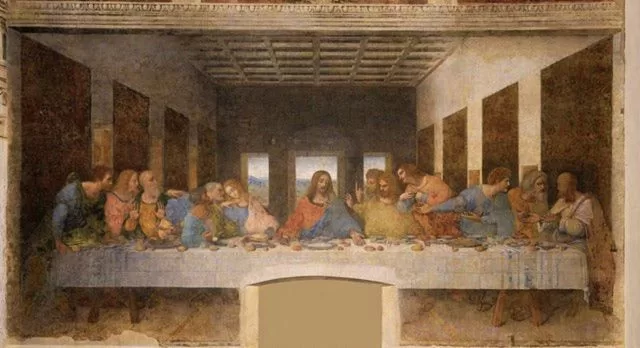
Leonardo da Vinci’s iconic Renaissance mural, The Last Supper (1495—1498)
Over the 500 years of its history, the famous fresco The Last Supper has been restored at least five times; the previous restoration was completed 21 years ago. The great Leonardo’s fresco is of Jesus’ final meal with his disciples prior to his betrayal, arrest and death. This fresco is not only studied for its composition, but also for its shapes and colors, and theories on hidden symbols and the existence of Mary Magdalene next to Jesus abound. This is one of the famous art pieces and is one of the important art assets in the Basilica di Santa Maria delle Grazie monastery in Milan.
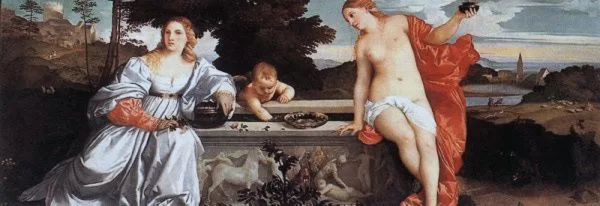
Sacred and Profane Love by Italian painter Tiziano Vecelli (1515—1516)
The present title of the painting was not attributed to Titian but only two centuries later. The composition of the painting caused a lot of controversy among scientists, but in the end it was possible to prove that it was a gift for the wedding of the Venetian aristocrat Nicolo Aurelio and the widow Laura Bagarotto. The girl’s simple dress was clearly inspired by a classic wedding gown. The terrain in the background is also symbolic: The road going up is a symbol of prudence and fidelity, the plain is a symbol of mutual understanding and peace, and the rabbits are a symbol of fertility. The painting is one of many renowned works in the Galleria Borghese in Rome.
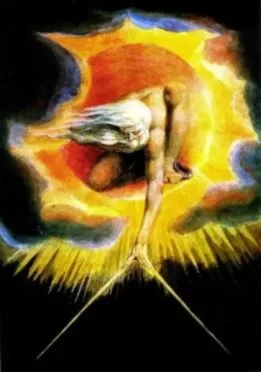
The Lamb by William Blake (1794)
This is one of his popular pieces of art that is now kept in the British Museum, London. The Great Architect or The Creation are the two other popular versions besides the original. The name of the painting, the Ancient of Days, is the same phrase that was used as the name of God. God at the moment of creation is the painting’s main character, who doesn’t set out the order, but rather restricts freedom of movement and marks the boundaries of imagination.
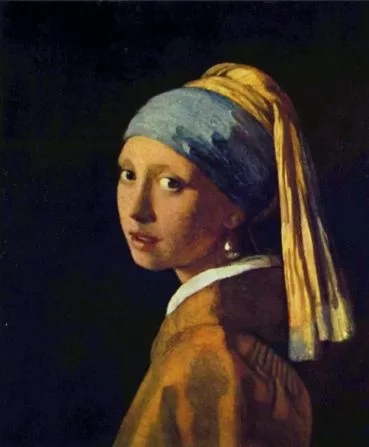
Girl with a Pearl Earring by Johannes Vermeer (1665)
The northern Mona Lisa is Girl with a Pearl Earring by Dutch artist Jan Vermeer. Partly due to the fact that it is so popular, but also because of the expression on the girl’s face is hard to capture and explain. Very little is known about the painting: it is not dated, the name of the girl depicted is unknown. A film was cut on the possible creation of the painting based on the novel of the same name by Tracy Chevalier in 2003. “Girl with a Pearl Earring” does not differ in terms of style, but in fact it is not a portrait, it is called “Troni”, which means head in Dutch, but not a whole person.
The painting was sold at The Hague’s auction house in 1881 for just two guilders and thirty cents. During the restoration of Mauritshuis (2012-2014), Girl with a Pearl Earring went on tour to the USA, Italy and Japan. It attracted massive audiences wherever it went and eventually its reputation as one of the world’s most renowned paintings was established. It is now in the Mauritshuis in The Hague.
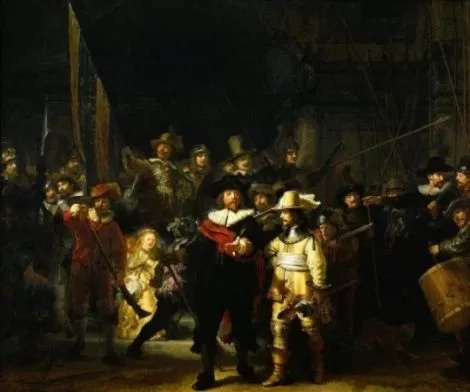
The Night Watch by Rembrandt van Rijn (1642)
This painting by Rembrandt is actually is entitled The Shooting Company of Frans Banning Cocq and Willem van Ruytenburch. In the 19th century, art critics who found this painting believed that people were standing in front of a dark background and named it The Night Watch. It was later found that the painting was dark due to a layer of soot and the action is actually happening during the day. The painting was, however, a valuable addition to the collection of famous artworks, known as The Night Watch. The painting has been preserved in the Rijksmuseum in Amsterdam.
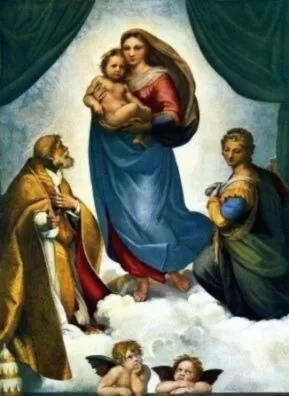
The Sistine Madonna by Raffaello Santi (1512)
The masterpiece is one of the most famous works of Raffaello Santi, also called Madonna di San Sisto, that is kept in the Old Masters Picture Gallery in Dresden. The painting has one little secret: If you look at the background, which appears to be clouds from far away, you will notice that it is actually angels’ heads! And the two angels depicted in the picture below have become the motif of numerous postcards and posters.
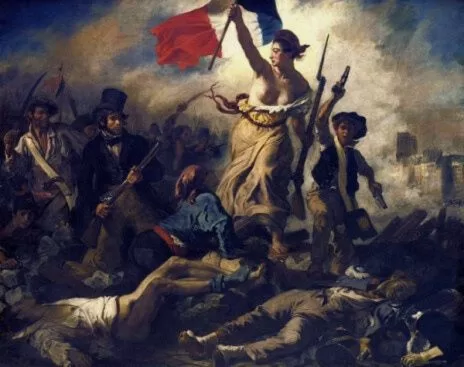
Liberty Leading the People by Eugene Delacroix (1830)
Eugene Delacroix’s Liberty Leading the People was the most powerful art ever, and remains in the Louvre Paris. “Inspired by the political upheaval of the July Revolution of 1830, Eugène Delacroix painted Liberty Leading the People, an enduring masterpiece of French Romanticism. Delacroix penned this letter to his brother, October 12, 1830, which read: “If I were not a soldier of the Motherland, at least I shall paint for her. The allegorical, semi-nude woman leading the charge symbolizes the French people’s fierce dedication to the ideals of liberty and democratic progress.
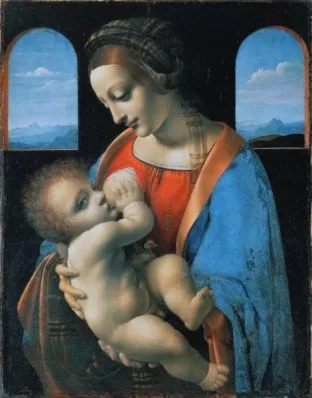
Leonardo da Vinci’s Madonna Litta (1491)
Long recognized as a world classic, this Renaissance masterpiece is preserved in the Hermitage Museum in St. Petersburg. Its modern title, the Madonna Litta, is derived from Count Litta, who once owned the painting and housed it within his family’s private art gallery in Milan. According to the hypothesis, the figure was not painted by Leonardo da Vinci himself, but is the work of one of his students. This is reflected in the uncharacteristic baby pose which is not like da Vinci’s style.
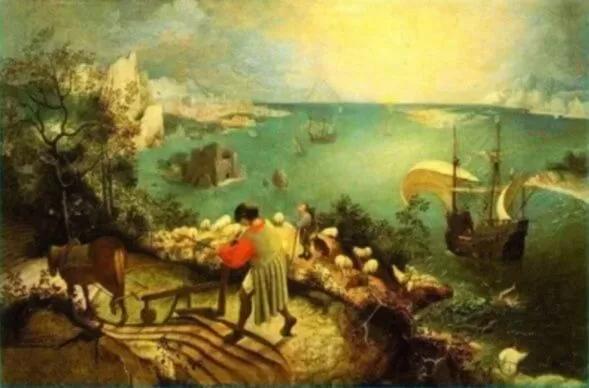
Landscape with the Fall of Icarus by Pieter Bruegel the Elder (1560)
This painting is by the Dutch artist Pieter Bruegel, and is now in the Royal Museums of Fine Arts of Belgium, Brussels. The genius of the author allows him to present a powerful social message in a rather simple manner. As with many great and famous works of art, through the image of the fallen Icarus, Bregel also employs the theme of the fate and futility of human attempts to reach God.
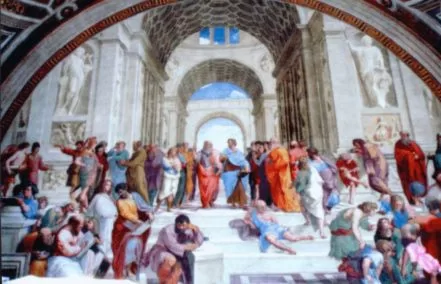
The School of Athens by Raffaello Santi (1509–1511)
The School of Athens, which has been attributed to the young Raphael’s hand, is a painting from his early Roman years that portrays famous Greek philosophers like Plato, Aristotle, Euclid, Socrates, Pythagoras and more. The big secret of this fresco is that many of the philosophers are identified as contemporaries of Raphael: Plato is Leonardo da Vinci, Heraclitus is Michelangelo, Euclid is Bramante. This ingenious artwork of Raphael adorns the Apostolic Palace, Vatican City.
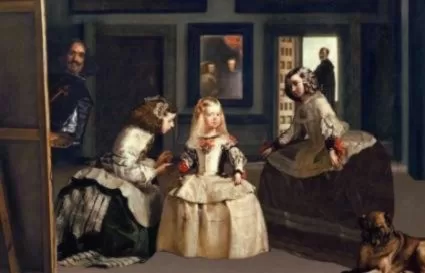
Las Meninas by Diego Velázquez (1656)
The most famous painting of Diego Velázquez is Las Meninas, in which he portrays 5 year old Infanta Margarita, standing in front of a portrait of herself and her parents. Several plans are included in the picture: the characters pose to the painter, are seen in the mirror and exit the room. Such a composition expands the dimensions of the canvas, making it three-dimensional. It is the greatest work of Velazquez’s own hand and is now in the possession of Museo del Prado in Madrid. Sir Thomas Lawrence, President of the Royal Academy of Arts, termed it “the true philosophy of art.
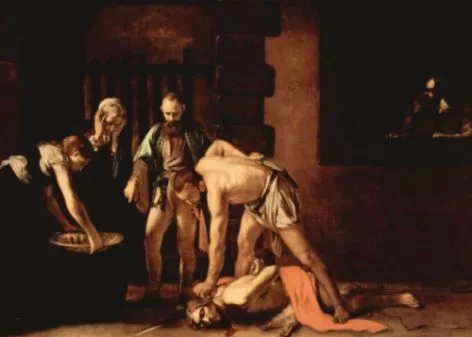
The Beheading of Saint John the Baptist by Michelangelo da Caravaggio (1608)
Widely regarded as a defining masterpiece of Baroque art, this piece stands out as one of Caravaggio’s most iconic and celebrated creations. It portrays the scene of the killing of John the Baptist in prison in a very realistic way. The darkness of the painting, coupled with the character’s expressions make it a true legacy of art. This work of Caravaggio is housed in St. John’s Co-Cathedral at Valletta.
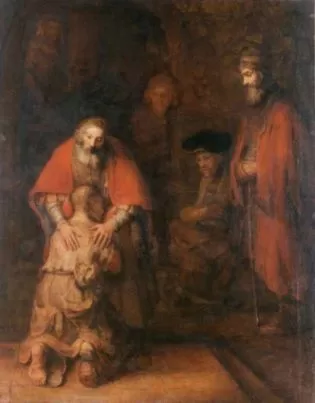
The Return of the Prodigal Son by Rembrandt van Rijn (1661–1669)
This is the largest canvas painted by Rembrandt on a religious theme. It is also dedicated to the parable of the prodigal son and is the artist’s top recognizable artwork. It is not known how and when Rembrandt worked on the painting The Return of the Prodigal Son, but it is assumed that the painting was created in the last years of his life. Today the painting, the best art of all time, is kept at the Hermitage Museum in Saint Petersburg.
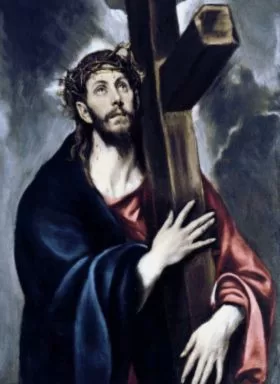
Christ Carrying the Cross by El Greco (1580)
In total, El Greco made at least seven copies of the oil painting “Christ Carrying the Cross”, which testifies both to the importance of this work for the artist himself and to its incredible popularity during the artist’s lifetime. El Greco focused primarily not on the divine, but on the humanity of Christ. Today, this masterpiece of art is kept at the Metropolitan Museum of Art in New York.
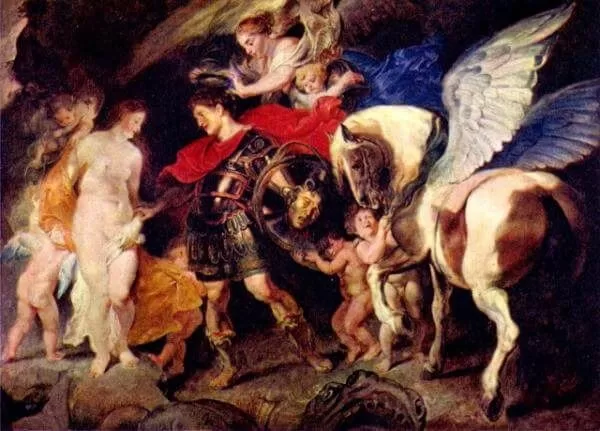
Perseus and Andromeda by Peter Paul Rubens (1622)
In terms of perfection and skill of the painting technique, this is one of the most significant and famous art pieces by famous artists, both for mankind and for the artist himself. Rubens artfully illustrates what man is born for: struggle, victory and love. The painting Perseus and Andromeda was painted in the classical Baroque style. Thanks to the almost monochrome coloring, the characters harmonize well with the dark stone background. Today it is in the State Hermitage Museum in St. Petersburg.
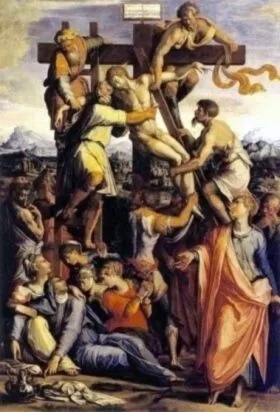
Deposition from the Cross by Giorgio Vasari (1540)
Paintings by Giorgio Vasari are created in the mannerism style, also known as Late Renaissance, which is distinguished by special pretentiousness and artistic positions of the characters. Most of Vasari’s paintings are devoted to biblical and antique themes. Deposition from the Cross is a very common plot and the way Vasari writes it reveals the essence of mannerism and his creative approach. This work is kept in the Monastery of Camaldoli, Tuscany.
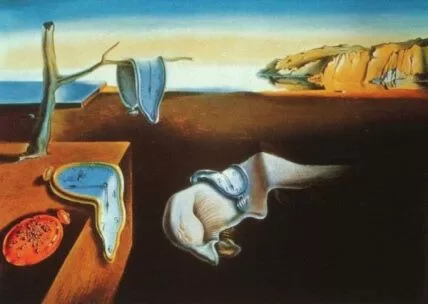
The Persistence of Memory by Salvador Dalí (1931)
According to the author himself, the picture was painted as a result of abstract associations that Dali had at the sight of processed cheese. Gala predicted quite correctly that no one, once having seen the Persistence of Memory, will not forget it. This outstanding painting, the best art of all time, is located in the Museum of Modern Art in New York.
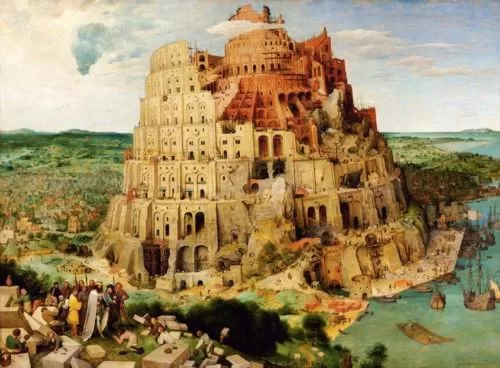
The Tower of Babel is a renowned painting by Pieter Bruegel the Elder (1563)
Pieter Bruegel the Elder is known for creating three notable paintings that depict a famous biblical story.
Among his many masterpieces, Pieter Bruegel the Elder created three celebrated artworks inspired by a classic biblical narrative. The artist’s vision is that language barriers are not the culprit in the failure that befell the construction; instead it is due to mistakes and poor quality building materials. The gigantic building looks sturdy at first sight, but a closer look at it uncovers the secret of the painting. This painting can be found in the Kunsthistorisches Museum in Vienna.
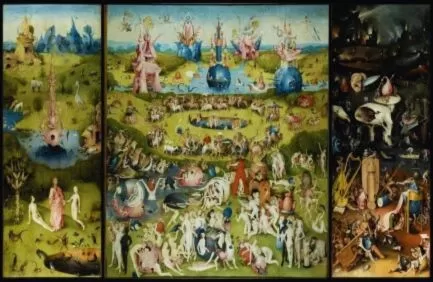
The Garden of Earthly Delights by Hieronymus Bosch (1500-1510)
Hieronymus Bosch painted the best art of all time, the most monumental triptych, The Garden of Earthly Delights, between 1500 and 1510 and it is now exhibited in the Prado Museum in Madrid. The triptych is literally teeming with figures, fantastic constructions, monsters, caricatures of reality, which will require at least a month’s worth of careful reading. Bosch’s surrealistic world of the phantasmagoric is totally irreconcilable with any of the known religions.
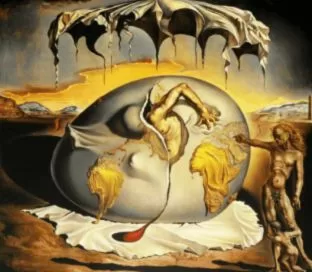
Geopoliticus Child Watching the Birth of the New Man by Salvador Dalí (1943)
Another renowned masterpiece by Salvador Dalí, believed by many to showcase his prophetic imagination, is preserved at the Salvador Dalí Museum in St. Petersburg, Florida. In the lower right corner of the painting is a Renaissance human figure that is an allegory of the Old World, which in its heyday was capable of great things, but now in its declining years. On the other hemisphere a New Man is on the verge of birth, while on the Old World it appears that the entire civilization is a rather biological process, and the process is depicted by Dali.
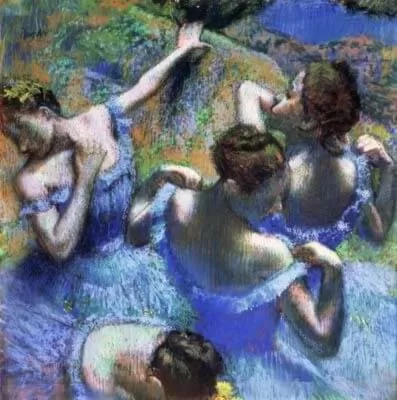
Blue Dancers by Edgar Degas (1897)
Ballerinas were a favorite of Degas’s, which is why he is known as the artist of ballet. The surface decoration and the paramount importance of its organization are characteristic of Degas’s late period, when his vision declined and he started to work in large spots of color, as in Blue Dancers. The painting is now in the Pushkin Museum, Moscow.
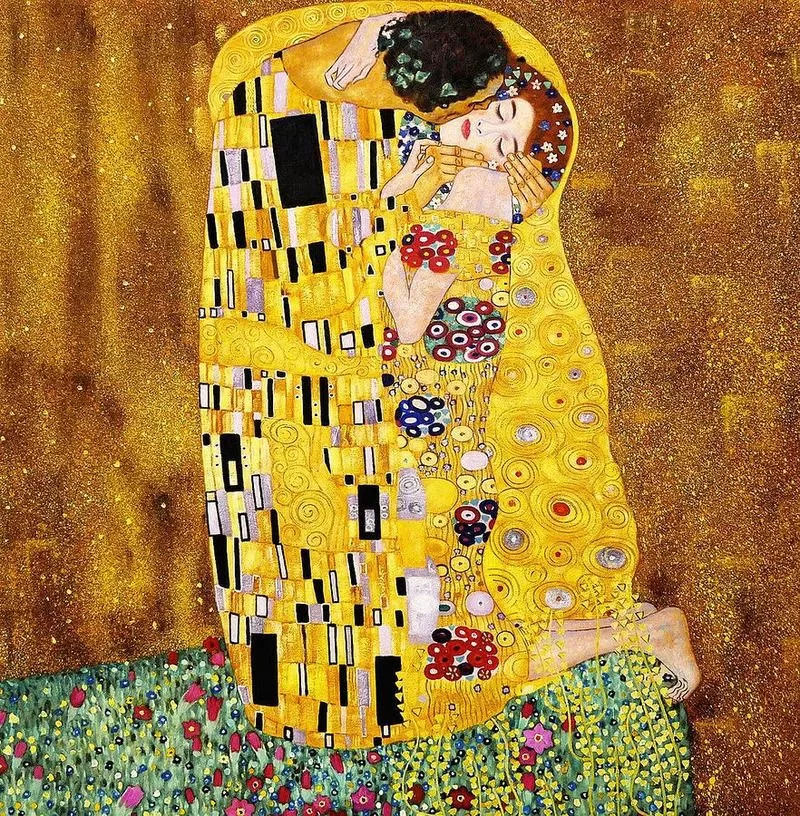
The Kiss by Gustav Klimt (1907–1908)
One of the first pieces of art in L’Art Nouveau/modern style is the kiss. It is a nearly monochromatic (gold) work of art, one of the most arresting of the style. The renowned work of the Austrian artist is visible in Österreichische Galerie Belvedere in Vienna.
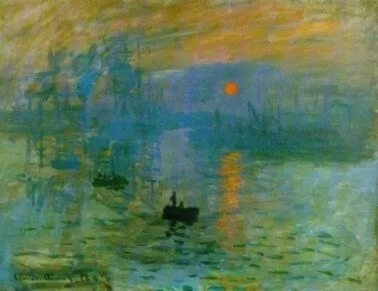
Impression, Sunrise by Claude Monet (1872)
This painting, Impression, soleil levant (literally “Impression, morning sun”), was painted by the journalist, L. Leroy, with the light hand of the painter, and became the name of the artistic movement. The painting is an original, first life painting by the artist in the old Le Havre, France outport. The work is now on display in Paris at the Musée Marmottan Monet, and is an iconic impressionist artwork by Claude Monet.
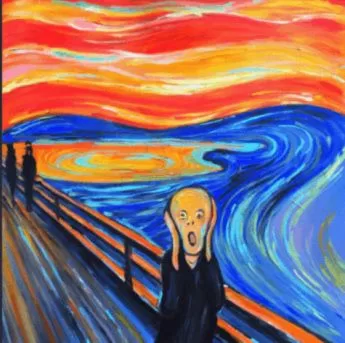
The Scream by Edvard Munch (1893)
The Scream is an iconic work, one of the most famous paintings, of Norwegian expressionist Edvard Munch. Over the period from 1893 to 1910, he completed four separate versions of the painting. One of the first of this type of painting, in which realism is downplayed and more space is made for emotions, this painting is now in the National Gallery and the Munch Museum in Oslo.
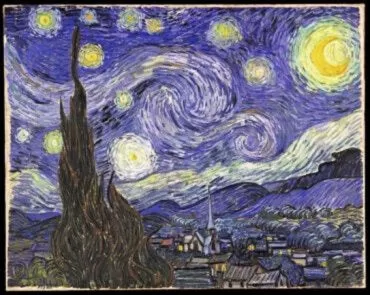
The Starry Night by Vincent van Gogh (1889)
Starry Night is one of the most ubiquitous paintings in post-impressionist culture, and Van Gogh’s work on it is one of the most famous paintings. It is hanging at the museum of modern art, New York right now. In contrast to most of Dutch artist’s paintings, Starry Night was painted from memory. Van Gogh at the time was in the hospital in Saint-Remy, suffering from bouts of madness.
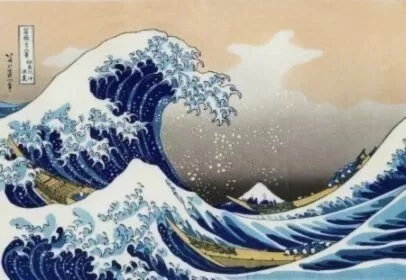
The Great Wave of Kanagawa by Katsushika Hokusai (1831)
The Great Wave of Kanagawa or The Great Wave (and The Wave) is one of the most popular paintings by Japanese master Hokusai. In a series of 36 ukiyo prints of Mt. Fuji. Hokusai did not depict the middle plan so there is no sense of depth. The woodblock print is part of the collection at the Metropolitan Museum of Art.
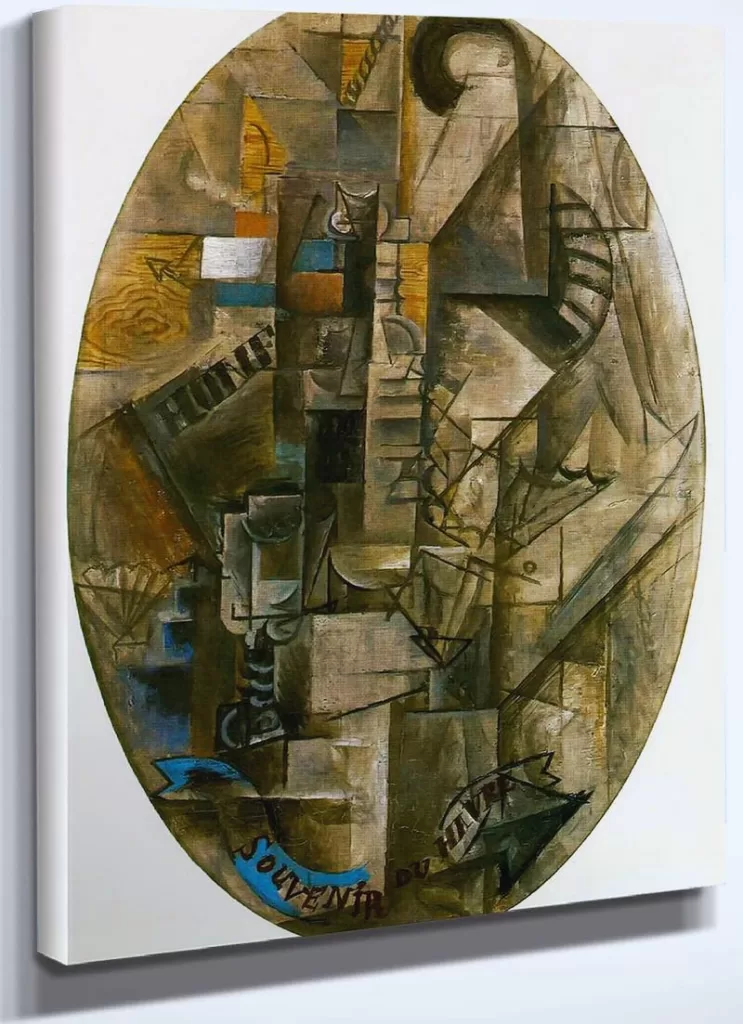
Souvenir from Havre by Pablo Picasso (1912)
The synthetic phase in the Spanish cubist Pablo Picasso started with his work Souvenir from Havre which used brighter colours, not inherent to analytical cubism. Then came the time for colour again with some monochrome works. The artworks of this period are very famous and are mainly still life’s in which real objects have been used to reduce the abstraction.






0 Comments