
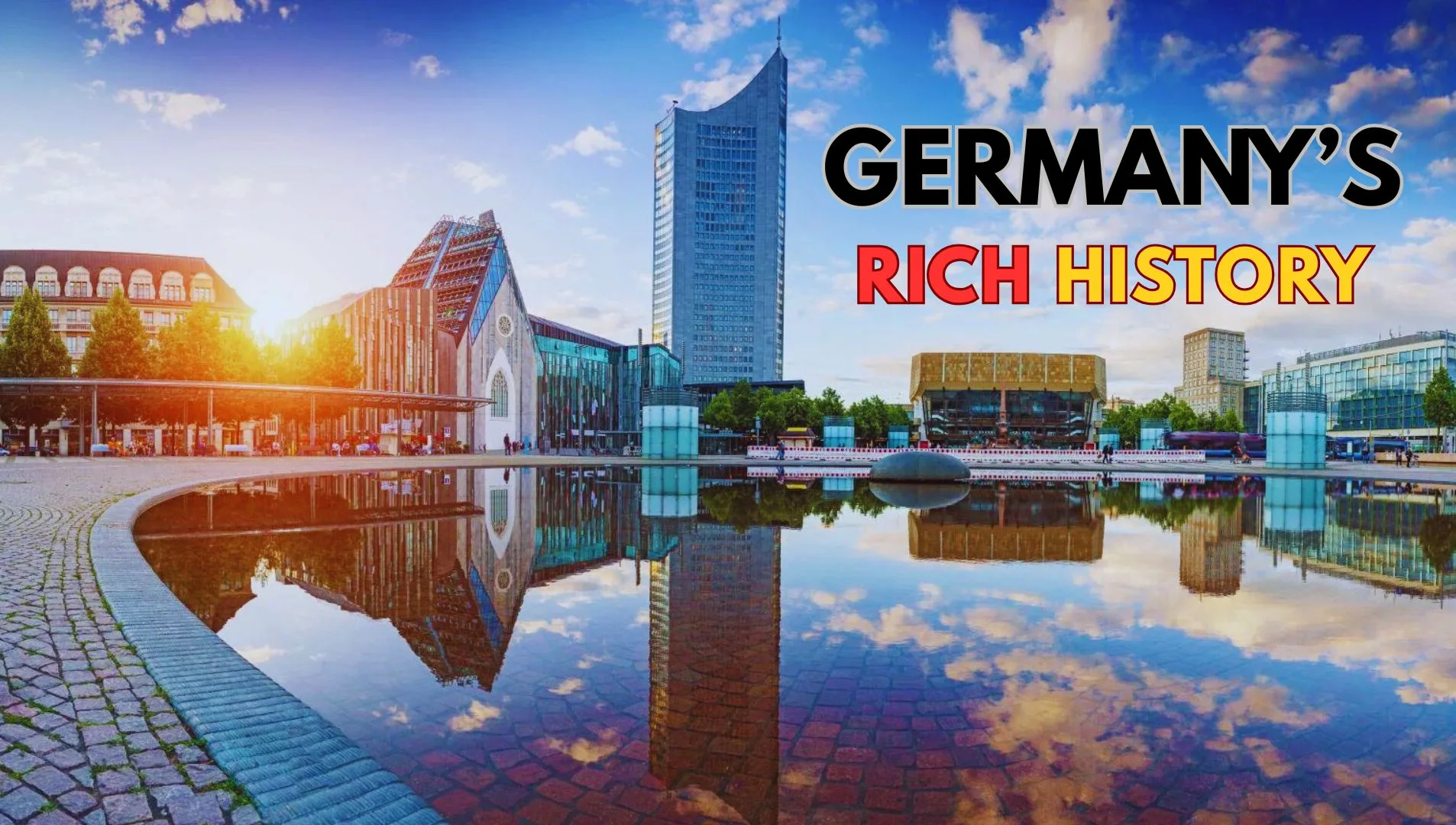
The history of Germany is an interesting account of division and union, of genius and disastrous war, of rebellion and rebuilding. Over two millennia long, the history of Germany is inseparably connected with world history of Europe. A country of ancient tribal confederations and the Holy Roman Empire, of upheavals in the tumultuous 20th century and the modern democratic state, Germany has a long history of great changes.
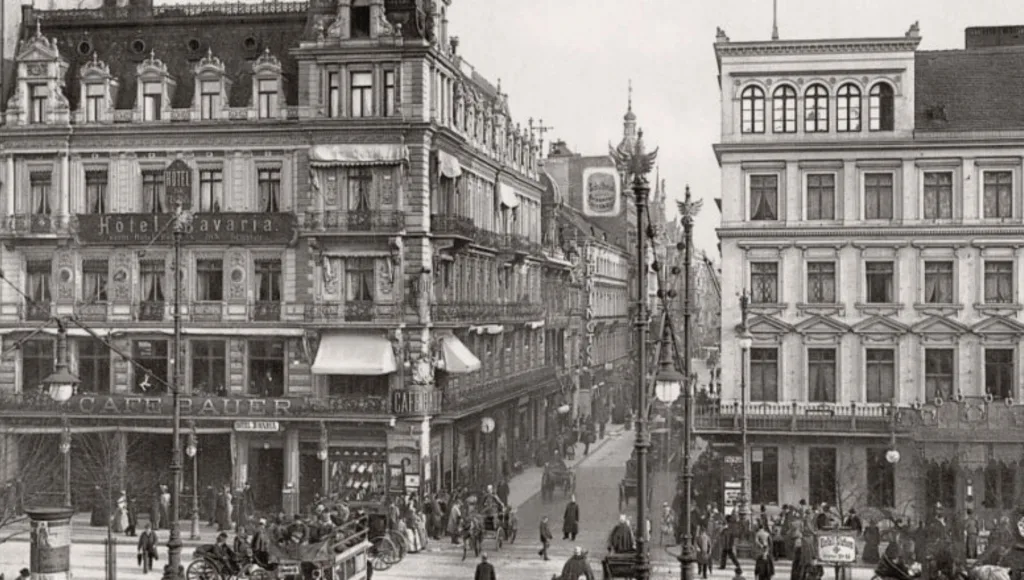
Ancient Germany: Tribal Beginnings
Years and years before there was a country like Germany, the region was populated by different Germanic tribes. These tribes-the Saxons, Franks, the Goth and the Vandals were distributed over Central and Northern Europe. These tribes were fought by the Romans during the campaigns of Julius Caesar in the 1st century BCE. The Romans were unable to subdue permanently the lands east of the Rhine even though they annexed them as territories west of the Rhine and created provinces like Germania Inferior and Germania Superior.
This battle was significant because in 9 CE, three Roman legions were ambushed and wiped by the Germanic tribes led by Arminius in the Battle of the Teutoburg Forest. This loss put a stop to any Roman southward expansion into the interior of Germania, and gave an assurance that the region would grow independent of that of the Roman Empire.
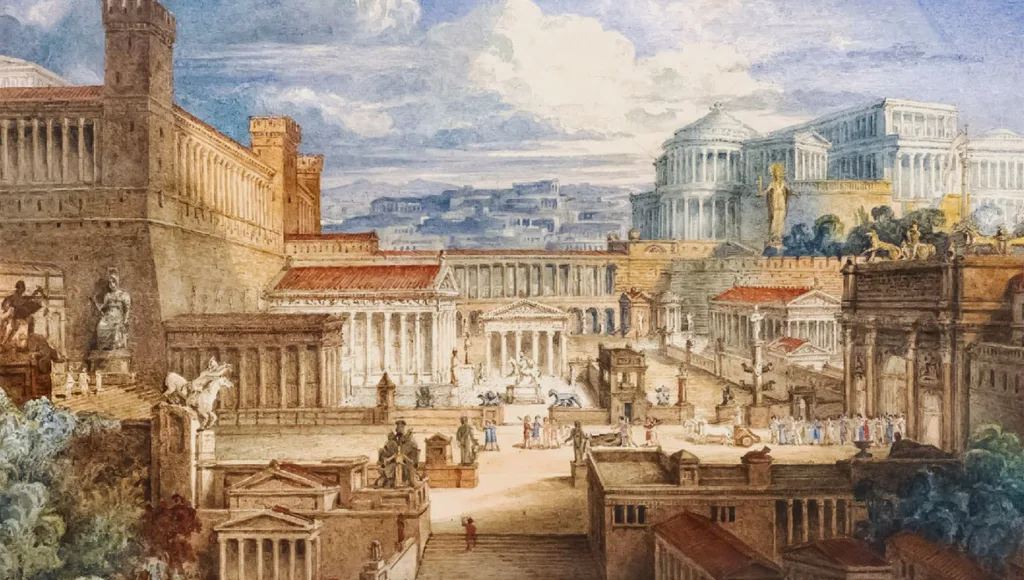
The Middle Ages: The Holy Roman Empire
After the collapse of the Western Roman Empire in 476 CE, the Germanic people, especially the Franks emerged. With Charlemagne (who was crowned the Holy Roman Emperor in 800 CE) a large part of Western and Central Europe was united. Upon death, the empire was partitioned and in 962 Otto I was crowned as an Emperor and this led to what would in later days be known as the Holy Roman Empire of the German Nation.
The Holy Roman Empire was no centralized nation-state, but a federation of loosely associated units that were duchies, principalities and free cities, and ecclesiastical territories. During centuries it was used as a political system according to which German-speaking peoples were regulated with partiality.
This time was marked by cultural and economic development in Germany especially in the High Middle Ages (11th-13th centuries) flourishment of cities and trade unions like the Hanseatic League. But in it also occurred internal wars and disputes among emperors and papacy, between the regional princes.
The Reformation and Religious Wars
The Protestant Reformation, an event that was triggered by a German monk, Martin Luther in the year 1517, was one of the most revolutionary processes in German history. With his Ninety-Five Theses nailed to a church door in Wittenberg, he undermined the power of the Catholic Church and became the initiator of a religious and politico-social revolution.
The Reformation divided the European Christianity and brought about the growth of Protestantism. This made Germany a divided nation and some regions became Lutherans, whereas others were Catholics. As a consequence of these tensions, there ensued a sequence of wars, culminating in the Thirty Years War (1618-1648) a horrific war that decimated a large part of Central Europe.
With the Peace of Westphalia the war came to an end, the independence of the different German states, and the early modern international system was launched. Nevertheless, Germany took much longer to consolidate as hundreds of independent states existed in Germany as late as the 19th century.
From Fragmentation to Unification
By the 18th century, two states of Germany, Austria and Prussia became predominant. Whereas Austria was at the head of the Holy Roman Empire and thus exerted influence through dynastic marriages, Prussia became a strong military and bureaucratic force, such as the man Alfred, Frederick the great.
Napoleon Bonaparte accomplished this in 1806 when Austria was defeated and the Holy Roman Empire, dissolved, replaced by the Confederation of the Rhine, a French satellite, the reorganization of German territories. Following the defeat of Napoleon in 1815 the German Confederation was formed, loosely gathering together 39 states which spoke German, dominated by Austria.
German unification had been further fueled by nationalism, industrialism, and Prussian success during the 19th century. Chancellor Otto von Bismarck led Prussia into three wars, that is, against Denmark (1864), Austria (1866), and France (1870-1871). The German Empire was declared at Versailles in 1871 after Germany won the Franco-Prussian War, Emperor Wilhelm I of Prussia had been the King.
Imperial Germany and World War I
The combined German Empire was an influential European state, which enjoyed a strong industrial growth, scientific breakthrough, and military advancement. But during the time of Emperor Wilhelm II, there were aggressive foreign policies and naval growth that resulted in the increasing conflicts with other powers.
Germany joined World War I on the side of Austria-Hungary in 1914 against Serbia and allies. The war characterized by trench war and huge losses was over in 1918 when Germany lost. This Treaty of Versailles subjected very harsh terms to Germany in form of territorial cuts, arms limitation, and reparations.
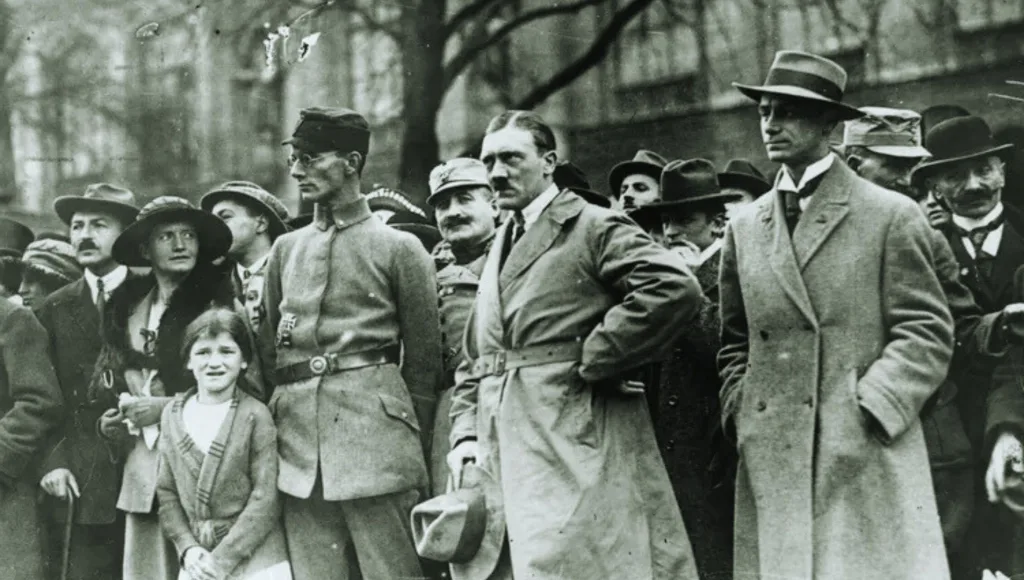
The Weimar Republic and Nazi Germany
The unexpected end of the war led to the formation of the Weimar Republic in 1919, which was the first attempt of Germany to liberal democracy. In spite of cultural liveliness during the 1920’s (e.g. Bauhaus, Expressionism), the republic faced economic crises, hyperinflation, political extremism and social turmoil.
In 1933, the rule of Adolf Hitler and his Nazi Party rose to power, thus creating a totalitarian state. Providing aggressive nationalism, militarization, and virulent Antisemitism, the regime of Hitler ended in the Holocaust, or the planned mass murder of six million Jews and millions of other people.
The World War II was declared in 1939 as Germany attacked Poland. With the following six years, Germany conquered the better part of Europe only to be driven back by allied forces. It was in the month of May 1945 when Berlin was trapped and Hitler took his own life just before Germany surrendered. The war had ravaged Germany, torn Germany apart and even scarred Germany morally.
Division and the Cold War
Following the World War II, Germany was partitioned into four occupational zones under the jurisdiction of the U.S., UK, France and the Soviet Union. This was confirmed in 1949 when it divided into two states:
- Federal Republic of Germany (FRG) – West Germany that shared the same side with the West.
- German Democratic Republic (GDR) – East Germany who was aligned with the Soviet bloc.
Communism split the world into the proverbial east and west and in 1961 the Berlin wall became the most vivid sign of this separation. West Germany, led by such politicians as Konrad Adenauer and Willy Brandt, was reconstructed and turned into a stable democracy and a member of the European Economic Community. East Germany was strictly controlled by the Soviets and had only little liberties and a poor economy.
Reunification and Modern Germany
The collapse of the Berlin wall in 1989 because of the huge protest and collapse of Soviet influence led to the short reignited unification of Germany in 1990. October 3, 1990, East and West Germany reunited and Berlin was reinstated as the capital.
With a strong state, Germany has become the largest economy and the most vocal in international affairs in Europe since reunification. It became instrumental in the enlargement of the European Union, the introduction of a common currency, the euro, the struggle to curb climate change, immigration, and financial stability.
German is a modern parliamentary republic state, which prides strong institutions, technology and honors human rights. Even though its problems are not over yet – it has to cope with its convoluted history, manage immigration, and find its way through geopolitical tensions – Germany is today a pillar of peace and stability in Europe.
Conclusion
Germany has come through tribal confederations, empires, periods of religious upheavals, and wars to arrive at a united democratic state. It has a history full of incredible cultural episodes and tragic wars. Germany, with its passing through the past and in its building of a path to cooperation and peace, is a sharp example which can evidence before our eyes a country which was divided and destroyed, that is today one of the most respected democracies of the planet.



0 Comments