
India is one of the oldest civilizations in the world and the largest democracy in the world today, which is likely to assume a dominant position in the world affairs. India is no longer merely a regional giant, it is fast becoming a world leader with a vibrant economy, young and ambitious population, increasing technological expertise and a balanced though aggressive foreign policy. With the world order growing more multipolar and countries work to find other partners, India is emerging as a country that can affect global governance, climate action, economic trends and peace-building activities.
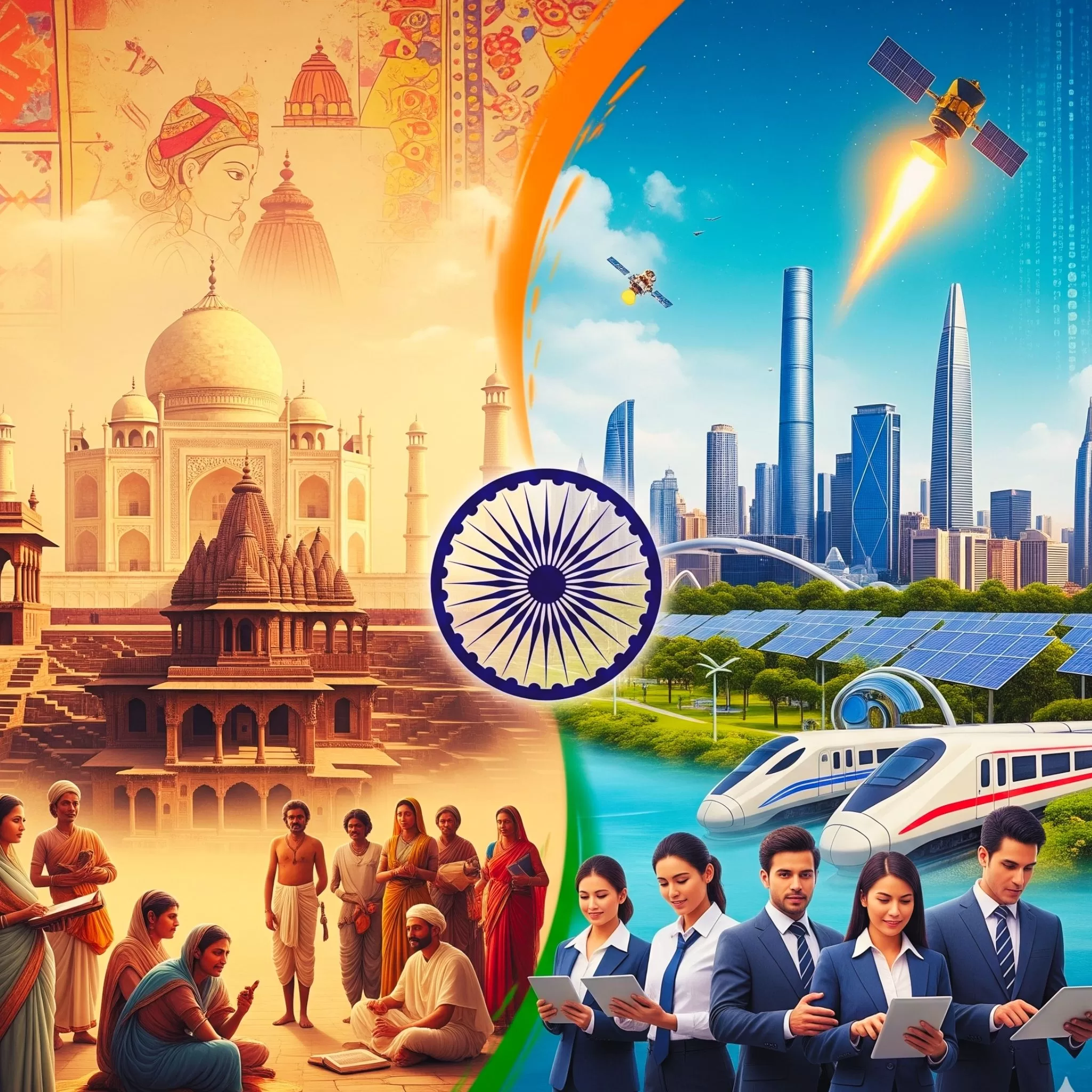
Historical Legacy and Modern Aspirations
The Indian civilization has a long history of more than 5,000 years and has left a rich heritage to the world in the areas of mathematics, science, philosophy, medicine, and spirituality. Nevertheless, the path of a post-colonial India towards the possible status of a superpower is especially significant. After attaining its independence in 1947, India has since grown to become a vibrant democracy with high focus on development, innovation and international cooperation.
The development process in the country has not been smooth-sailing-poverty, illiteracy, health care disparities and regional tensions have been on the list but India has demonstrated endurance and flexibility. Today, it is not reaching its goals only to see national expansion but at the global level, especially to developing countries.
Economic Growth and Global Influence
The economy of India is currently the fifth largest in the world and is projected to be the third largest by 2030 based on several international projections. India is an emerging economic powerhouse, with one of the highest growth rates of the GDP annually, by far.
Key pillars of India’s economic strength include:
- A strong services sector especially in information technology and software exports.
- A thriving start-up ecosystem, which is the third-largest in the world.
- Increasing production with the “Make in India” program.
- An emerging digital economy, with a government-led digitization drive.
The Digital Public Infrastructure (DPI) model of India, the Unified Payments Interface (UPI), Aadhaar, and Co-WIN models have been recognized the world over as an example of inclusive and scalable technology. The African, South-east Asian, and Latin American countries are considering the Indian digital ecosystem as a template to follow in their development.
Technology and Innovation of India
India is rapidly becoming a world leader in science, technology and space exploration. Indian Space Research Organization (ISRO) missions including Chandrayaan-3 (the first mission to land on the south pole of the Moon), Aditya-L1 (the first Indian mission to space), and the upcoming Gaganyaan (crewed space flight program) have been in the global headlines.
India is spending much on research and development in artificial intelligence, quantum computing, cybersecurity, and green technology. India is willing to be at the forefront in frontier technologies, evidenced by its support of initiatives such the National AI Mission and semiconductor manufacturing.
Moreover, India has emerged as one of the major world suppliers of pharmaceuticals and vaccines. It received a critical role during the COVID-19 pandemic as part of the Vaccine Maitri program, making available more than 90 countries with vaccines, demonstrating both its manufacturing capabilities and humanitarian efforts.
Demographic Dividend
India has now surpassed China as the most populous nation with a population of more than 1.4 billion people. More importantly, it is one of the youngest nations in the world with more than 65 percent of its population aged below 35 years. This demographic asset is a rare chance to drive innovation, business, and productivity.
The large population of English speaking and tech-savvy youth in India has already reshaped the world of IT and business services. When the right steps are taken, this demographic dividend can be the greatest asset of India in establishing global leadership in the next decades.
Geopolitical Leadership and Foreign Policy
The foreign policy of India founded on the principles of strategic autonomy, non-alignment and mutual respect is increasingly receiving echo in the international arena. Instead of closely aligning itself with any individual bloc, India is closely intertwined with a variety of the global powers: the United States, Russia, European Union, Japan, and the Gulf states, and is also developing its relations with Africa, Latin America and the Pacific Islands.
India is a powerful member of some world and regional organizations:
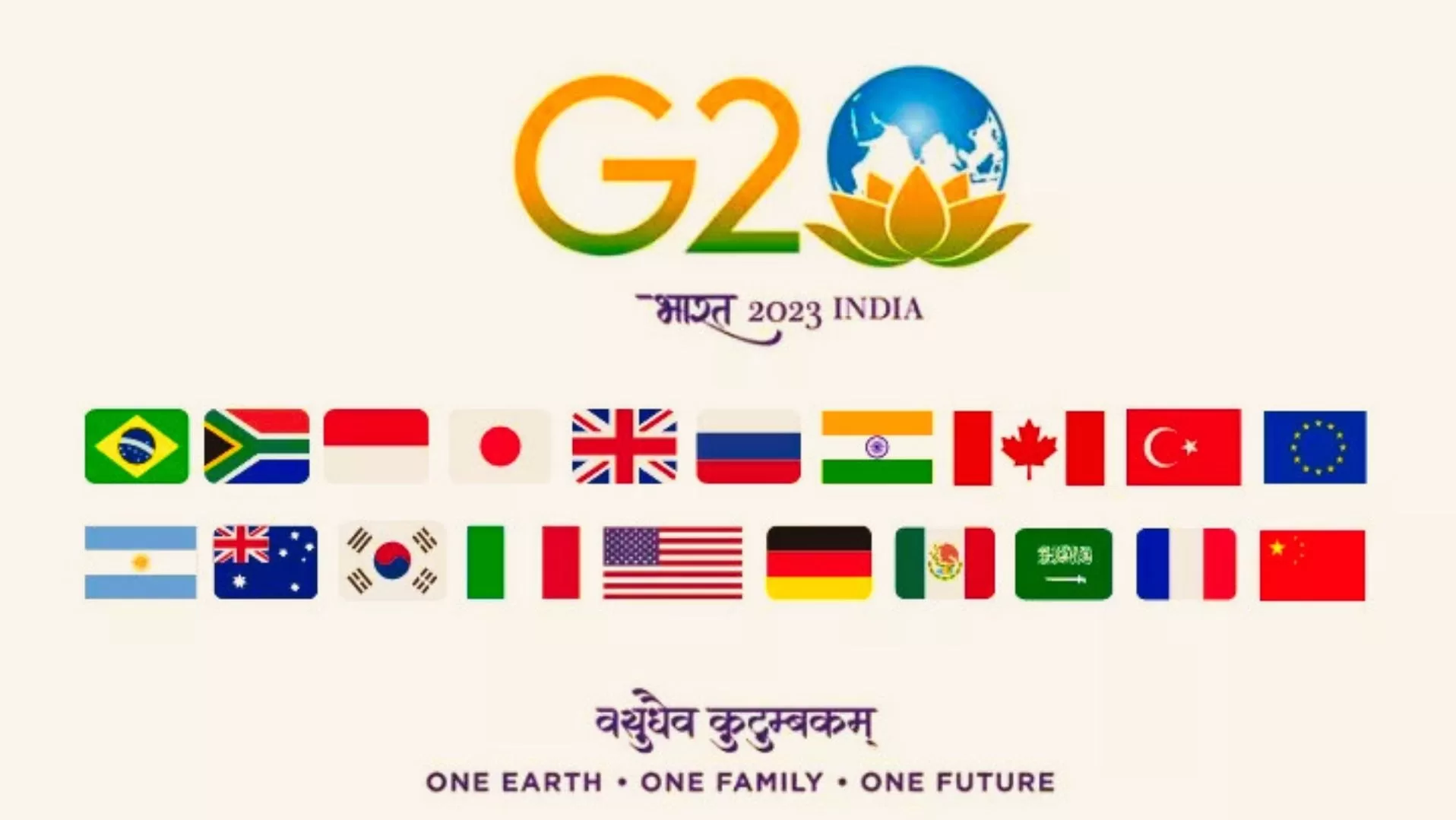
- G20: India as the G20 President 2023 demonstrated its capability to unite divergent voices and concentrate on inclusive development through its theme One Earth, One Family, and one Future.
- BRICS: India is an original member and a key player in advocating multipolarity and restructuring the international agencies.
- QUAD (India, US, Japan, Australia): A strategic alliance of regional security, technology and economic collaboration.
- SCO (Shanghai Cooperation Organization): Deepening its involvement in Eurasia.
The leadership of India as one of the Global South countries is of particular importance. India has become the voice of the developing world by advocating the cause of climate justice, debt relief, food security and fair global governance.
Championing Climate Leadership
India is leading in the tackling of global climate issues. Though its per-capita emissions are significantly lower than those of the developed nations, India is making serious investments in renewable energy, with the target of 500 GWs of non-fossil fuel capacity by 2030.
Initiatives like:
- The International Solar Alliance (ISA) is an alliance of more than 100 countries formed by India and France in the promotion of solar energy.
- Lifestyle for Environment (LiFE) Movement, an organization that preaches sustainable consumption patterns worldwide.
- Green hydrogen, EV, and climate-resilient infrastructure leadership.
Climate diplomacy in India indicates the willingness to be the first to set the example but not to disregard the needs of the developing countries in the global climate agenda.
Soft Power and Cultural Influence
The soft power is one of the most successful tools of international influence that India possesses. The exports of Indian culture, whether it comes in the form of the Bollywood movies, yoga, and classical music or in the form of food, literature or spirituality, are welcomed by the world.
The Indian diaspora, which is located in over 100 countries, also contributes largely towards creating the global image of India. A big number of the diaspora hold high ranks in politics, business and academics-assisting in building very strong bilateral bridges between India and the nations they reside in.
The organization of International Yoga Day by India on the 21st of June every year has turned into a global cultural event with the support of the United Nations and celebrated in more than 190 countries.
A Responsible Global Stakeholder
India is not taking over the world but it is accountable, involving, and collaborative. India has been a reliable follower of UN Peacekeeping Missions, reputed ally of humanitarian emergencies, and a dynamic advocate of fairness in international governance.
India has been making calls to reform the world bodies like UN Security Council, WTO and IMF and to represent the developing nations in these bodies. Its insistence on the international order based on the rule of law, observance of sovereignty, and peaceful dispute settlement strengthens its credibility.
Challenges on the Path to Leadership
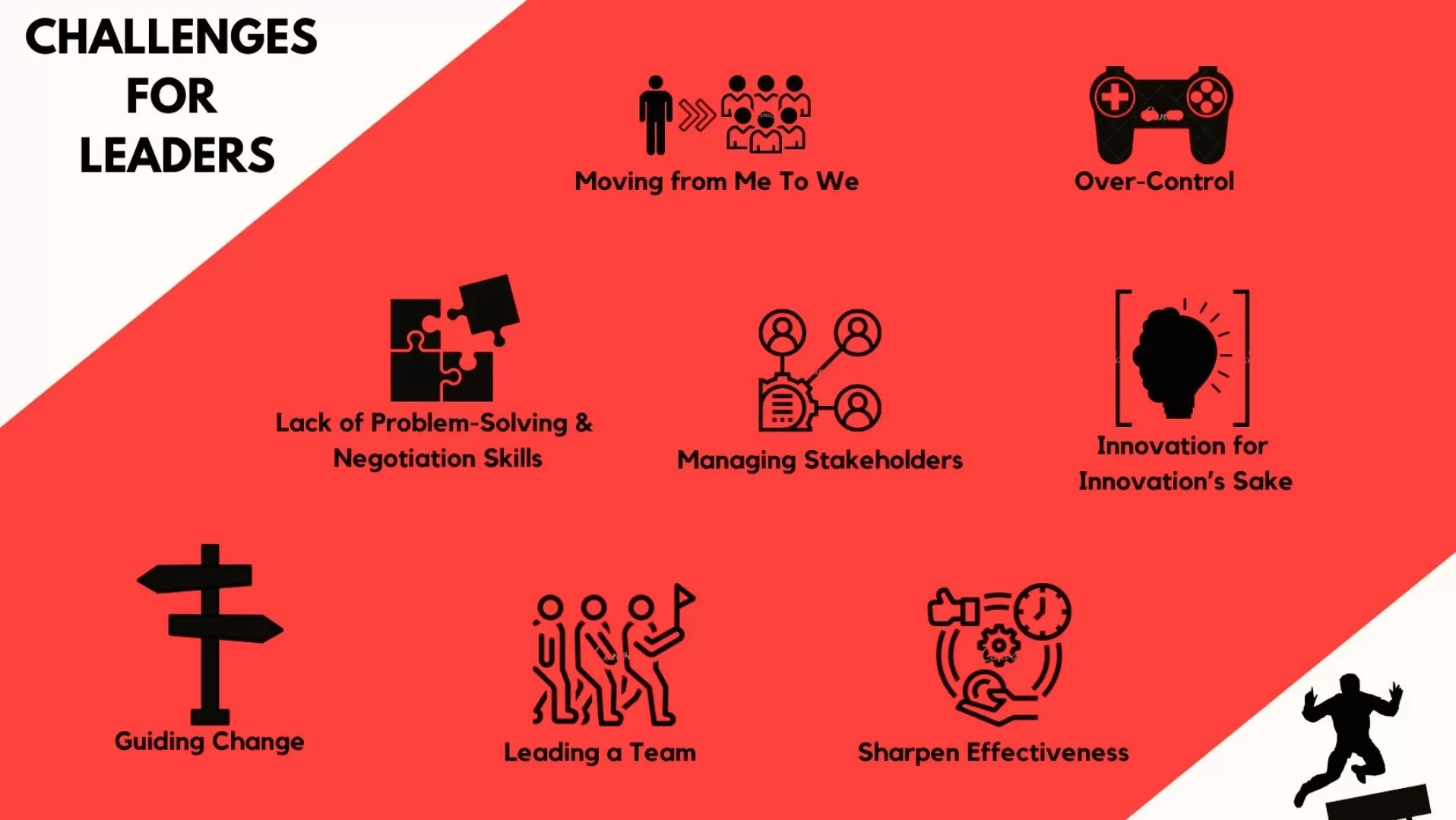
Although the development of India is really impressive, it has a number of internal and external challenges.
- Poverty and inequality: Tens of millions continue to have no access to quality education, healthcare and sanitation.
- Infrastructure voids: Rural environments commonly experience lack of connectivity, power and water.
- Environmental degradation: Urban pollution, deforestation, water stress, etc. should be addressed urgently.
- Geopolitical tensions: There are border problems with China, instability in South Asia and the problem of terrorism.
India needs to deal with these problems through long-term policy, transparency, and inclusive governance in order to consolidate its leadership globally.
Conclusion
The evolution of India as the developing country that started as a post-colonial and has become an aspiring, confident, and responsible global force is one of the most influential narratives of the 21st century. The ideals that India shares are not only democracy, pluralism, peace, and sustainability, but economic development and military power are another reason why India can be a global leader.
India offers another way of leadership, the way valuing diversity, the way that finds a middle ground between modernity and tradition, the way that provides cooperation, as opposed to confrontation. In a world that is more and more in need of a measure of stability amid flux, India is also receiving more and more of a consideration not so much as a rising power, but as a partner in global development.




0 Comments